
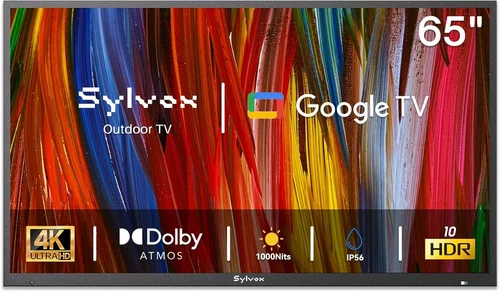
Outdoor living spaces have evolved far beyond simple patios and balconies—they’re now extensions of our homes, designed for comfort, entertainment, and relaxation. Whether you’re sipping morning coffee on a sun-drenched balcony or hosting friends for an evening under the stars, having a reliable outdoor TV can transform your space into a true outdoor oasis. But here’s the reality: not everyone needs (or wants to spend on) a $3,000 weatherproof television built for commercial use. That’s where budget outdoor TVs come in—offering a smart balance between affordability, performance, and durability.
This comprehensive buying guide is crafted specifically for homeowners, renters, and outdoor enthusiasts who want to enjoy high-quality entertainment outdoors without breaking the bank. You’ll learn how to evaluate key features like brightness, weather resistance, build quality, and smart functionality—all while staying within a realistic budget. We’ll walk you through common pitfalls, explain what “budget” really means in this category, and help you avoid overpaying for features you don’t need. By the end, you’ll be equipped with expert-level knowledge to make a confident, informed decision that fits both your space and your wallet.
The market for outdoor TVs has grown significantly in recent years, driven by increased demand for outdoor living solutions and advancements in display technology. While premium brands like SunBrite and Samsung dominate the high-end segment with fully sealed, all-weather models, a new wave of budget-friendly options has emerged from brands like TCL, Hisense, Vizio, and even specialized outdoor TV manufacturers offering more affordable alternatives. These budget models often use indoor TVs housed in protective enclosures or feature enhanced brightness and basic weatherproofing—making them ideal for covered patios, screened-in porches, or balconies with partial shelter. Understanding the nuances between these options is crucial to finding the right fit for your setup.

What to Look for When Buying Buying Guide
1. Budget & Price Range
When shopping for a budget outdoor TV, your first consideration should be how much you’re willing to spend—and what you get for that price. True outdoor TVs designed for full exposure to the elements typically start around $1,500 and can exceed $5,000. However, budget-friendly alternatives—often indoor TVs modified for outdoor use—can be found between $300 and $800, making them accessible to a much wider audience. The key is understanding what “budget” means in context: it doesn’t necessarily mean cheap, but rather value-driven. A $600 TV that lasts three years with minimal issues may offer better long-term value than a $400 model that fails after one season.
Set a realistic budget based on your usage frequency and environmental conditions. If your balcony is fully covered and shielded from rain and direct sunlight, you can safely opt for a lower-cost solution. But if your space sees occasional splashes or intense glare, investing slightly more in brightness and basic weather protection pays off. Avoid the temptation to go for the absolute cheapest option—many sub-$300 “outdoor” TVs are simply rebranded indoor models with no real weather resistance, which can lead to premature failure and safety hazards.
2. Performance Specifications
Performance specs matter just as much outdoors as they do indoors—but with some unique twists. Brightness is arguably the most critical factor. Indoor TVs typically range from 250 to 400 nits, which is fine for dim rooms but completely inadequate in daylight. For outdoor use, especially on a sunny balcony, look for a minimum of 500 nits, with 700+ nits being ideal. Some budget outdoor TVs achieve this through high-brightness panels or anti-glare coatings, while others rely on outdoor enclosures with built-in lighting enhancements.
Resolution is another key spec. While 4K UHD is now standard even in budget models, ensure the TV supports HDR (High Dynamic Range) for better contrast and color accuracy in varying light conditions. Refresh rate matters too—60Hz is acceptable for casual viewing, but if you plan to stream sports or action movies, a 120Hz panel will reduce motion blur. Audio performance is often overlooked, but outdoor environments lack the acoustic reflection of indoor walls, so built-in speakers may sound tinny. Consider pairing your TV with outdoor-rated Bluetooth speakers for a richer experience.
3. Build Quality & Durability
Even on a budget, durability cannot be compromised. The biggest threat to electronics outdoors is moisture—not just rain, but also humidity, condensation, and morning dew. Look for TVs with at least an IP54 rating (protection against splashing water and dust), though IP55 or higher is preferable. Many budget outdoor TVs aren’t fully sealed like their premium counterparts but come with protective covers or are sold as part of an outdoor kit that includes a weatherproof housing.
Materials matter too. Aluminum or powder-coated steel frames resist rust and corrosion better than plastic. Check the back panel and ports—sealed or rubber-grommeted inputs prevent water ingress. Also consider temperature tolerance. Most consumer electronics are rated for 32°F to 95°F (0°C to 35°C), but outdoor conditions can exceed this range. Some budget models now include thermal management systems or are designed to operate safely in temperatures from -4°F to 122°F (-20°C to 50°C), which is a significant advantage for four-season climates.
4. Features & Functionality
Smart functionality is almost expected in modern TVs, and budget outdoor models are no exception. Most come with built-in platforms like Roku TV, Google TV, or Fire TV, allowing you to stream Netflix, YouTube, Disney+, and more without external devices. This is especially useful outdoors where running cables is impractical. Look for Wi-Fi 5 (802.11ac) or Wi-Fi 6 support for stable streaming, and ensure the interface is responsive—laggy menus ruin the experience.
Connectivity is another area to scrutinize. HDMI ports (at least two), USB, and audio outputs are essential. Some models include weatherproof cable glands or rear-access panels to protect connections. Voice control via Alexa or Google Assistant is a nice bonus, as is support for screen mirroring (Miracast or AirPlay). Avoid TVs with only composite or component inputs—these are outdated and limit your streaming options. Also, check if the remote is backlit or has a long range, as outdoor use often means greater distance from the screen.
5. Brand Reputation
Not all budget brands are created equal. Stick with manufacturers known for reliability and customer support. TCL and Hisense have earned strong reputations for delivering high value at low prices, with consistent performance and decent warranties. Vizio offers solid mid-tier options with good smart features. On the outdoor-specific side, brands like Seura and SkyVue offer more affordable weatherized models compared to SunBrite, though still pricier than standard TVs.
Avoid obscure or no-name brands sold exclusively through third-party marketplaces. These often lack proper certifications, have poor build quality, and offer little to no customer service. Check if the brand provides firmware updates—this is crucial for security and feature improvements over time. Reading professional reviews and user feedback on trusted sites like CNET, RTINGS.com, or Amazon (filtering for verified purchases) can reveal patterns in reliability and common failure points.
6. Warranty & Support
A solid warranty is a strong indicator of a manufacturer’s confidence in their product. Most budget indoor TVs come with a 1-year limited warranty, but outdoor use introduces additional risks. Look for extended coverage—ideally 2–3 years—that explicitly includes outdoor or environmental damage. Some brands offer optional outdoor protection plans for an extra fee, which may be worth it if you live in a harsh climate.
Customer support responsiveness is equally important. Can you reach a human quickly? Is there a dedicated outdoor TV support line? Check forums and review sites for reports of warranty claims being denied due to “improper use” when the TV was clearly used as intended. Also, verify that replacement parts (like remotes or stands) are readily available. A TV is only as good as the support behind it—especially when Mother Nature is involved.
7. Size & Portability
Size directly impacts viewing experience and installation logistics. For most balconies and small patios, a 43-inch to 55-inch screen is ideal—large enough to enjoy from a few feet away, but not so big that it overwhelms the space. Measure your mounting area and viewing distance before buying. A general rule: your viewing distance (in inches) should be about 1.5 to 2.5 times the screen size (in inches). So for a 50-inch TV, sit 6 to 10 feet away.
Portability matters if you plan to move the TV seasonally or between indoor and outdoor use. Some budget models are lightweight and come with VESA-compatible mounts for easy transfer. Others are heavier and designed for permanent installation. Consider whether you’ll need a tilt or swivel mount to adjust for sun glare. Also, check the weight limit of your balcony railing or wall mount—some older structures may not support heavier units.
8. User Reviews & Ratings
Never rely solely on manufacturer claims. User reviews provide real-world insights into longevity, ease of setup, and performance under actual outdoor conditions. Look for patterns: if multiple users report screen fogging after rain, that’s a red flag. If several mention excellent brightness on sunny days, that’s a strong endorsement. Pay attention to reviews from people in similar climates—what works in Arizona may fail in Florida’s humidity.
Use review aggregation tools and filter for recent feedback (last 6–12 months) to account for product updates. Be wary of fake reviews—look for detailed descriptions, photos, and verified purchase badges. Sites like Wirecutter, TechRadar, and even YouTube unboxing videos can offer balanced perspectives. Remember: a 4.5-star average with 1,000+ reviews is more trustworthy than a 5-star rating from 10 users.
Different Types of Buying Guide
Common Buying Mistakes to Avoid
❌ Mistake: Buying a Regular Indoor TV for Full Outdoor Use
Why it’s bad: Indoor TVs lack weatherproofing and aren’t designed to handle temperature swings, humidity, or UV exposure. Using one outside—even under a roof—can lead to condensation inside the panel, corrosion of internal components, and eventual failure. In worst cases, it poses an electrical hazard.
What to do instead: Only use indoor TVs in fully enclosed, climate-controlled spaces like sunrooms. For anything exposed to the elements—even partially—opt for a TV with outdoor certification or pair an indoor model with a certified weatherproof enclosure.
❌ Mistake: Ignoring Brightness Requirements
Why it’s bad: A dim screen turns your outdoor TV into a mirror on sunny days. You’ll strain to see content, defeating the purpose of having a TV outside. Many buyers regret choosing a standard 300-nit TV for a bright balcony.
What to do instead: Prioritize brightness. Aim for at least 500 nits, and 700+ if your space gets direct sunlight. Look for terms like “high-brightness,” “anti-reflective coating,” or “outdoor viewing optimized” in the specs.
❌ Mistake: Overlooking Mounting and Installation Needs
Why it’s bad: Outdoor mounting isn’t as simple as hanging a picture. You need weatherproof brackets, proper sealing around wall penetrations, and sometimes professional help. DIY mistakes can lead to water leaks, structural damage, or the TV falling.
What to do instead: Invest in a VESA-compatible outdoor mount rated for your TV’s weight and size. Use silicone sealant around screw holes, and consider a tilt function to reduce glare. If in doubt, hire a certified installer.
❌ Mistake: Choosing Based Solely on Price
Why it’s bad: The cheapest option often cuts corners on critical features like weather resistance, brightness, and build quality. You may end up replacing it within a year, costing more in the long run.
What to do instead: Focus on total cost of ownership. A $600 TV that lasts 4 years is better value than a $400 TV that fails in 18 months. Read reviews, check warranty terms, and prioritize reliability over initial savings.
❌ Mistake: Neglecting Audio Quality
Why it’s bad: Outdoor environments absorb sound, making built-in TV speakers sound weak and tinny. You’ll constantly turn up the volume, which can distort audio and annoy neighbors.
What to do instead: Pair your TV with outdoor-rated wireless speakers or a soundbar. Look for models with weather resistance (IPX5 or higher) and long-range Bluetooth. Some TVs support HDMI ARC or optical audio out for wired connections.
❌ Mistake: Assuming All “Outdoor” TVs Are Equal
Why it’s bad: The term “outdoor TV” is loosely used. Some are fully sealed and built for extreme conditions; others are just indoor TVs with a splash-resistant label. Confusing the two leads to mismatched expectations.
What to do instead: Read the fine print. Check IP ratings, temperature specs, and whether the TV is sold as a complete outdoor system or requires additional accessories. When in doubt, contact the manufacturer.
❌ Mistake: Forgetting About Power and Connectivity
Why it’s bad: Running power cords and HDMI cables outdoors is a tripping hazard and invites water damage. Poor cable management can ruin your setup and create safety risks.
What to do instead: Use in-wall rated (CL2/CL3) cables for permanent installations. Install outdoor-rated outlets or use GFCI-protected circuits. Consider wireless streaming devices (like Apple TV or Roku Ultra) to minimize cable clutter.
Budget Guidelines: How Much Should You Spend?
Entry-Level ($300–$500): This tier is ideal for fully covered, low-exposure spaces like enclosed balconies or screened patios. Expect 43-inch to 50-inch 4K TVs with basic smart features, around 400–500 nits brightness, and minimal weatherproofing (often just a protective cover). Brands like TCL 4-Series or Hisense A6 are common here. These are great for casual use but not recommended for direct sun or rain.
Mid-Range ($500–$800): This is the sweet spot for most buyers. You’ll find 50-inch to 55-inch models with 500–700 nits brightness, better anti-glare coatings, and improved build quality. Many include weather-resistant remotes, sealed ports, and support for HDR10. Look for TCL 5-Series, Vizio V-Series, or Hisense U6. These can handle partial exposure and offer 3–5 years of reliable service with proper care.
Premium ($800–$1,500): For those willing to invest more, this range includes semi-outdoor or fully weatherized models with 700+ nits, IP55 ratings, and enhanced thermal management. Examples include the SkyVue Pro or Seura Edge. These are suitable for open patios with occasional rain and full sun, offering near-commercial durability at a fraction of the cost.
Luxury ($1,500+): Reserved for true all-weather performance, these TVs are built like tanks—fully sealed, fan-cooled, and rated for extreme temperatures. Brands like SunBrite and Samsung The Terrace dominate here. While beyond strict “budget” territory, they’re worth mentioning for comparison. They’re overkill for most balconies but essential for poolside or beachfront installations.
Expert Tips for Getting the Best Deal
- Time your purchase around major sales events. Black Friday, Cyber Monday, and Amazon Prime Day offer the deepest discounts on TVs—including outdoor models. Retailers like Best Buy, Costco, and Walmart often run bundle deals (TV + mount + cables) during these periods.
- Shop at specialty outdoor retailers. Stores like Outdoor TV Direct, Seura, or SkyVue often have exclusive models and better customer support than big-box chains. They may also offer free shipping or installation guides.
- Compare online and in-store prices. Use price-tracking tools like Honey or CamelCamelCamel to monitor fluctuations. Sometimes, local stores will price-match online deals—just ask.
- Check for open-box or refurbished units. Certified refurbished TVs from reputable sellers (like Best Buy Outlet or manufacturer websites) can save you 15–25% and often come with the same warranty as new models.
- Read the return policy carefully. Outdoor TVs are harder to return due to size and shipping costs. Ensure you have at least 30 days to test the TV in your actual environment. Some retailers charge restocking fees for large items.
- Test brightness and viewing angle before committing. If possible, view the TV in person under similar lighting conditions to your balcony. Glare and color shift can vary significantly between models.
- Consider financing options. Many retailers offer 0% APR financing for 12–18 months on TV purchases over $500. This lets you spread the cost without interest—just pay it off before the promotional period ends.
- Don’t forget accessories. Factor in the cost of a mount, cables, and possibly a sound system. Buying a bundle can save money compared to purchasing items separately.

Frequently Asked Questions
Q: Can I use a regular TV on my balcony if it’s covered?
A: Yes, but only if the balcony is fully enclosed and protected from rain, humidity, and direct sunlight. Even then, temperature swings and condensation can damage internal components over time. For peace of mind, use a TV rated for outdoor use or pair an indoor model with a certified weatherproof enclosure.
Q: What’s the minimum brightness needed for outdoor viewing?
A: At least 500 nits for shaded areas, and 700+ nits for spaces with direct sun. Anything below 400 nits will be hard to see during the day, even under a roof.
Q: Do budget outdoor TVs come with warranties?
A: Most do, but coverage varies. Standard warranties are typically 1 year, while outdoor-specific models may offer 2–3 years. Always check if the warranty covers environmental damage—some exclude it unless you buy an extended plan.
Q: How do I protect my outdoor TV from rain?
A: Use a TV with an IP54 rating or higher, install it under a roof or awning, and ensure all cables are sealed with weatherproof glands. Avoid placing it where water can pool or splash directly onto the screen.
Q: Can I leave my outdoor TV on all the time?
A: Not recommended. Continuous operation generates heat and increases wear. Most outdoor TVs are designed for intermittent use—turn them off when not in use to extend lifespan.
Q: Are outdoor TVs energy efficient?
A: Modern LED models are quite efficient, consuming 50–150 watts depending on size and brightness. Look for ENERGY STAR certification to ensure low power usage.
Q: What’s the difference between an outdoor TV and an outdoor display?
A: Outdoor TVs are consumer-grade products designed for home use, with smart features and standard interfaces. Outdoor displays are commercial-grade, often lacking smart OS but built for 24/7 operation in public spaces. Budget outdoor TVs fall into the former category.
Q: Can I mount an outdoor TV on a balcony railing?
A: Only if the railing is structurally sound and the mount is specifically designed for railings. Most balcony mounts clamp onto the railing without drilling. Check weight limits and local building codes first.
Q: Do I need a special remote for outdoor use?
A: A weather-resistant or long-range remote is helpful, especially if you’re sitting far from the TV. Some models include remotes with backlighting or voice control for easier use in low light.
Q: How long do budget outdoor TVs typically last?
A: With proper care, 3–5 years is realistic. Factors like climate, usage frequency, and build quality play big roles. Fully weatherproof models can last 7+ years.
Our Final Recommendations
Best for Budget-Conscious Buyers: TCL 50S546 50-inch 4K QLED Roku TV ($499)
This model offers excellent value with 600 nits brightness, Dolby Vision HDR, and a sleek design. Pair it with a weatherproof enclosure like the Outdoor TV Cover Pro for under $600 total. Ideal for covered balconies.
Best Overall Value: Hisense 55U6H 55-inch ULED 4K Smart TV ($649)
With 700 nits peak brightness, quantum dot color, and Google TV, this TV delivers premium features at a mid-range price. Its robust build and strong user ratings make it a standout for partial outdoor use.
Best Premium Option: SkyVue Pro 55-inch Outdoor TV ($1,299)
A true semi-outdoor model with IP55 rating, 1000 nits brightness, and built-in thermal management. Perfect for open patios with occasional rain exposure.
Best for Beginners: Vizio V505-J01 50-inch 4K Smart TV ($379)
Simple setup, intuitive SmartCast interface, and solid performance. Great for first-time outdoor TV buyers on a tight budget.
Best for Advanced Users: Seura Edge 55-inch Ultra-Bright Outdoor TV ($1,499)
Combines high brightness (1200 nits), full weatherproofing, and customizable bezel options. Ideal for tech-savvy users who want a seamless, high-performance outdoor setup.
Conclusion: Making the Right Choice
Choosing the right budget outdoor TV for your balcony or patio doesn’t have to be overwhelming—or expensive. By focusing on your specific needs—whether that’s brightness for sunny mornings, durability for humid climates, or smart features for seamless streaming—you can find a model that delivers great performance without overspending. Remember, “budget” doesn’t mean sacrificing quality; it means being smart about where you allocate your dollars.
Prioritize brightness and weather resistance based on your environment, don’t overlook build quality and warranty, and always read real user reviews. Avoid common pitfalls like using indoor TVs in exposed areas or ignoring audio needs. And when in doubt, opt for a mid-range model—it’s often the best balance of cost, features, and longevity.
Your outdoor space deserves to be as enjoyable and functional as your living room. With the insights from this guide, you’re now equipped to make a confident, informed decision that enhances your outdoor lifestyle for years to come. So go ahead—bring the entertainment outside, fire up your favorite show, and enjoy the fresh air in comfort.

