
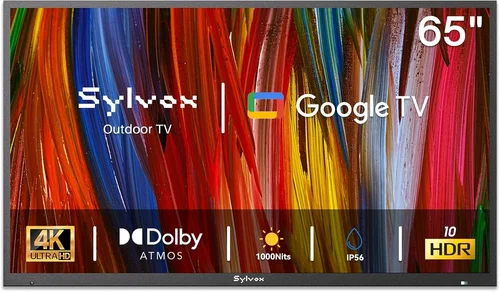
Living by the coast offers breathtaking views, salty breezes, and endless opportunities for outdoor relaxation. But it also presents unique challenges—especially when it comes to electronics. If you’re dreaming of movie nights under the stars or catching the big game from your seaside patio, a standard indoor TV simply won’t cut it. Coastal environments are notoriously harsh on technology: high humidity, salt spray, intense UV exposure, and strong winds can quickly degrade even the sturdiest devices. That’s why choosing the right backyard TV for a coastal home isn’t just about picture quality or screen size—it’s about survival.
This comprehensive buying guide is designed specifically for homeowners in coastal regions who want to enjoy premium outdoor entertainment without sacrificing durability or performance. Whether you live steps from the ocean or just a few miles inland, the corrosive effects of salt air and moisture demand specialized solutions. In this guide, you’ll learn exactly what to look for in an outdoor TV built to withstand coastal conditions, how to avoid common pitfalls, and which models offer the best balance of resilience, value, and viewing experience. We’ll break down technical specs, compare product categories, share expert tips for smart shopping, and provide real-world recommendations based on extensive research and user feedback.
The market for outdoor TVs has grown significantly in recent years, with manufacturers now offering purpose-built models that go far beyond simple weatherproofing. From fully sealed enclosures and anti-corrosion coatings to high-brightness displays and integrated heating/cooling systems, today’s coastal-ready TVs are engineered for year-round use in extreme environments. However, not all “outdoor” TVs are created equal—and many marketed as such still fall short in salty, humid climates. This guide cuts through the marketing noise to help you make an informed decision that ensures your investment lasts for seasons to come.

What to Look for When Buying Buying Guide
1. Weather Resistance & IP Rating
When shopping for a backyard TV in a coastal area, weather resistance isn’t optional—it’s essential. Look for TVs with a high Ingress Protection (IP) rating, which indicates how well the unit resists dust and water. For coastal homes, an IP55 rating is the absolute minimum, but IP65 or higher is strongly recommended. IP65 means the TV is dust-tight and protected against low-pressure water jets from any direction—perfect for handling sea spray and sudden rain showers. Some premium models even feature IP66 or IP67 ratings, offering protection against powerful water jets or temporary immersion.
Beyond the IP rating, examine the materials used in construction. Aluminum housings with powder-coated finishes resist rust and corrosion far better than plastic or untreated metal. Sealed cable ports, silicone gaskets around vents, and hydrophobic coatings on internal components further enhance longevity. Avoid TVs that rely solely on external covers or enclosures unless they’re specifically rated for marine environments.
2. Anti-Corrosion & Salt Air Protection
Salt air is one of the most aggressive enemies of electronics. It accelerates oxidation, degrades solder joints, and corrodes circuit boards—even inside seemingly sealed units. That’s why true coastal-ready TVs incorporate specialized anti-corrosion measures. Look for models that use conformal coating on internal PCBs (printed circuit boards), stainless steel screws and fasteners, and marine-grade aluminum or composite materials. Some manufacturers, like SunBrite and Seura, explicitly design their products for saltwater proximity and publish salt fog test certifications (e.g., ASTM B117 standards).
If a brand doesn’t mention salt resistance or marine durability, assume it’s not built for coastal use—even if it claims to be “weatherproof.” Don’t be fooled by generic marketing terms; ask for technical documentation or third-party testing results. A TV that works fine in a dry desert backyard may fail within months near the ocean.
3. Brightness & Sunlight Readability
Outdoor viewing means battling glare from direct sunlight, especially during midday or on bright, reflective patios. Standard indoor TVs typically peak at 300–500 nits of brightness—far too dim for outdoor use. For coastal backyards, aim for a minimum of 700 nits, but ideally 1,000 nits or more. High-brightness LED or QLED panels with anti-reflective coatings dramatically improve visibility in daylight.
Additionally, consider the TV’s viewing angle. Coastal homes often have open layouts where viewers sit at oblique angles. Look for TVs with wide viewing angles (178° horizontal/vertical) to maintain color accuracy and contrast no matter where you’re seated. Some models also feature ambient light sensors that automatically adjust brightness based on surrounding conditions—a handy feature for changing coastal skies.
4. Temperature Tolerance & Thermal Management
Coastal climates aren’t just humid—they can also experience extreme temperature swings. Summer afternoons may hit 90°F+, while winter nights can dip near freezing. Electronics generate heat internally, and without proper thermal management, components can overheat or fail prematurely. Quality outdoor TVs include built-in cooling fans, heat sinks, or passive ventilation systems designed to operate safely between -22°F and 122°F (-30°C to 50°C).
Heating elements are equally important in cooler months. Some premium models feature integrated heaters that activate below 40°F to prevent condensation and ensure reliable startup. This is especially critical in foggy or damp coastal mornings. Avoid TVs that lack thermal regulation—they may shut down unexpectedly or suffer long-term damage.
5. Build Quality & Durability
Durability goes beyond weatherproofing. A coastal backyard TV must withstand not only environmental stressors but also physical wear from wind, sand, and accidental bumps. Look for robust, rigid enclosures with minimal gaps or seams where moisture could seep in. Reinforced mounting brackets, shatter-resistant screens (like tempered glass or polycarbonate), and impact-resistant casings add another layer of protection.
Pay attention to hinge mechanisms if the TV tilts or swivels—these are common failure points. Opt for models with sealed, maintenance-free hinges. Also, check whether the TV is designed for permanent outdoor installation or intended as a semi-portable unit. Permanent installs typically offer better sealing and structural integrity.
6. Smart Features & Connectivity
Modern outdoor TVs aren’t just dumb screens—they often include smart platforms like Android TV, Roku, or webOS, allowing streaming directly from apps like Netflix, YouTube, or Disney+. This eliminates the need for external streaming boxes, reducing cable clutter and potential failure points. Ensure the TV supports Wi-Fi 5 or Wi-Fi 6 for stable connectivity, even at a distance from your router.
Connectivity options matter too. Look for multiple HDMI ports (preferably HDMI 2.0 or higher), USB inputs, and audio outputs. Some models include built-in Bluetooth for wireless speakers—a great option for open-air setups where running wires is impractical. If you plan to connect a soundbar or AV receiver, verify compatibility and cable routing options.
7. Size & Viewing Distance
Screen size should match your seating arrangement and typical viewing distance. For most coastal patios or decks, a 55-inch to 75-inch TV strikes the right balance between immersion and practicality. Use the 1.5x rule: multiply your viewing distance (in inches) by 1.5 to estimate ideal screen size. For example, if you sit 10 feet (120 inches) away, a 65-inch TV (≈120 ÷ 1.5 = 80, rounded down for comfort) is ideal.
However, don’t oversize just because you can. Larger screens require more power, generate more heat, and may overwhelm smaller spaces. Also, consider mounting height—coastal winds can make tall mounts unstable. Wall or ceiling mounts should be rated for outdoor use and secured with marine-grade hardware.
8. Warranty & Support
Given the harsh conditions, a strong warranty is non-negotiable. Look for at least a 2-year limited warranty, with some brands offering 3–5 years for outdoor units. More importantly, check what the warranty covers: does it include salt damage? Condensation? Fan failure? Many indoor TV warranties explicitly exclude outdoor use, so ensure your policy validates coastal installation.
Customer support is equally vital. Can you reach a human quickly? Are replacement parts readily available? Brands like SunBrite and Seura offer dedicated outdoor support lines and often provide extended service plans. Avoid obscure or imported brands with no local service network—you don’t want to wait weeks for a repair when your TV fails during hurricane season.
Different Types of Buying Guide

Common Buying Mistakes to Avoid
❌ Mistake: Buying an Indoor TV and Putting It Outside
Why it’s bad: Indoor TVs lack weatherproofing, corrosion resistance, and thermal management. Salt air will corrode internal components within weeks, and humidity will cause condensation, leading to short circuits or screen fogging. Most indoor warranties void coverage if used outdoors.
What to do instead: Invest in a purpose-built outdoor TV or use a certified outdoor enclosure designed for your specific model. Never assume “it’ll be fine under the awning.”
❌ Mistake: Ignoring the IP Rating
Why it’s bad: A TV labeled “weather-resistant” without a clear IP rating may only protect against light splashes—not sustained salt spray or wind-driven rain. This leads to premature failure and costly replacements.
What to do instead: Always verify the IP rating (aim for IP65 or higher) and cross-check with independent reviews or manufacturer specs.
❌ Mistake: Overlooking Salt Air Compatibility
Why it’s bad: Many “outdoor” TVs are tested in temperate climates but not in marine environments. Salt accelerates corrosion even in sealed units if internal components aren’t specially treated.
What to do instead: Choose brands that explicitly mention salt fog testing, marine-grade materials, or coastal suitability. SunBrite and Seura are industry leaders here.
❌ Mistake: Choosing Based on Price Alone
Why it’s bad: Cheap outdoor TVs often cut corners on sealing, brightness, and build quality. You may save $500 upfront but spend twice as much on repairs or replacements within two years.
What to do instead: Treat your outdoor TV as a long-term investment. Prioritize durability and performance over initial cost—especially in corrosive coastal zones.
❌ Mistake: Neglecting Mounting and Installation
Why it’s bad: Improper mounting can void warranties, create safety hazards, or allow water intrusion. Using indoor mounts outdoors invites rust and instability.
What to do instead: Use marine-grade stainless steel mounts rated for outdoor use. Consider professional installation, especially for wall or ceiling mounts in high-wind areas.
❌ Mistake: Forgetting About Audio
Why it’s bad: Outdoor TVs often have weak built-in speakers due to space and sealing constraints. Relying on them results in poor sound quality, especially with ocean noise in the background.
What to do instead: Pair your TV with weather-resistant outdoor speakers or a Bluetooth soundbar. Look for models with audio outputs or wireless streaming support.
❌ Mistake: Not Planning for Power and Cables
Why it’s bad: Exposed cables degrade quickly in salt air and UV light. Poor cable management also creates trip hazards and entry points for moisture.
What to do instead: Use UV-resistant, marine-grade cable conduits and waterproof junction boxes. Route cables through walls or under decking whenever possible.
Budget Guidelines: How Much Should You Spend?
Entry-Level ($800–$1,500): This tier includes partial-shade outdoor TVs or basic enclosures for indoor models. Expect IP54 or IP55 ratings, 700–1,000 nits brightness, and limited smart features. Suitable for covered patios away from direct ocean exposure. Brands like Element and Kogan offer decent options here, but verify salt resistance.
Mid-Range ($1,500–$3,000): The sweet spot for most coastal homeowners. These TVs feature IP65+ ratings, anti-corrosion coatings, 1,000+ nits brightness, and robust thermal systems. Models from SunBrite (Veranda series) and Seura (Outdoor TV) dominate this range, offering reliable performance with 2–3 year warranties.
Premium ($3,000–$5,000): Designed for full exposure and year-round use. Expect IP66 ratings, conformal-coated internals, integrated heating/cooling, and premium smart platforms. SunBrite’s Pro Series and Seura’s Signature line excel here, with commercial-grade durability and exceptional brightness (1,500+ nits).
Luxury ($5,000+): For discerning buyers who want the ultimate outdoor experience. These include ultra-bright commercial displays (2,000+ nits), custom finishes, advanced HDR support, and enterprise-level support. Ideal for large estates, beachfront rentals, or hospitality venues. Samsung’s The Terrace and LG’s Outdoor OLEDs fall into this category.
Expert Tips for Getting the Best Deal
- Shop during off-seasons: Prices drop significantly in late fall and winter when demand for outdoor electronics slows. Many retailers offer 20–30% discounts between November and February.
- Buy directly from manufacturers: Brands like SunBrite and Seura often run exclusive promotions, bundle deals (e.g., free mounts), or offer extended warranties when purchased through their websites.
- Check for trade-in programs: Some companies accept old TVs (even indoor ones) for credit toward outdoor models—great for offsetting costs.
- Read real user reviews: Look for feedback from coastal users on forums like AVS Forum or Reddit. Pay attention to mentions of rust, fogging, or fan noise after 6–12 months.
- Verify return policies: Ensure you have at least 30 days to test the TV in your environment. Some retailers charge restocking fees for opened electronics—avoid these if possible.
- Consider refurbished units: Certified refurbished outdoor TVs from reputable sellers can save 25–40% and often come with the same warranty as new models.
- Bundle with smart home systems: If you’re upgrading your whole outdoor setup, look for packages that include lighting, speakers, and TVs—sometimes offered by integrators at discounted rates.
- Ask about local rebates: Some coastal municipalities offer energy-efficiency rebates for outdoor electronics. Check with your utility provider.

Frequently Asked Questions
Q: Can I use a regular TV outside if it’s under a roof?
A: Technically yes, but it’s risky—especially near the coast. Even under cover, salt air, humidity, and temperature swings will damage internal components over time. Most indoor TV warranties won’t cover outdoor use, leaving you unprotected.
Q: How often do I need to clean my outdoor TV?
A: Wipe the screen and housing monthly with a soft, damp cloth and mild detergent. Avoid abrasive cleaners or high-pressure washers. Salt buildup should be rinsed off promptly to prevent corrosion.
Q: Will my outdoor TV work in the rain?
A: Yes—if it has an IP65 or higher rating. These TVs are designed to operate safely in rain, snow, and sea spray. However, avoid spraying water directly into vents or ports.
Q: Do I need a special antenna for outdoor TV?
A: Not necessarily. Most outdoor TVs support standard over-the-air antennas. For best reception in coastal areas (where signals can bounce off water), use a high-gain directional antenna mounted up high.
Q: Can I leave my outdoor TV on all the time?
A: It depends on the model. All-weather TVs are built for 24/7 operation, but partial-shade models may overheat if run continuously in direct sun. Check your manual for duty cycle recommendations.
Q: What’s the difference between an outdoor TV and a weatherproof TV?
A: “Weatherproof” is a vague term. True outdoor TVs are engineered from the ground up for external use, with sealed components, thermal management, and corrosion resistance. Weatherproof TVs may only have basic splash protection.
Q: How long do outdoor TVs last in coastal areas?
A: With proper care, a quality coastal-ready TV should last 5–8 years. Cheaper models or those not designed for salt air may fail in 2–3 years.
Q: Can I mount my outdoor TV on a boat dock?
A: Only if the TV is rated for marine environments and the mount is securely anchored to resist wave splash and high winds. Consult a marine electrician for safe installation.
Q: Do outdoor TVs consume more power?
A: Yes, due to higher brightness and thermal systems. Expect 20–50% higher energy use than indoor models. Look for ENERGY STAR-certified outdoor TVs to minimize impact.
Q: What if my TV fogs up inside the screen?
A: Internal fogging indicates a seal failure—common in non-coastal TVs exposed to humidity. This usually voids the warranty and requires professional repair or replacement.
Our Final Recommendations
Best for Budget-Conscious Buyers: SunBrite Veranda Series (55″) – At around $1,800, this model offers IP65 rating, 1,000 nits brightness, and solid anti-corrosion features. Perfect for covered decks within 5 miles of the coast.
Best Overall Value: Seura Outdoor TV (65″) – Priced near $2,500, it combines sleek design, 1,200 nits brightness, conformal-coated internals, and a 3-year warranty. Ideal for full-sun patios with ocean views.
Best Premium Option: SunBrite Pro Series (75″) – For $4,200, you get IP66 rating, 1,500 nits, integrated heating/cooling, and commercial-grade durability. Built to last a decade in harsh coastal conditions.
Best for Beginners: Element Outdoor TV (50″) – A user-friendly entry point at $1,200 with IP55 rating and basic smart features. Great for learning the ropes before upgrading.
Best for Advanced Users: Samsung The Terrace (75″) – At $6,500, this luxury model delivers 2,000+ nits, Quantum HDR, and seamless smart integration. Best for tech-savvy homeowners who demand top-tier performance.
Conclusion: Making the Right Choice
Choosing the best backyard TV for a coastal home requires balancing durability, performance, and budget—but it’s absolutely worth the effort. The right TV will transform your outdoor space into a year-round entertainment hub, letting you enjoy everything from sunrise yoga sessions to sunset movie marathons without worrying about salt, sun, or storms. Remember: not all outdoor TVs are built for the coast. Prioritize IP65+ ratings, anti-corrosion construction, high brightness, and strong warranties. Avoid cutting corners on mounting, cables, and audio. And don’t forget to factor in installation and long-term maintenance.
Ultimately, your ideal TV depends on your specific environment, usage patterns, and how much you’re willing to invest. Whether you’re lounging on a covered porch or hosting guests on a windswept deck, there’s a coastal-ready solution that fits your lifestyle. Use this guide as your roadmap—compare options, ask the right questions, and choose wisely. Your future self (and your favorite shows) will thank you. Now go enjoy that ocean breeze—with the perfect picture to match.

