
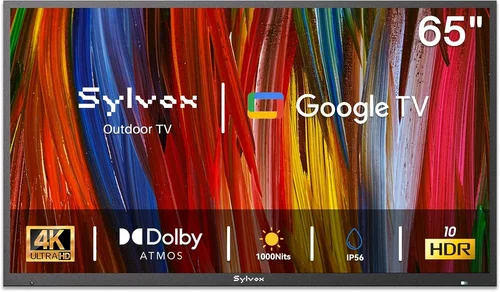
If you’ve ever dreamed of sipping your morning coffee under the shade of your gazebo while catching up on the news or streaming your favorite show, you’re not alone. Outdoor living spaces have evolved far beyond simple seating areas—they’re now fully functional extensions of our homes, complete with lighting, sound systems, and yes, even televisions. But finding a reliable, affordable garden TV that can withstand the elements without breaking the bank? That’s where things get tricky.
This comprehensive buying guide is designed to cut through the noise and help you make a smart, informed decision when choosing a cheap garden TV for your gazebo. Whether you’re a weekend warrior looking to upgrade your patio setup or a homeowner planning a full backyard entertainment zone, we’ve got you covered. We’ll walk you through every critical factor—from weather resistance and screen brightness to smart features and mounting options—so you don’t end up with a pricey paperweight after the first rainstorm.
The market for outdoor TVs has exploded in recent years, with more brands than ever offering “weatherproof” or “all-weather” models at surprisingly accessible price points. However, not all budget-friendly options are created equal. Some sacrifice durability for low cost, while others skimp on essential features like brightness or connectivity. Our goal is to help you identify the sweet spot: a garden TV that delivers solid performance, reliable protection against moisture and dust, and long-term value—all without draining your wallet. By the end of this guide, you’ll know exactly what to look for, what to avoid, and how to get the best deal possible.

What to Look for When Buying a Garden TV
1. Weather Resistance & IP Rating
When it comes to outdoor electronics, weather resistance isn’t just a nice-to-have—it’s non-negotiable. A garden TV must be built to handle rain, humidity, dust, and temperature swings. The key metric here is the Ingress Protection (IP) rating, which tells you exactly how well the TV resists solid particles (like dust) and liquids (like rain).
Look for a minimum IP54 rating—this means the TV is protected against splashing water from any direction and limited dust ingress. For gazebos, which offer partial shelter but aren’t fully enclosed, IP55 or higher is ideal. Some premium models boast IP65 or even IP66 ratings, meaning they’re dust-tight and can withstand powerful water jets. While these may cost more, they’re worth considering if your gazebo is exposed to wind-driven rain or frequent storms.
Avoid TVs labeled only as “weather-resistant” without a clear IP rating—that’s often marketing fluff. Also, remember that even the most rugged outdoor TVs aren’t meant to be submerged or left in standing water. Always ensure proper drainage around the unit and consider a protective cover during extreme weather.
2. Screen Brightness & Anti-Glare Technology
Indoor TVs typically operate at around 300–400 nits of brightness—fine for dimly lit living rooms but hopelessly inadequate outdoors. Sunlight reflecting off the screen can turn your favorite movie into a blurry mess unless you choose a model designed for high ambient light.
For garden use, aim for a minimum of 700 nits, with 1000+ nits being ideal. This ensures the image remains visible even on bright sunny days. Additionally, look for anti-glare or anti-reflective coatings. These reduce the amount of light bouncing off the screen, improving contrast and color accuracy in daylight.
Some budget models claim high brightness but use cheaper LCD panels that wash out in direct sun. OLED screens offer superior contrast and viewing angles but are rarely found in affordable outdoor TVs due to cost and burn-in risks. Instead, seek out LED-backlit LCDs with local dimming or high dynamic range (HDR) support—even basic HDR10 can make a noticeable difference in outdoor visibility.
Don’t forget about viewing angle. If your gazebo seating is arranged around the TV (rather than directly in front), opt for a panel with wide viewing angles (IPS or similar) to maintain color consistency from the sides.
3. Build Quality & Durational Materials
Cheap doesn’t have to mean flimsy—but it often does. Pay close attention to the materials used in the TV’s construction. The chassis should be made of powder-coated aluminum or marine-grade stainless steel, both of which resist rust and corrosion far better than standard plastic or untreated metal.
Avoid models with thin plastic backs or exposed circuit boards. These may save money upfront but will degrade quickly when exposed to UV rays and moisture. Also, check the seals around ports, buttons, and the screen bezel. Silicone gaskets or rubberized coatings indicate thoughtful engineering for outdoor use.
Another often-overlooked detail: ventilation. Outdoor TVs need airflow to prevent overheating, but they also can’t have open vents that let in rain. Look for sealed cooling systems or passive heat dissipation designs. Active cooling (fans) is rare in outdoor TVs because fans introduce failure points and noise—both undesirable in a quiet garden setting.
Finally, consider the weight and mounting hardware. A heavier TV often signals sturdier build quality, but make sure your gazebo structure can support it. Most outdoor TVs come with VESA-compatible mounts, but verify compatibility with your chosen bracket before buying.
4. Smart Features & Connectivity
Even on a budget, you shouldn’t have to sacrifice modern conveniences. Today’s best cheap garden TVs come equipped with smart platforms like Android TV, Roku TV, or webOS, allowing you to stream Netflix, YouTube, Disney+, and more directly without external devices.
Check which apps are pre-installed and whether the interface receives regular software updates. Outdated firmware can lead to security vulnerabilities and app incompatibilities over time. Also, ensure the TV supports Wi-Fi 5 (802.11ac) or better—Wi-Fi 4 may struggle with 4K streaming in areas with weak signal strength.
Connectivity matters too. Look for at least two HDMI ports (preferably HDMI 2.0 or higher for 4K@60Hz), USB ports for media playback, and an Ethernet port for wired internet if your gazebo has network access. Audio output options like optical or 3.5mm jack let you connect external speakers for richer sound—essential since built-in TV speakers are usually tinny and weak outdoors.
Some models include Bluetooth for wireless audio streaming to headphones or portable speakers—a great feature if you want to watch late-night shows without disturbing others.
5. Size & Viewing Distance
Choosing the right screen size isn’t just about preference—it’s about ergonomics. Too small, and you’ll strain your eyes from a distance; too large, and it overwhelms your space and budget.
As a general rule, multiply your viewing distance (in inches) by 0.84 to get the ideal screen diagonal. For example, if you’ll be sitting 8 feet (96 inches) away, aim for a 80-inch TV (96 × 0.84 ≈ 80). However, in a gazebo—where seating is often closer and more intimate—you might prefer a smaller screen for a cozier experience.
Most affordable outdoor TVs range from 32 to 55 inches. 43-inch models are especially popular for gazebos because they balance visibility and space efficiency. Larger screens (65″+) are available but quickly push into premium pricing, even among “budget” options.
Also consider the physical dimensions, not just the diagonal. Measure your mounting area carefully, including clearance for cables and airflow. Some TVs have unusually thick bezels that eat into usable wall space.
6. Power Consumption & Energy Efficiency
Outdoor TVs often run longer hours than indoor ones—think evening movie nights or all-day sports events. That means energy efficiency directly impacts your electricity bill.
Look for models with ENERGY STAR certification or low wattage ratings (typically under 100W for 43–50″ screens). LED-backlit TVs are inherently more efficient than older plasma or CCFL models, but even within LED categories, efficiency varies.
Some smart TVs include ambient light sensors that automatically adjust brightness based on surroundings—this saves power on cloudy days and reduces eye strain at night. Others offer eco modes that dim the screen and limit processing power when full performance isn’t needed.
If you plan to leave the TV on for extended periods, consider a model with a sleep timer or scheduled on/off function. This prevents unnecessary runtime and extends the TV’s lifespan.
7. Brand Reputation & Customer Support
Not all budget brands are equal. While lesser-known manufacturers may offer tempting prices, they often cut corners on support, firmware updates, and replacement parts.
Stick with brands that specialize in outdoor electronics or have a proven track record in consumer TVs. Companies like SunBriteTV, Seura, and Sylvane dominate the premium outdoor market, but more affordable alternatives from Hisense, TCL, and Vizio now offer certified outdoor models at lower price points.
Research customer service responsiveness—can you reach a human quickly? Are replacement remotes or stands readily available? Check forums and review sites for reports of long-term reliability. A TV that fails after 18 months isn’t “cheap”—it’s a waste.
Also, verify whether the brand offers regional service centers. If your TV needs repair, you don’t want to ship it across the country at your own expense.
8. Warranty & Return Policy
A strong warranty is your safety net against defects and premature failure. Most reputable outdoor TVs come with at least a 1-year limited warranty, but some extend to 2 or even 3 years—especially if registered online.
Pay attention to what’s covered: Does it include labor and parts? Is accidental damage included? Are there exclusions for “improper installation”? Many warranties require professional installation by a certified technician to remain valid.
Return policies matter too, especially when buying online. Look for retailers offering at least 30 days to return or exchange. Some stores (like Costco or Best Buy) provide generous return windows and in-person support, which can be invaluable if the TV arrives damaged or doesn’t meet expectations.
Never buy an outdoor TV from a seller with no return policy or vague warranty terms—it’s a red flag.
Different Types of Garden TVs

For most gazebo owners, the Semi-Outdoor (Gazebo-Safe) TV category offers the best balance of affordability, performance, and protection. These models are engineered for partially sheltered environments and typically include the essential features needed for enjoyable outdoor viewing without the premium price tag.
Common Buying Mistakes to Avoid
❌ Mistake: Buying a Regular Indoor TV for Outdoor Use
Why it’s bad: Indoor TVs lack weatherproofing, have low brightness, and use materials that degrade quickly in humid or sunny conditions. Within months, you’ll likely see screen discoloration, port corrosion, or complete failure.
What to do instead: Always choose a TV explicitly rated for outdoor or semi-outdoor use. If budget is tight, pair an indoor TV with a certified outdoor enclosure—but never leave an unprotected indoor TV outside.
❌ Mistake: Ignoring the IP Rating
Why it’s bad: Without a proper IP rating, you have no way to verify the TV’s ability to resist water and dust. Vague terms like “weather-resistant” or “all-season” are meaningless without certification.
What to do instead: Demand an official IP rating (IP54 minimum for gazebos). Cross-check it with independent reviews or manufacturer specs.
❌ Mistake: Overlooking Screen Brightness
Why it’s bad: A dim screen turns your garden TV into a mirror on sunny days. You’ll constantly adjust seating or squint to see anything.
What to do instead: Prioritize brightness (700+ nits) and anti-glare coatings. Test the TV in daylight if possible, or rely on verified reviewer footage.
❌ Mistake: Skimping on Mounting Hardware
Why it’s bad: Using indoor mounts or DIY brackets can lead to instability, sagging, or even the TV falling—posing a safety risk.
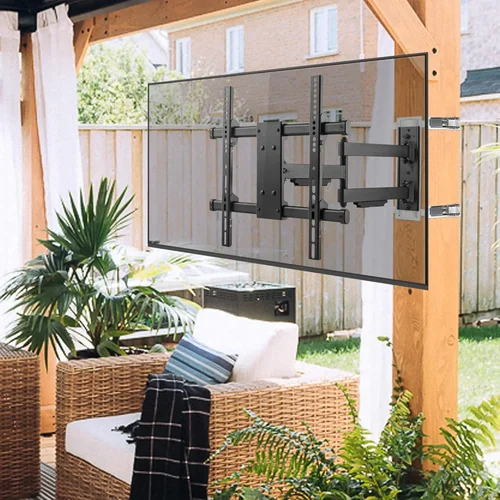
What to do instead: Invest in a VESA-compatible outdoor mount rated for your TV’s weight and size. Ensure it’s corrosion-resistant (powder-coated or stainless steel).
❌ Mistake: Neglecting Audio Quality
Why it’s bad: Built-in TV speakers are rarely loud or clear enough for outdoor spaces, where ambient noise (wind, birds, traffic) drowns out dialogue.
What to do instead: Plan for external audio from day one. Use Bluetooth speakers, wired outdoor soundbars, or a multi-room audio system synced to the TV.
❌ Mistake: Forgetting About Power and Connectivity
Why it’s bad: Running extension cords across your lawn is unsafe and unsightly. Poor Wi-Fi signal leads to buffering and frustration.
What to do instead: Have an electrician install a weatherproof outlet near your gazebo. Use a Wi-Fi extender or mesh network to boost signal strength outdoors.
❌ Mistake: Not Reading the Fine Print on Warranties
Why it’s bad: Many warranties exclude “outdoor use” unless installed by a professional or in specific conditions. You could pay for repairs out of pocket.
What to do instead: Read the warranty terms carefully before purchasing. Register the product immediately and keep installation records.
Budget Guidelines: How Much Should You Spend?
– Entry-Level ($250–$400): At this price, you’re typically looking at portable outdoor TVs or indoor models in basic enclosures. Expect smaller screens (32–40″), limited smart features, and modest brightness (500–600 nits). Best for occasional use in fully covered gazebos with minimal sun exposure.
– Mid-Range ($400–$700): This is the sweet spot for most buyers. You’ll find 43–50″ semi-outdoor TVs with IP54/IP55 ratings, 700–1,000 nits brightness, full smart platforms, and decent build quality. Ideal for regular use in standard gazebos.
– Premium ($700–$1,200): Here, options include larger screens (55–65″), higher brightness (1,000+ nits), enhanced audio, and better materials. Some models offer advanced cooling or integrated streaming devices. Great for larger gatherings or homes with high-end outdoor setups.
– Luxury ($1,200+): These are true all-weather TVs with IP65+ ratings, commercial-grade components, and professional installation support. Overkill for most residential gazebos but justified for coastal properties, luxury resorts, or extreme climates.
Remember: A slightly higher upfront cost often translates to years of reliable service. Spending $600 on a well-built TV that lasts 5+ years is smarter than replacing a $300 model every 18 months.
Expert Tips for Getting the Best Deal
– Shop during off-seasons: Prices drop significantly in late fall and winter when outdoor living demand declines. Look for Black Friday, Cyber Monday, and post-holiday sales.
– Compare retailers: Big-box stores (Best Buy, Costco) often price-match and offer extended warranties. Online specialists (Sylvane, Outdoor TV Direct) may have exclusive models or bundles.
– Bundle with accessories: Some sellers offer discounts when you buy a TV + mount + cover together. This can save $50–$100 versus purchasing separately.
– Check refurbished or open-box deals: Certified refurbished outdoor TVs from reputable sellers come with warranties and can cost 20–30% less than new.
– Verify return policies: Ensure you can return the TV if it doesn’t perform as expected in your specific environment. Some brightness claims look great in a showroom but fail in real-world sunlight.
– Install professionally if required: If your warranty mandates certified installation, factor that cost into your budget—but it’s often worth it for peace of mind.
– Use price-tracking tools: Websites like Honey or CamelCamelCamel alert you when prices drop on specific models.
– Don’t forget the cover: Even the best outdoor TV benefits from a fitted cover during storms or winter storage. It’s a small investment that extends lifespan.

Frequently Asked Questions
Q: Can I use a regular TV in my gazebo if it’s covered?
A: Technically yes, but it’s not recommended. Even covered gazebos experience humidity, temperature swings, and indirect moisture. Over time, these factors degrade indoor TV components. For long-term reliability, choose a purpose-built outdoor or semi-outdoor model.
Q: Do outdoor TVs need special installation?
A: Not always, but proper mounting is crucial. Use corrosion-resistant hardware and ensure the mount is rated for outdoor use. If your warranty requires professional installation, hire a certified technician.
Q: How do I protect my garden TV from theft?
A: Use a security mount with a lock, install motion-sensor lights, or choose a model with a built-in anti-theft alarm. For high-risk areas, consider removable portable TVs stored indoors when not in use.
Q: Will my garden TV work in winter?
A: Most outdoor TVs operate safely between -22°F and 122°F (-30°C to 50°C). However, extreme cold can temporarily reduce brightness. Store the TV indoors during prolonged sub-zero conditions if possible.
Q: Can I connect a soundbar to an outdoor TV?
A: Absolutely. Most outdoor TVs include optical, HDMI ARC, or 3.5mm audio outputs. Just ensure the soundbar is also rated for outdoor use or place it under cover.
Q: Do I need a separate streaming device?
A: Only if the TV lacks built-in smart features. Many affordable outdoor models now include Roku, Android TV, or Fire TV, eliminating the need for external boxes.
Q: How often should I clean my outdoor TV?
A: Wipe the screen and casing monthly with a microfiber cloth and mild cleaner. Avoid ammonia-based products, which can damage anti-glare coatings.
Q: Are outdoor TVs energy-efficient?
A: Yes, especially LED models. Look for ENERGY STAR certification to minimize power consumption during long viewing sessions.
Q: What’s the difference between IP54 and IP65?
A: IP54 protects against splashing water and limited dust. IP65 is dust-tight and resistant to low-pressure water jets—better for harsher conditions.
Q: Can I mount my garden TV on a post or beam?
A: Yes, but use a reinforced outdoor post mount and ensure the structure can handle the weight and wind load. Consult a contractor if unsure.
Our Final Recommendations
– Best for Budget-Conscious Buyers: TCL 43S5400AF – A 43″ semi-outdoor TV with IP55 rating, 800 nits brightness, and Roku TV built-in. Priced under $500, it delivers exceptional value for covered gazebos.
– Best Overall Value: Hisense 50A7HQT – Offers 50″ screen, 1,000 nits, IP54 rating, and Google TV for under $650. Excellent brightness and smart features make it ideal for most homeowners.
– Best Premium Option: SunBriteTV Veranda Series 55″ – While pricier ($1,100+), it’s built like a tank with IP65 rating, 2,500 nits brightness, and commercial-grade components. Perfect for exposed or high-end setups.
– Best for Beginners: Vizio D-Series 40″ Outdoor – Simple setup, intuitive interface, and solid IP54 protection. Great for first-time outdoor TV owners.
– Best for Advanced Users: Sylvane Outdoor 55″ Pro – Features modular design, customizable mounting, and integrated cooling. Ideal for tech-savvy users wanting a tailored solution.
Conclusion: Making the Right Choice
Choosing a cheap garden TV for your gazebo doesn’t have to be overwhelming—or expensive. By focusing on weather resistance, screen brightness, build quality, and smart features, you can find a model that delivers years of enjoyment without compromising on safety or performance. Remember, the cheapest option isn’t always the most cost-effective; invest wisely in durability and usability.
Prioritize your specific needs: How much sun does your gazebo get? Will you use it daily or occasionally? Do you need streaming, gaming, or just live TV? Answering these questions will guide you to the perfect fit.
Don’t rush the decision. Read reviews, compare specs, and take advantage of seasonal deals. And once you’ve made your choice, protect it with proper mounting, covers, and maintenance.
Your gazebo is more than just a structure—it’s a sanctuary. With the right garden TV, it becomes a place where memories are made, stories are shared, and everyday moments feel extraordinary. Now go enjoy the great outdoors—indoors.

