
If you’ve ever tried watching your favorite show or live sports game from your patio or poolside, you know how quickly the experience can go from relaxing to frustrating. Glare off the screen, poor sound quality in open spaces, or worse—your TV shorting out after a sudden summer storm—can turn your outdoor oasis into a tech headache. That’s why choosing the right budget TV for your patio or pool area isn’t just about saving money; it’s about making a smart investment in durability, visibility, and long-term enjoyment.
This comprehensive buying guide is designed to help you navigate the often-overwhelmed world of outdoor-friendly TVs without breaking the bank. Whether you’re looking to upgrade your backyard entertainment setup or simply want a reliable screen for weekend barbecues and pool parties, we’ll walk you through every critical decision point. You’ll learn what specs truly matter in an outdoor environment, which brands offer the best value, and how to avoid common pitfalls that leave many buyers disappointed. By the end, you’ll have a clear roadmap to find a TV that delivers great performance, stands up to the elements, and fits comfortably within your budget.
The market for outdoor TVs has evolved significantly in recent years. What used to be a niche category dominated by ultra-expensive, fully sealed models now includes a growing number of affordable, semi-outdoor options—especially those designed for covered patios, screened-in porches, or shaded pool decks. These budget-friendly alternatives offer impressive brightness, weather-resistant builds, and smart features once reserved for premium models. However, not all “outdoor-ready” TVs are created equal, and understanding the nuances between indoor, semi-outdoor, and fully weatherproof units is essential. This guide cuts through the marketing noise to give you expert-level insights tailored specifically to 2026’s best value-driven options.

What to Look for When Buying a Budget Patio TV
1. Brightness & Anti-Glare Performance
When it comes to outdoor viewing, brightness isn’t just a nice-to-have—it’s non-negotiable. Sunlight reflecting off water, concrete, or even light-colored patio furniture can wash out even the most vibrant indoor TVs. For patios and pool areas, you need a display with high peak brightness (measured in nits) and effective anti-reflective coating.
Look for TVs with at least 500 nits of brightness, but ideally 700 nits or higher if your space gets direct sunlight during peak hours. Many budget models now include matte finishes or specialized optical filters that reduce glare without sacrificing color accuracy. Avoid glossy screens unless they’re explicitly marketed as “sunlight-readable.” Also, consider the TV’s viewing angle: wide-angle panels (like IPS) maintain color consistency even when viewed from the side—perfect for group gatherings around a pool.
2. Weather Resistance & Build Quality
Even if your TV is installed under a covered patio, humidity, salt air (near pools), temperature swings, and occasional splashes pose real risks. A standard indoor TV may survive a few months outdoors but will likely fail prematurely due to corrosion or moisture ingress.
For budget-conscious buyers, look for TVs labeled as “semi-outdoor,” “weather-resistant,” or “suitable for covered outdoor use.” These models typically feature sealed ports, corrosion-resistant internal components, and protective coatings on circuit boards. While they aren’t fully waterproof like commercial-grade outdoor TVs (which can cost $2,000+), they’re engineered to handle the milder conditions of a sheltered patio.
Check the IP (Ingress Protection) rating if available—though most consumer TVs won’t have one. Instead, focus on build materials: aluminum frames, ventless designs, and rubber grommets around cable inputs are good signs. Avoid plastic-heavy enclosures that can warp or crack in extreme heat.
3. Smart Features & Connectivity
Modern outdoor entertainment isn’t just about broadcast TV—it’s about streaming Netflix, casting from your phone, or syncing with smart home systems. Fortunately, many budget patio TVs now come with built-in smart platforms like Roku TV, Google TV, or webOS, eliminating the need for external streaming sticks.
Ensure the TV supports Wi-Fi 5 (802.11ac) or better for stable streaming in open areas where signal strength may vary. HDMI ports are essential for connecting soundbars, gaming consoles, or cable boxes—aim for at least two HDMI 2.0 ports. USB ports allow for media playback or firmware updates, while Bluetooth enables wireless audio to outdoor speakers.
4. Audio Quality & External Speaker Compatibility
Built-in TV speakers are notoriously weak, especially in open outdoor spaces where sound dissipates quickly. Most budget patio TVs prioritize slim designs over robust audio, so don’t expect room-filling sound from the internal drivers.
Instead, look for models with optical audio output, 3.5mm headphone jacks, or Bluetooth audio support. This allows you to connect external weather-resistant speakers or a compact soundbar designed for outdoor use. Some newer budget TVs even include basic Dolby Audio or DTS Virtual:X processing to enhance dialogue clarity—useful for hearing dialogue over pool splashes or ambient noise.
If you plan to host parties, investing in a separate outdoor audio system (like rock-shaped wireless speakers or mounted all-weather units) will dramatically improve the experience. Just make sure your TV can interface with it seamlessly.
5. Size & Viewing Distance
Choosing the right screen size depends more on your seating arrangement than square footage. For patios and pool decks, viewers are often closer to the screen than indoors—sometimes just 6 to 10 feet away.
As a rule of thumb:
– 6–8 feet: 43″ to 50″
– 8–10 feet: 55″ to 65″
– 10+ feet: 70″ or larger
However, larger screens require higher resolution to maintain image sharpness. A 75″ TV at 1080p will look pixelated up close, so opt for 4K UHD whenever possible—even in budget models. Most new TVs under $600 now offer 4K resolution, making it a standard feature rather than a luxury.
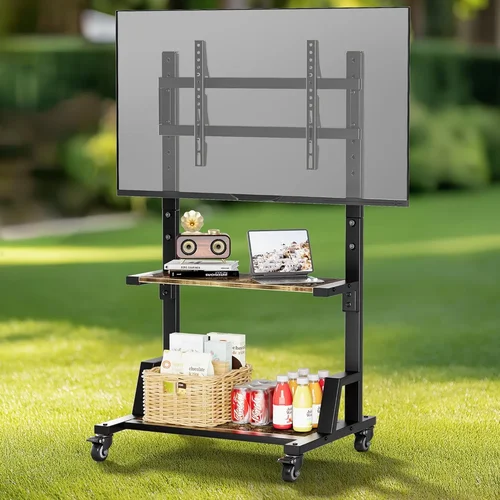
Also consider mounting options: wall mounts, ceiling brackets, or articulating arms. Ensure your chosen TV is VESA-compatible (most are) and that your mounting surface can support the weight and allow for ventilation.
6. Energy Efficiency & Heat Management
Outdoor environments can get hot—especially under direct sun or near heated pools. TVs generate their own heat, and without proper ventilation, internal components can overheat, leading to shutdowns or reduced lifespan.
Look for models with passive cooling (no fans) and efficient power consumption. LED-backlit LCDs are generally cooler and more energy-efficient than older plasma or edge-lit designs. Check the Energy Star rating if available—many budget TVs now meet these standards, saving you on electricity and reducing thermal stress.
Avoid placing TVs in enclosed cabinets without airflow. If you must use a media cabinet, ensure it has louvered doors or built-in ventilation fans.
7. Brand Reputation & Reliability
Not all budget TV brands are equal. While you might be tempted by ultra-low prices from lesser-known manufacturers, reliability and long-term support matter—especially for electronics exposed to harsher conditions.
Stick with established brands like TCL, Hisense, Samsung (The Frame or outdoor-compatible models), LG, and Vizio. These companies offer better quality control, more consistent firmware updates, and accessible customer service. TCL and Hisense, in particular, have gained strong reputations for delivering high-value 4K smart TVs with excellent brightness and durability at sub-$500 price points.
Read professional reviews and user feedback focusing on longevity and outdoor performance. A TV that works great indoors may fail within a year outdoors—so prioritize real-world durability over specs alone.
8. Warranty & Return Policy
Outdoor use inherently increases risk, so a solid warranty is crucial. Most budget TVs come with a standard 1-year limited warranty, but some brands offer extended coverage for outdoor use or accidental damage.
Check whether the warranty explicitly covers outdoor installation—some void coverage if used outside. Also, review the return policy: can you test the TV in your actual patio environment and return it if glare or connectivity becomes an issue? Retailers like Best Buy, Amazon, and Costco often have generous return windows (30–90 days), which is invaluable for outdoor setups where lighting conditions vary throughout the day.
Different Types of Budget Patio TVs

Common Buying Mistakes to Avoid
❌ Mistake: Assuming All “Bright” TVs Are Outdoor-Ready
Why it’s bad: Many indoor TVs advertise high brightness (e.g., 600 nits), but lack anti-glare coatings, weather sealing, or proper thermal management. Using them outdoors can lead to screen burn-in, overheating, or moisture damage—even under cover.
What to do instead: Verify that the TV is explicitly rated for semi-outdoor or covered outdoor use. Look for terms like “weather-resistant,” “humidity-tested,” or “designed for patios.” When in doubt, contact the manufacturer.
❌ Mistake: Ignoring Audio Needs
Why it’s bad: Outdoor spaces lack walls to reflect sound, making built-in TV speakers nearly useless beyond a few feet. You’ll strain to hear dialogue during pool parties or windy days.
What to do instead: Budget for a compatible outdoor sound system from day one. Choose a TV with optical or Bluetooth audio output and pair it with weatherproof speakers rated for your climate.
❌ Mistake: Overlooking Mounting & Ventilation Requirements
Why it’s bad: Improper mounting can block airflow, trap heat, or expose cables to water. Enclosed cabinets without ventilation are a common cause of premature TV failure.
What to do instead: Use a VESA-compatible outdoor mount with tilt/swivel options for glare control. Ensure at least 4–6 inches of clearance around the TV for airflow. Use conduit or cable raceways to protect wiring.
❌ Mistake: Buying Based Solely on Price
Why it’s bad: The cheapest TV may save you $100 upfront but cost you $300 in replacements within two years due to corrosion or component failure.
What to do instead: Prioritize value over absolute low cost. A $550 semi-outdoor TV with a 2-year warranty and proven durability often outperforms a $350 indoor model used outdoors.
❌ Mistake: Skipping Real-World Testing
Why it’s bad: Lighting conditions change throughout the day. A TV that looks great at noon may be unwatchable at sunset due to reflections or dimming.
What to do instead: If possible, test the TV during different times of day. Many retailers allow in-home trials or extended return periods—use them wisely.
❌ Mistake: Neglecting Software Updates
Why it’s bad: Smart TV platforms receive regular updates for security, performance, and app compatibility. Outdated firmware can lead to crashes, slow loading, or lost functionality.
What to do instead: Choose brands known for consistent updates (TCL, Samsung, LG). Enable auto-updates and check for firmware patches every few months.
Budget Guidelines: How Much Should You Spend?
Entry-Level ($200–$400): This tier includes standard indoor TVs repurposed for fully covered, shaded patios. Expect 4K resolution, basic smart features, and 400–500 nits brightness. Ideal for renters or temporary setups, but not recommended for long-term outdoor exposure. Best for: occasional use under deep eaves or pergolas.
Mid-Range ($400–$700): The sweet spot for most patio owners. These semi-outdoor models offer 500–700 nits brightness, weather-resistant builds, improved audio outputs, and reliable smart platforms. Brands like TCL (Series 5/6) and Hisense (U6/U7) dominate this space with excellent value. Best for: covered patios, screened-in porches, and pool decks with minimal direct exposure.
Premium ($700–$1,000): For those willing to invest in longevity and performance. These TVs feature fanless cooling, enhanced sealing, wider viewing angles, and often come with extended warranties. Some include built-in heaters for cold climates or anti-reflective glass. Best for: partially exposed areas, coastal regions, or users who want a 5+ year lifespan.
Luxury ($1,000+): Fully weatherproof, commercial-grade outdoor TVs from brands like SunBriteTV or Seura. While beyond strict “budget” scope, they’re worth mentioning for comparison. These are overkill for most residential patios but offer unmatched durability and brightness (1,000+ nits). Best for: open-air installations or high-end outdoor entertainment zones.
Expert Tips for Getting the Best Deal
– Buy During Off-Season: Prices drop significantly in late winter (February–March) and early spring (April) as retailers clear inventory for new models. Avoid summer peaks when demand surges.
– Shop Refurbished or Open-Box: Certified refurbished TVs from reputable sellers (Best Buy, Amazon Renewed) often come with full warranties and save 20–30%. Open-box deals at Costco or Micro Center can yield even deeper discounts.
– Bundle with Accessories: Some retailers offer free mounting hardware, HDMI cables, or streaming devices with TV purchases. Compare total package value, not just TV price.
– Use Price Tracking Tools: Browser extensions like Honey or CamelCamelCamel alert you to price drops on specific models. Set alerts for your target TV and wait for a dip.
– Check Local Classifieds: Gently used patio TVs appear on Facebook Marketplace or Craigslist, especially after pool season ends. Verify functionality and warranty status before buying.
– Negotiate Extended Warranties: If adding a protection plan, ask for discounts—especially if purchasing multiple items. Sometimes they’re free with certain credit cards or store memberships.
– Test Before Finalizing: Use the return window to assess glare, Wi-Fi stability, and audio performance in your actual environment. Don’t rely solely on showroom demos.
– Consider Energy Rebates: Some utilities offer rebates for Energy Star-certified TVs. Check your provider’s website—it could shave $20–$50 off your cost.

Frequently Asked Questions
Q: Can I use a regular indoor TV on my covered patio?
A: Yes—but only if it’s fully protected from rain, splashes, and high humidity. Even then, expect a shorter lifespan due to environmental stress. For best results, choose a model with high brightness and avoid prolonged exposure to morning dew or pool mist.
Q: Do I need a special outdoor TV mount?
A: Not necessarily, but a weather-resistant mount with corrosion-proof hardware is strongly recommended. Standard indoor mounts may rust or degrade over time. Look for powder-coated steel or aluminum brackets rated for outdoor use.
Q: How do I protect my TV from pool chemicals?
A: Saltwater and chlorine vapors are highly corrosive. Install the TV at least 10–15 feet from the pool edge, use a protective cover when not in use, and ensure adequate ventilation to prevent chemical buildup. Rinse mounts and frames occasionally with fresh water.
Q: Will my Wi-Fi reach the patio?
A: It depends on distance and obstacles. Concrete walls, metal roofs, and landscaping can block signals. Test with your phone first. If weak, add a Wi-Fi extender or use a wired Ethernet connection via buried conduit.
Q: Are OLED TVs suitable for outdoor use?
A: Generally no. OLEDs are more susceptible to burn-in from static outdoor signage or bright skies and often lack the peak brightness needed for daylight viewing. Stick with QLED or high-nit LED/LCD for patios.
Q: Can I leave my patio TV on all day?
A: Continuous operation increases heat buildup and wear. Most modern TVs can handle 8–12 hours daily, but allow cooling periods. Use a timer or smart plug to automate shutoff during off-hours.
Q: What’s the difference between “weather-resistant” and “waterproof”?
A: Weather-resistant means protected against humidity, dust, and light splashes—ideal for covered areas. Waterproof (IP65 or higher) implies full protection against jets of water, required only for open-air installations.
Q: Should I get a curved screen for outdoor viewing?
A: No. Curved screens exacerbate glare and reduce off-axis visibility—both problematic outdoors. Flat panels offer better group viewing and easier mounting.
Q: How often should I clean my outdoor TV?
A: Wipe the screen weekly with a microfiber cloth and mild cleaner (avoid ammonia). Clean vents and ports monthly to prevent dust buildup. Never spray liquids directly on the TV.
Our Final Recommendations
Best for Budget-Conscious Buyers: TCL 5-Series (50S555) – At under $400, this 50″ 4K QLED delivers 600+ nits brightness, Roku TV integration, and solid build quality. Perfect for shaded patios with minimal exposure.
Best Overall Value: Hisense U7G (55U7G) – Priced around $550, this 55″ model offers 700 nits, Dolby Vision, and excellent color accuracy. Its sealed design and wide viewing angle make it ideal for poolside gatherings.
Best Premium Option: Samsung The Terrace (55″) – While nearing $1,000, this semi-outdoor model features 2,000 nits brightness, anti-reflective coating, and IP55 rating. Ideal for partially exposed luxury patios.
Best for Beginners: LG UQ75 (43UQ7500) – Simple setup, intuitive webOS interface, and reliable performance under $350. Great for first-time outdoor TV users.
Best for Advanced Users: Sony X85K (65″) – With XR Triluminos Pro and robust thermal management, this model handles dynamic outdoor lighting beautifully. Best paired with a high-end outdoor audio system.
Conclusion: Making the Right Choice
Choosing a budget TV for your patio or pool area doesn’t have to mean compromising on quality or durability. By focusing on brightness, weather resistance, smart functionality, and real-world usability, you can find a model that enhances your outdoor lifestyle without overspending. Remember: the cheapest option isn’t always the most cost-effective long-term. Invest wisely in a TV that matches your environment, usage patterns, and entertainment needs.
Prioritize your must-have features—whether that’s glare-free viewing, seamless streaming, or compatibility with outdoor speakers—and don’t hesitate to test before you commit. With the insights from this guide, you’re equipped to make a confident, informed decision that delivers years of enjoyment by the pool or under the stars.
Now’s the time to upgrade your outdoor space. Browse our top picks, compare prices, and get ready to enjoy movie nights, game days, and sunset shows in comfort and style—all within your budget.

