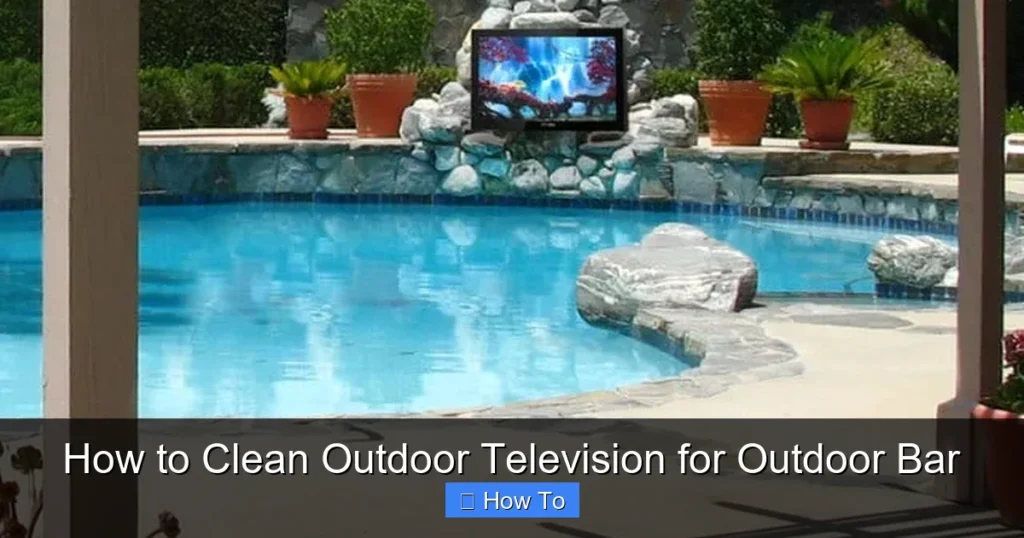
Installing a patio TV on a small patio can transform your outdoor space into a cozy entertainment zone. This guide walks you through choosing the right TV, mounting it safely, managing cables, and ensuring weather protection—all tailored for compact areas.
Key Takeaways
- Choose an outdoor-rated TV: Standard indoor TVs aren’t built to handle sun, rain, or temperature changes. Look for models labeled “outdoor,” “all-weather,” or “patio-safe.”
- Measure your space first: Small patios require compact setups. Measure wall space, seating distance, and sun exposure to pick the right TV size and placement.
- Use a weatherproof mount: A sturdy, corrosion-resistant mount ensures your TV stays secure and protected from the elements.
- Plan cable management early: Hide wires with conduits or raceways to prevent tripping hazards and keep your patio looking clean.
- Protect against glare and weather: Install in a shaded area or use a glare-reducing screen. Cover the TV when not in use if it’s not fully weatherproof.
- Test before finalizing: Power on the TV and check signal strength, sound, and viewing angle before securing everything permanently.
- Consider a soundbar or outdoor speakers: Built-in TV speakers often lack volume outdoors. Add external audio for a better experience.
How to Install Patio TV for Small Patio
Imagine sipping your morning coffee or hosting a summer barbecue while enjoying your favorite show under the open sky. With the right setup, your small patio can become a cozy outdoor living room—complete with a patio TV. But installing a TV outside isn’t as simple as mounting one indoors. You need to consider weather, space, glare, and safety.
This guide will walk you through every step of installing a patio TV on a small patio, from choosing the right television to securing it safely and managing cables. Whether you have a tiny balcony, a compact courtyard, or a modest backyard deck, these tips will help you create a stylish and functional outdoor entertainment space.
By the end of this guide, you’ll know exactly how to pick the best TV, mount it correctly, protect it from the elements, and enjoy seamless viewing—rain or shine.
Step 1: Assess Your Patio Space
Visual guide about How to Install Patio Tv for Small Patio
Image source: i1.wp.com
Before buying anything, take a close look at your patio. Small spaces require smart planning to avoid clutter and ensure comfort.
Measure the Available Area
Grab a tape measure and note the dimensions of your patio. Pay attention to:
– Wall space for mounting (height and width)
– Distance from seating to the TV (ideal viewing distance is 1.5 to 2.5 times the screen size)
– Sun exposure throughout the day
– Nearby power outlets
For example, if your seating is 6 feet from the wall, a 40- to 50-inch TV is ideal. Anything larger may overwhelm the space or strain your eyes.
Check for Shade and Weather Protection
Direct sunlight can cause glare and overheat your TV. Look for areas under a pergola, awning, or covered porch. If your patio is fully exposed, consider installing a retractable shade or choosing a TV with a high-brightness, anti-glare screen.
Also, note how rain, wind, and dust affect your space. Even “weather-resistant” TVs need some protection. If your patio is open on all sides, you may need a full outdoor enclosure or a TV cover.
Evaluate Power and Connectivity
Make sure you have access to a GFCI (ground fault circuit interrupter) outlet nearby. Outdoor electronics must be plugged into a protected outlet for safety. If the outlet is far away, consult an electrician about extending the circuit or installing a new one.
Also, think about how you’ll connect devices—like a streaming stick, game console, or sound system. Will you run HDMI cables through walls, or use wireless options? Plan this early to avoid last-minute hassles.
Step 2: Choose the Right Patio TV
Not all TVs are created equal—especially for outdoor use. Here’s what to look for when selecting a TV for your small patio.
Outdoor-Rated vs. Indoor TVs
Never use a standard indoor TV outside. They aren’t built to handle moisture, temperature swings, or UV exposure. Instead, choose one of these options:
– **Full Outdoor TVs:** Designed for permanent outdoor use. They’re sealed against rain, dust, and extreme temps. Brands like SunBrite, Samsung Terrace, and LG Outdoor are top choices.
– **Partial Sun/All-Weather TVs:** Ideal for covered patios. They resist moisture and glare but shouldn’t be exposed to direct rain.
– **Indoor TVs with Outdoor Enclosures:** A budget-friendly option. You buy a regular TV and install it in a weatherproof case. Brands like Seura and Avid offer enclosures, but they add bulk and cost.
For small patios, a partial sun TV is often the best balance of performance and affordability.
Screen Size and Resolution
In a small space, bigger isn’t always better. A 55-inch TV might look impressive, but on a 6-foot-wide wall, it can feel overwhelming. Stick to 40–50 inches for most small patios.
Resolution matters too. Go for at least 4K Ultra HD for sharp, vibrant images. If you plan to stream sports or movies, 4K makes a big difference—even at close range.
Brightness and Anti-Glare Features
Outdoor TVs need high brightness to combat sunlight. Look for a model with at least 700 nits of brightness (indoor TVs typically have 300–400 nits). Some outdoor TVs go up to 2,000 nits—perfect for bright patios.
Anti-glare coatings and matte screens reduce reflections. If your patio gets afternoon sun, this feature is a must.
Smart Features and Connectivity
Most outdoor TVs come with built-in smart platforms like Roku, Android TV, or webOS. This lets you stream Netflix, YouTube, and more without extra devices.
Check the number of HDMI ports, USB inputs, and whether it supports Wi-Fi or Ethernet. For small patios, wireless streaming is often cleaner and easier.
Step 3: Select the Right Mounting Hardware
A secure mount is critical—especially outdoors where wind and vibrations can loosen hardware over time.
Types of Outdoor TV Mounts
– **Fixed Wall Mounts:** Hold the TV flat against the wall. Best for small patios where space is tight.
– **Tilt Mounts:** Allow you to angle the TV up or down. Useful if mounting high or in a shaded area.
– **Full-Motion (Articulating) Mounts:** Let you swivel and extend the TV. Great for flexible viewing but take up more space.
For small patios, a fixed or tilt mount is usually best. They’re compact, sturdy, and less likely to interfere with furniture.
Weatherproof and Corrosion-Resistant Materials
Choose mounts made from powder-coated steel or aluminum. Avoid cheap plastic or untreated metal—they’ll rust quickly.
Look for mounts labeled “outdoor-rated” or “weatherproof.” Brands like Sanus, Peerless, and MantelMount offer reliable options.
Weight and VESA Compatibility
Check your TV’s weight and VESA pattern (the screw hole layout on the back). The mount must support both. Most outdoor mounts handle 50–100 lbs, which covers most patio TVs.
If you’re unsure, check the TV and mount manuals or ask the retailer.
Step 4: Prepare the Mounting Area
Before drilling, make sure your wall can support the TV and mount.
Locate Studs or Use Concrete Anchors
Use a stud finder to locate wall studs. Mounting into studs provides the strongest support. If your patio wall is concrete, brick, or block, use masonry anchors or toggle bolts.
For small patios with siding or drywall, avoid mounting near windows, doors, or vents. These areas may not be structurally sound.
Mark the Mounting Points
Hold the mount against the wall and use a level to ensure it’s straight. Mark the screw holes with a pencil. Double-check measurements—once you drill, there’s no going back.
Drill Pilot Holes
Use a drill bit slightly smaller than your screws or anchors. For wood, drill into the studs. For concrete, use a hammer drill and masonry bit.
Always wear safety goggles and a dust mask when drilling outdoors.
Step 5: Install the Mount and TV
Now it’s time to put everything together.
Attach the Mount to the Wall
Secure the mount using the appropriate screws or anchors. Tighten firmly, but don’t over-torque—this can strip the holes.
Use a level again to confirm the mount is straight. Even a slight tilt can be noticeable on a large screen.
Attach the Mounting Brackets to the TV
Most mounts come with brackets that screw into the VESA holes on the back of the TV. Use the provided screws and a screwdriver.
Be gentle—TVs are delicate. Don’t overtighten the screws.
Hang the TV on the Mount
With a helper, lift the TV and hook it onto the mount. Make sure it’s seated securely. Most mounts have safety locks or screws to prevent accidental detachment.
Double-check that the TV is level and doesn’t wobble.
Step 6: Manage Cables and Wiring
Exposed wires are unsafe and unattractive. Keep them hidden and protected.
Use Conduit or Cable Raceways
Run HDMI, power, and audio cables through a plastic or metal conduit. These can be painted to match your wall and are weather-resistant.
For a cleaner look, install a cable raceway—a flat channel that sticks to the wall and hides wires. Brands like D-Line and Legrand offer easy-to-install options.
Seal Cable Entry Points
If running cables through a wall, use silicone caulk or foam sealant to close gaps. This prevents water, insects, and drafts from entering.
Use Weatherproof Cable Covers
For cables that run along the ground or railing, use UV-resistant cable covers. These protect wires from sun damage and tripping hazards.
Step 7: Connect and Test the System
Before celebrating, make sure everything works.
Plug in and Power On
Connect the TV to power and any devices (like a streaming stick or soundbar). Turn it on and check the picture and sound.
Test Signal Strength and Streaming
If using Wi-Fi, check the signal strength. Outdoor areas can have weak reception. Consider a Wi-Fi extender or mesh network if needed.
Stream a video to test buffering and quality.
Adjust Picture and Sound Settings
Outdoor lighting affects picture quality. Use the TV’s settings to adjust brightness, contrast, and color. Many outdoor TVs have “outdoor mode” presets.
For sound, built-in speakers often lack volume. Consider adding a weatherproof soundbar or outdoor speakers.
Step 8: Protect Your Patio TV
Even the best outdoor TV needs care to last.
Use a TV Cover When Not in Use
If your TV isn’t fully weatherproof, cover it with a breathable, UV-resistant cover. Avoid plastic tarps—they trap moisture and cause mold.
Clean the Screen Regularly
Dust, pollen, and bird droppings can build up. Use a microfiber cloth and screen-safe cleaner. Never use paper towels or harsh chemicals.
Inspect Mounts and Cables Seasonally
Check screws, seals, and cables every few months. Tighten loose parts and replace worn covers.
Troubleshooting Common Issues
TV Won’t Turn On
– Check the power outlet with another device.
– Ensure the GFCI hasn’t tripped.
– Verify all cables are securely connected.
Poor Picture Quality or Glare
– Adjust the TV’s brightness and contrast settings.
– Reposition the TV to avoid direct sunlight.
– Consider a glare-reducing screen protector.
Weak Wi-Fi Signal
– Move your router closer or use a Wi-Fi extender.
– Switch to a 5GHz band if available (less interference).
– Use an Ethernet cable for a wired connection.
TV Overheats
– Ensure the TV has proper ventilation.
– Avoid enclosing it in a tight space.
– Install in a shaded area.
Mount Feels Loose
– Tighten all screws and anchors.
– Check for wall damage or rot.
– Consult a professional if the wall is unstable.
Conclusion
Installing a patio TV on a small patio is a rewarding project that enhances your outdoor lifestyle. With the right TV, mount, and setup, you can enjoy movies, sports, and shows in the fresh air—without sacrificing quality or safety.
Remember to choose an outdoor-rated TV, measure your space, use weatherproof hardware, and manage cables neatly. Protect your investment with regular maintenance, and don’t forget to add great sound for the full experience.
Your small patio doesn’t have to mean small fun. With this guide, you’re ready to create a stylish, functional outdoor entertainment zone that you’ll love for years to come.