Tired of messy cables ruining your small patio’s vibe? This guide shows you simple, effective ways to hide backyard TV cables—from under decking to behind furniture—so you can enjoy a clean, safe outdoor entertainment space.
Key Takeaways
- Plan your cable route first: Map out the shortest, safest path from your TV to the power source and devices to minimize exposure and tripping hazards.
- Use weatherproof cable covers: Choose UV-resistant, waterproof raceways or conduits designed for outdoor use to protect wires from sun, rain, and foot traffic.
- Leverage existing structures: Run cables along railings, under decking, or behind patio furniture to keep them out of sight without major renovations.
- Anchor cables securely: Use outdoor-rated clips, zip ties, or adhesive mounts to prevent sagging, snagging, or damage from wind or pets.
- Test before finalizing: Always check signal strength and power flow after routing cables to avoid frustrating setup issues later.
- Prioritize safety: Never staple cables directly into wood or run them under rugs where they can overheat—use proper channels instead.
- Blend with decor: Paint cable covers to match your patio’s color scheme or tuck them behind plants and decor for a seamless look.
How to Hide Cables Backyard TV for Small Patio
So, you’ve finally set up that dream backyard TV on your cozy small patio—only to realize the dangling power cords, HDMI cables, and speaker wires are turning your serene outdoor oasis into a tripping hazard nightmare. Don’t worry! You’re not alone. Many homeowners face this exact problem, especially in compact spaces where every inch counts.
The good news? Hiding cables for your backyard TV doesn’t require a construction crew or a huge budget. With a little planning, some smart tools, and a few clever tricks, you can keep your patio looking clean, safe, and stylish—all while enjoying your favorite shows under the stars.
In this complete guide, we’ll walk you through step-by-step methods to hide cables for your backyard TV on a small patio. Whether you’re working with a balcony, a concrete slab, or a wooden deck, we’ve got solutions that are practical, affordable, and easy to implement. You’ll learn how to route cables safely, protect them from the elements, and blend them seamlessly into your outdoor decor—all without sacrificing performance or safety.
Let’s get started!
Step 1: Assess Your Patio Layout and Cable Needs
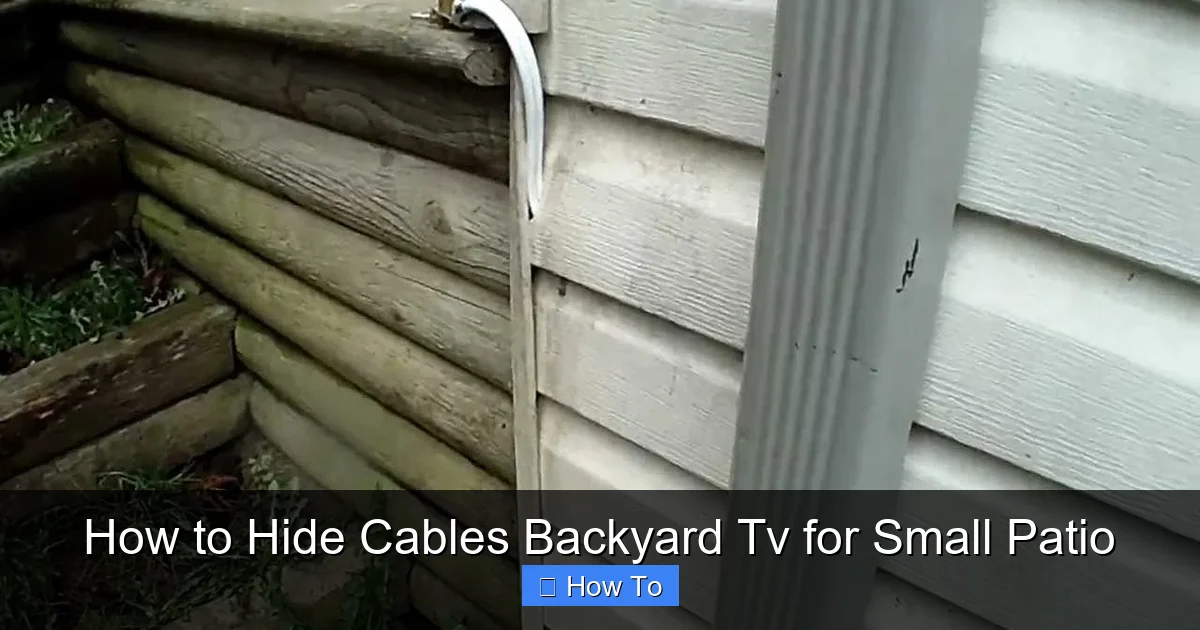
Visual guide about How to Hide Cables Backyard Tv for Small Patio
Image source: i.ytimg.com
Before you buy a single cable cover or drill a hole, take a few minutes to evaluate your space. A small patio may feel limiting, but it actually gives you more control over cable management—if you plan wisely.
Identify All Connected Devices
Start by listing everything that needs to be powered or connected:
– The TV itself
– Streaming device (like Roku, Apple TV, or Fire Stick)
– Soundbar or outdoor speakers
– Cable box or satellite receiver (if applicable)
– Any lighting or smart controls
Each of these devices will need at least one cable—power, HDMI, or audio. Count them up so you know how many wires you’re dealing with.
Map the Shortest Safe Route
Look at your patio layout. Where is the TV mounted? Where is the nearest outdoor outlet? Where are your devices located?
The goal is to find the shortest, most direct path from the TV to the power source and other devices. Avoid crossing high-traffic areas like the main walkway or seating zone. Instead, aim to run cables along walls, under furniture, or along the edge of the deck.
Pro tip: Use a measuring tape to estimate cable length. Always buy cables 1–2 feet longer than needed to allow for slack and easy adjustments.
Check for Obstacles and Hazards
Look for potential problems:
– Is there a railing you can route behind?
– Are there gaps under decking boards?
– Is the floor concrete, wood, or tile?
– Are there plants, furniture, or decor that can help conceal cables?
Also, note any hazards: sharp edges, moisture-prone areas, or spots where pets or kids might chew or trip.
Step 2: Choose the Right Cable Management Tools
Once you’ve mapped your route, it’s time to pick the right tools. Not all cable covers are created equal—especially for outdoor use.
Outdoor-Rated Cable Raceways
These are plastic or metal channels that snap or screw into place along walls or baseboards. They’re perfect for running multiple cables in a clean, hidden line.
Look for raceways labeled “weatherproof” or “UV-resistant.” Brands like D-Line, Legrand, and Cable Conceal offer great outdoor options. They come in white, black, or gray, and many can be painted to match your patio’s color.
Flexible Conduit or Split Loom Tubing
If you’re running cables under decking or along uneven surfaces, flexible conduit is your best friend. It’s a corrugated plastic tube that protects wires from moisture, abrasion, and pests.
Split loom tubing (a type of conduit with a slit along the side) makes it easy to insert cables without disconnecting them. It’s ideal for tight spaces or when you need to add cables later.
Cable Clips and Adhesive Mounts
For quick, no-drill solutions, use outdoor-rated adhesive cable clips. These stick to walls, railings, or furniture and hold individual wires in place.
Choose clips with strong 3M adhesive and UV protection. Avoid cheap plastic clips—they crack in the sun.
For wood or concrete, use screw-in clips. They’re more permanent but offer superior hold in windy conditions.
Underground Cable Channels (for Concrete or Tile)
If your patio is paved, consider surface-mounted cable channels. These are low-profile trays that sit on top of the floor and can be painted or covered with outdoor carpet.
Alternatively, for a more permanent fix, you can cut a shallow groove in concrete (with a masonry saw) and lay conduit inside—then seal it with outdoor caulk. This is more advanced, so only attempt if you’re comfortable with power tools.
Step 3: Route Cables Along Walls and Railings
One of the easiest ways to hide cables on a small patio is to run them along vertical surfaces.
Use Wall-Mounted Raceways
Attach a raceway from the TV mount down to the outlet or device location. Most raceways come with mounting screws or strong adhesive.
Start at the top near the TV and work your way down. Keep the raceway straight and level. If it crosses a corner, use a corner piece or gently bend flexible raceway.
Paint the raceway to match your wall or fence for a nearly invisible look.
Clip Cables to Railings
If your patio has a railing, use zip ties or adhesive clips to secure cables along the underside or back side. This keeps them out of sight and away from foot traffic.
For a cleaner look, wrap the cables in spiral wrap or loom tubing before clipping—this protects them and makes them easier to manage.
Tuck Behind Outdoor Panels or Screens
Do you have a privacy screen, lattice, or decorative panel? Run cables behind it. The texture and shadows will hide the wires completely.
Just make sure the panel is securely mounted and won’t shift in the wind.
Step 4: Hide Cables Under Decking or Furniture
For patios with wooden decking, you have a hidden advantage: space underneath.
Run Cables Under the Deck
Lift a few deck boards (if removable) and feed cables through the gap. Use flexible conduit to protect the wires from moisture and critters.
Secure the conduit to the joists with zip ties or clips. Then replace the deck boards.
This method keeps cables completely out of sight and safe from foot traffic.
Use Furniture as a Cable Shield
Place a storage bench, planter box, or outdoor cabinet near the TV. Run cables behind or underneath it.
For example, a weatherproof storage bench can hide a power strip and streaming device while also providing seating.
Just ensure there’s enough airflow around electronics to prevent overheating.
Create a Cable Channel Under a Rug (Carefully)
If you have an outdoor rug, you can run a flat, low-profile cable cover underneath—but only if it’s designed for this purpose.
Never run standard cables under a rug. They can overheat, get damaged, or become a fire hazard.
Instead, use a flat, ventilated cable ramp made for outdoor use. These are wide, low, and have open sides for airflow.
Step 5: Protect Cables from Weather and Wear
Outdoor cables face sun, rain, wind, and temperature swings. Protection is non-negotiable.
Use Weatherproof Conduit for Exposed Runs
Any cable running along the ground or across open areas should be inside UV-resistant conduit. This prevents cracking, fading, and water damage.
PVC conduit is affordable and easy to cut, but make sure it’s rated for outdoor use.
Seal Connections with Outdoor Electrical Tape
Wrap cable connections (like HDMI or power plugs) with electrical tape rated for outdoor use. This adds a layer of moisture protection.
For extra security, use silicone sealant around plug ends—just don’t block ventilation.
Elevate Cables Off the Ground
Never let cables sit directly on wet concrete or soil. Moisture can seep in and cause shorts or corrosion.
Use cable ramps, clips, or conduit to keep wires at least 1–2 inches above the ground.
Install a GFCI Outlet
If you don’t already have one, install a Ground Fault Circuit Interrupter (GFCI) outlet near your TV setup. It shuts off power if it detects a leak—critical for outdoor safety.
Most outdoor outlets should be GFCI-protected by code, but it’s worth double-checking.
Step 6: Test and Secure Your Setup
Before you call it a day, make sure everything works—and stays that way.
Power On and Check Signals
Turn on the TV and all connected devices. Test the picture, sound, and internet connection.
If the signal is weak or cuts out, the cable may be bent too tightly or damaged. Re-route if needed.
Tighten All Clips and Fasteners
Give every clip, screw, and adhesive mount a gentle tug. Make sure nothing is loose or sagging.
Loose cables can snag, break, or become tripping hazards.
Add Labels for Future Maintenance
Use waterproof labels or tags to mark what each cable does (e.g., “HDMI to Soundbar,” “Power to Fire Stick”). This saves time if you need to troubleshoot or upgrade later.
Step 7: Blend Cables into Your Patio Decor
The final touch: make your cable solution look intentional—not like an afterthought.
Paint Cable Covers to Match
Most raceways and conduits can be painted with outdoor spray paint. Match them to your wall, fence, or deck color.
Use a primer first for better adhesion, especially on plastic.
Tuck Cables Behind Plants and Decor
Use tall potted plants, trellises, or outdoor art to block the view of cables. A large fern or bamboo screen can hide a raceway perfectly.
Just avoid covering vents or blocking airflow around electronics.
Use Cable Sleeves for a Clean Look
If you have multiple loose cables, bundle them in a fabric or spiral cable sleeve. Choose a color that blends with your patio (like gray, beige, or green).
This reduces visual clutter and protects wires from tangling.
Troubleshooting Common Cable Hiding Problems
Even with the best plan, issues can pop up. Here’s how to fix them.
Cables Keep Snapping Out of Clips
This usually means the clips aren’t strong enough or the adhesive failed. Switch to screw-in clips or use a stronger adhesive like outdoor-rated epoxy.
Also, check if the cable is too thick—some clips only fit certain sizes.
Signal Drops After Routing
Long cable runs or tight bends can weaken HDMI or Ethernet signals. Use a signal booster or switch to a higher-quality cable (like HDMI 2.1).
Avoid running power cables parallel to signal cables—they can cause interference.
Water Seeping into Conduit
If moisture builds up inside conduit, it may not be sealed properly. Add drip loops (a downward curve in the cable) before it enters the conduit to let water drip off.
Also, use waterproof end caps or silicone sealant at entry points.
Adhesive Mounts Falling Off
Outdoor adhesives can fail in heat or humidity. Clean the surface with rubbing alcohol before applying, and let it cure for 24 hours.
For high-stress areas, use mechanical fasteners instead.
Bonus Tips for Small Patios
Small spaces require smart thinking. Here are a few extra ideas:
– Use a wireless sound system: Eliminate speaker cables entirely with Bluetooth or Wi-Fi speakers.
– Mount the TV closer to the outlet: Reduce cable length by placing the TV near a power source.
– Choose a streaming stick over a box: Devices like Fire Stick or Chromecast use fewer cables and can be hidden behind the TV.
– Go cordless where possible: Use rechargeable outdoor lights or battery-powered speakers to cut down on wires.
Conclusion
Hiding cables for your backyard TV on a small patio isn’t just about aesthetics—it’s about safety, functionality, and enjoying your outdoor space to the fullest. With the right tools and a bit of planning, you can turn a tangled mess into a clean, professional-looking setup that blends seamlessly into your patio.
Remember: start with a plan, use weatherproof materials, route cables safely, and test everything before finalizing. Whether you’re using raceways, conduit, or clever furniture placement, the goal is the same—a beautiful, hazard-free outdoor entertainment area.
So grab your tools, follow these steps, and get ready to enjoy movie nights, game days, and sunset shows—without the eyesore of dangling wires. Your small patio deserves to shine, cable-free.