
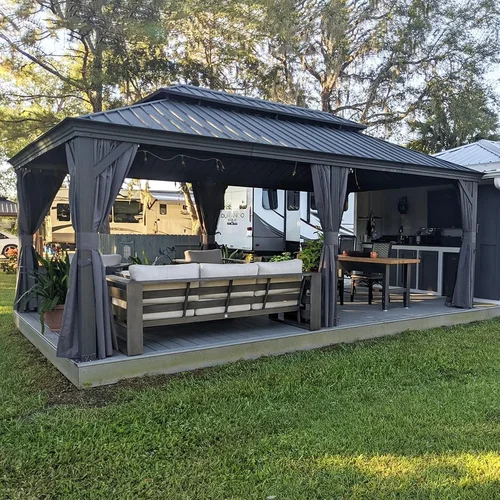
Choosing the right TV for your gazebo or outdoor patio isn’t just about picking a screen that fits on the wall. It’s about finding a display that can withstand the elements, deliver crisp visuals in bright daylight, and still offer the smart features you’ve come to expect from modern indoor TVs. Whether you’re hosting summer barbecues, watching the big game under string lights, or enjoying a quiet evening movie night under the stars, your outdoor TV needs to do more than just play content—it needs to perform reliably in conditions most indoor models aren’t built to handle.
This guide is designed to cut through the noise and help you make a confident, informed decision. We’ll walk you through every critical factor—from weather resistance and brightness to connectivity and smart platform performance—so you don’t end up with a TV that fades in sunlight or fails after the first rainstorm. You’ll learn how to balance budget with performance, understand the differences between outdoor-rated and indoor TVs used outdoors, and discover which brands truly deliver on their promises. By the end, you’ll know exactly what to look for, what to avoid, and how to get the best value for your investment.
The outdoor TV market has evolved dramatically in recent years. What once meant bulky, expensive all-weather enclosures is now a landscape of sleek, purpose-built outdoor displays from trusted electronics brands. Companies like Samsung, LG, Sony, and specialized players like SunBriteTV and Seura have introduced models specifically engineered for patios, gazebos, and covered outdoor spaces. These aren’t just indoor TVs in a box—they’re built with enhanced cooling, anti-glare screens, weatherproof components, and robust mounting systems. With options ranging from budget-friendly partial-outdoor models to premium 4K HDR displays capable of surviving full sun exposure, there’s never been a better time to upgrade your outdoor entertainment setup.

What to Look for When Buying Buying Guide
1. Weather Resistance & IP Rating
One of the most critical factors when selecting a TV for your gazebo or patio is its ability to resist moisture, dust, temperature swings, and UV exposure. Unlike indoor TVs, outdoor models must be built to endure real-world conditions—even in covered areas where humidity, rain splash, and morning dew are common.
Look for TVs with an official IP (Ingress Protection) rating. This two-digit code tells you exactly how well the device resists solids (like dust) and liquids (like rain). For example, an IP55 rating means the TV is protected against dust (limited ingress) and low-pressure water jets from any direction. For fully covered gazebos, an IP55 rating is usually sufficient. However, if your space is partially exposed or located in a region with heavy rainfall or high humidity, consider models with IP65 or higher ratings for full dust-tight protection and resistance to water jets.
Beyond the IP rating, examine the TV’s internal design. Outdoor-rated TVs often feature sealed ventilation systems, corrosion-resistant circuit boards, and specialized gaskets around ports and connectors. These details prevent moisture from seeping into sensitive components. Avoid using standard indoor TVs outdoors—even under cover—unless they’re housed in a certified outdoor enclosure, which adds cost and complexity.
2. Brightness & Anti-Glare Performance
Sunlight is the enemy of screen visibility. Even in a shaded gazebo, ambient light can wash out colors and make content hard to see. That’s why outdoor TVs must deliver significantly higher brightness than their indoor counterparts. While a typical living room TV operates at around 300–500 nits, outdoor models should offer at least 700 nits—and ideally 1,000 nits or more—for clear viewing in daylight.
Look for TVs with high peak brightness and advanced anti-reflective coatings. These coatings reduce glare from windows, water features, or nearby lighting, ensuring the screen remains readable even when the sun hits it at an angle. Some premium models use optically bonded glass, which minimizes air gaps between the LCD layer and the outer glass, further reducing reflections and improving contrast.
HDR (High Dynamic Range) support is also essential. HDR enhances color depth, contrast, and detail, making outdoor viewing feel more immersive. However, HDR only works effectively if the TV can sustain high brightness levels. A TV that claims HDR but peaks at 400 nits won’t deliver the intended experience outdoors.
Finally, consider the screen finish. Matte finishes are preferable for outdoor use because they diffuse light rather than reflecting it like glossy screens. Avoid TVs with highly reflective surfaces unless you’re certain your gazebo offers consistent shade.
3. Build Quality & Durability
Outdoor environments are tough on electronics. Temperature fluctuations, humidity, insects, and even bird droppings can damage poorly constructed TVs. That’s why build quality matters more outdoors than indoors.
Start with the chassis. Look for TVs with metal frames or reinforced polymer casings instead of thin plastic. Metal provides better heat dissipation and structural integrity, while high-grade polymers resist UV degradation and cracking over time. Pay attention to port covers—outdoor TVs should have rubberized or hinged covers over HDMI, USB, and power inputs to keep moisture out.
Internal components are equally important. Outdoor-rated TVs often use conformal-coated circuit boards, which are sprayed with a protective layer to prevent corrosion. They may also include enhanced cooling systems, such as passive heat sinks or quiet fans, to manage internal temperatures without relying on open vents that could let in dust or water.
Mounting hardware should also be robust. Many outdoor TVs come with VESA-compatible brackets designed for secure wall or ceiling mounting. Ensure the mount is rated for outdoor use and can support the TV’s weight, especially in windy areas. Some models include built-in leveling systems or anti-theft features for added peace of mind.
4. Smart Features & Connectivity
Just because a TV lives outside doesn’t mean it should lack modern conveniences. Today’s best outdoor TVs come equipped with full smart platforms, allowing you to stream Netflix, YouTube, Disney+, and more without needing an external device.
Check which operating system the TV uses. Samsung’s Tizen, LG’s webOS, and Google TV (found in Sony and TCL models) are among the most user-friendly and regularly updated platforms. Avoid obscure or discontinued systems that may lose app support over time. Also, verify that the TV supports Wi-Fi 5 (802.11ac) or Wi-Fi 6 for reliable streaming, especially if your outdoor space is far from the router.
Connectivity options are crucial. Look for at least three HDMI ports (preferably HDMI 2.0 or 2.1 for 4K/60Hz), USB ports for media playback, and an Ethernet port for wired internet if Wi-Fi is spotty. Some models include built-in Bluetooth for wireless audio to outdoor speakers or headphones.
Voice control is another nice-to-have. Many outdoor TVs support Alexa, Google Assistant, or Siri, letting you change channels or adjust volume without reaching for a remote—perfect when you’re lounging in a chair or grilling nearby.
5. Size & Viewing Distance
Choosing the right screen size depends on how far viewers will sit from the TV and the layout of your gazebo. A TV that’s too small will be hard to see from a distance, while one that’s too large can overwhelm the space and strain the eyes.
As a general rule, multiply your viewing distance (in inches) by 0.84 to get the ideal screen diagonal in inches. For example, if your seating area is 10 feet (120 inches) away, a 100-inch screen (120 × 0.84 ≈ 101) would be optimal. However, outdoor settings often allow for larger screens because ambient light reduces perceived sharpness—so you can go slightly bigger than you might indoors.
Consider the gazebo’s dimensions. A narrow space may not accommodate a 75-inch TV without blocking walkways or feeling cramped. Measure the wall or mounting area carefully, including clearance for ventilation and cable management. Also, think about sightlines: will people be viewing the TV from multiple angles? If so, choose a model with wide viewing angles (IPS or OLED panels perform best here).
Portability is another factor if you plan to move the TV between indoor and outdoor use. Some hybrid models are lightweight and come with carrying handles, but true outdoor TVs are typically heavier and designed for permanent installation.
6. Audio Quality & Speaker Options
Most outdoor TVs have built-in speakers, but don’t expect theater-level sound from them. The compact design and weatherproofing often limit audio performance, resulting in tinny or quiet output—especially in open-air environments where sound dissipates quickly.
If you plan to rely on the TV’s internal speakers, look for models with at least 20W of total power and support for Dolby Audio or DTS:X. Some premium outdoor TVs include front-firing speakers or bass radiators to improve clarity and depth.
However, for the best experience, we recommend pairing your outdoor TV with a dedicated sound system. Weather-resistant outdoor speakers, soundbars, or wireless Bluetooth speakers can dramatically enhance audio quality. Many outdoor TVs include optical audio outputs, RCA jacks, or Bluetooth for easy connection.
Keep in mind that local noise ordinances may restrict loud volumes, especially in residential areas. Test your setup at a reasonable level to ensure it’s enjoyable without disturbing neighbors.
7. Brand Reputation & Reliability
Not all outdoor TV brands are created equal. While major consumer electronics companies like Samsung and LG now offer outdoor models, specialized manufacturers like SunBriteTV, Seura, and Avid Power have decades of experience building displays for harsh environments.
Research brand reputation by reading professional reviews, customer testimonials, and forum discussions. Look for consistent feedback about longevity, customer service, and real-world performance. Brands that offer extended warranties or on-site repair services often stand behind their products more confidently.
Avoid unknown brands selling “outdoor-ready” TVs at suspiciously low prices. These may be rebranded indoor models with minimal weatherproofing, putting your investment at risk. Stick with companies that provide detailed specifications, clear installation guides, and responsive support.
8. Warranty & Support
Outdoor TVs are a significant investment, so robust warranty coverage is essential. Most reputable brands offer at least a one-year limited warranty, but many extend this to two or three years for outdoor models. Some even provide five-year coverage on critical components like the display panel.
Read the fine print. Does the warranty cover damage from moisture, temperature extremes, or power surges? Is accidental damage included? Can you get service locally, or do you need to ship the TV back? Look for brands that offer expedited replacement programs or loaner units during repairs.
Customer support quality matters too. Can you reach a human quickly? Are technicians knowledgeable about outdoor installations? Check online reviews for insights into post-purchase experiences. A great TV is only as good as the support behind it.
Different Types of Buying Guide

Common Buying Mistakes to Avoid
❌ Mistake: Using an Indoor TV Outdoors Without Protection
Why it’s bad: Indoor TVs aren’t designed to handle moisture, dust, or temperature changes. Even under a covered gazebo, condensation can form inside the unit, leading to corrosion, short circuits, or complete failure within months.
What to do instead: Either purchase a purpose-built outdoor TV or invest in a certified outdoor enclosure rated for your climate. Don’t assume “it’s just under cover” is safe—humidity alone can ruin electronics.
❌ Mistake: Ignoring Brightness Requirements
Why it’s bad: A TV with low brightness will look washed out in daylight, making it unusable during the day. You’ll end up watching everything at night, defeating the purpose of an outdoor setup.
What to do instead: Choose a model with at least 700 nits of brightness, and ideally 1,000+ nits if your gazebo gets direct sun. Check reviews that mention real-world visibility, not just specs.
❌ Mistake: Overlooking Mounting and Ventilation Needs
Why it’s bad: Improper mounting can cause overheating, water ingress, or even structural failure. Some outdoor TVs require specific clearances for airflow—blocking these voids the warranty and risks damage.
What to do instead: Follow the manufacturer’s installation guide precisely. Use only recommended mounts and ensure adequate space around the TV for ventilation and cable routing.
❌ Mistake: Choosing Based Solely on Price
Why it’s bad: The cheapest outdoor TV may lack essential features like proper weather sealing, sufficient brightness, or reliable smart functionality. You could end up replacing it within a year.
What to do instead: Focus on value, not just cost. A mid-range model with strong reviews and a solid warranty often outperforms a bargain bin option in the long run.
❌ Mistake: Neglecting Audio Planning
Why it’s bad: Built-in speakers on outdoor TVs are often weak and muffled. Without external audio, your movie nights or sports events will lack immersion and clarity.
What to do instead: Budget for outdoor speakers or a soundbar from day one. Test audio options before finalizing your purchase to ensure compatibility and performance.
❌ Mistake: Assuming All “Outdoor” TVs Are Equal
Why it’s bad: Some brands label indoor TVs as “outdoor-ready” with minimal modifications. These may lack true weatherproofing or durability.
What to do instead: Verify the IP rating, read independent reviews, and confirm the TV is specifically engineered for outdoor use—not just marketed that way.
❌ Mistake: Skipping the Warranty Check
Why it’s bad: Outdoor TVs face harsher conditions than indoor ones. If something goes wrong, a weak warranty could leave you paying for expensive repairs or replacements.
What to do instead: Choose a brand with at least a 2–3 year warranty that covers environmental damage. Consider extended coverage if available.
Budget Guidelines: How Much Should You Spend?
- Entry-Level ($800–$1,500): These are typically partial-outdoor models suitable for fully covered gazebos. Expect 4K resolution, 700–1,000 nits brightness, basic smart features, and IP55 ratings. Brands like TCL and Hisense offer competitive options in this range. Ideal for casual viewers who prioritize affordability over extreme durability.
- Mid-Range ($1,500–$3,500): This is the sweet spot for most homeowners. You’ll find TVs with 1,000+ nits brightness, robust weather sealing (IP55 or IP65), premium smart platforms (Google TV, webOS), and better audio. Models from Samsung, LG, and SunBriteTV fall here. Great balance of performance, features, and longevity.
- Premium ($3,500–$6,000): Designed for serious outdoor entertainers. These TVs offer OLED or QLED panels, 1,500+ nits brightness, advanced anti-glare tech, and commercial-grade durability. Often include extended warranties, professional installation support, and seamless integration with home automation systems.
- Luxury ($6,000+): Top-tier all-weather displays built for open-air environments or commercial use. Features include 24/7 operation capability, vandal-resistant casings, remote monitoring, and ultra-high brightness (2,000+ nits). Brands like Seura and Peerless offer these for luxury homes, resorts, or public venues.
Expert Tips for Getting the Best Deal
- Buy during off-season sales: Outdoor TVs see peak demand in spring and summer. Shop in late fall or winter (October–February) for discounts of 15–30% as retailers clear inventory.
- Compare bundled packages: Some retailers offer TV + mount + speaker bundles at a lower total cost than buying separately. Check if the included accessories meet your needs.
- Consider refurbished or open-box units: Certified refurbished outdoor TVs from reputable sellers often come with full warranties and can save you hundreds. Ensure they’re inspected and include original accessories.
- Negotiate installation services: Many dealers provide free or discounted professional installation with purchase—especially for higher-end models. Don’t hesitate to ask.
- Check for local rebates or incentives: Some utility companies or green building programs offer rebates for energy-efficient outdoor electronics. It’s worth a quick search.
- Read return policies carefully: Outdoor TVs are heavy and expensive to return. Ensure the retailer offers at least a 30-day return window and covers return shipping for defective units.
- Test before finalizing: If possible, visit a showroom to see the TV in bright lighting. Compare side-by-side models for brightness, color accuracy, and glare resistance.
- Register your warranty immediately: Some brands require registration within 30 days to activate full coverage. Do this as soon as you unbox the TV.

Frequently Asked Questions
Q: Can I use a regular indoor TV in my gazebo if it’s covered?
A: Technically yes, but it’s not recommended. Even covered spaces experience humidity, temperature swings, and occasional moisture. Without proper ventilation and sealing, indoor TVs can fail prematurely. If you must use an indoor model, invest in a certified outdoor enclosure with active cooling and drainage.
Q: Do outdoor TVs need special power outlets?
A: Most outdoor TVs use standard 120V AC power and plug into regular outlets. However, ensure the outlet is GFCI-protected (required by code for outdoor use) and located within reach of the TV with proper cable management. Avoid extension cords if possible.
Q: How do I protect my outdoor TV from theft?
A: Use anti-theft mounting brackets, install the TV high on the wall, and consider security cameras or motion sensors. Some models include Kensington lock slots or built-in alarms. For high-risk areas, choose a commercial-grade display with tamper-resistant features.
Q: Will an outdoor TV work in winter or cold climates?
A: Yes, but check the operating temperature range. Most outdoor TVs function from -22°F to 122°F (-30°C to 50°C). Avoid turning the TV on immediately after extreme cold exposure—let it acclimate to ambient temperature first to prevent condensation.
Q: Can I connect gaming consoles or streaming devices?
A: Absolutely. Outdoor TVs have full HDMI and USB support. Just ensure your devices are also protected from the elements or placed in a weatherproof media box nearby.
Q: Do outdoor TVs consume more power?
A: Slightly, due to higher brightness and enhanced cooling. However, modern LED models are still energy-efficient. Look for ENERGY STAR certification to minimize electricity use.
Q: How often do outdoor TVs need maintenance?
A: Minimal. Wipe the screen with a microfiber cloth monthly and check port covers for debris. No internal cleaning is needed if the TV is properly sealed.
Q: Are outdoor TVs compatible with solar power?
A: Some portable models support 12V DC input and can run on solar generators. Full-size outdoor TVs typically require AC power, but you can use an inverter with a solar battery system.
Q: What’s the lifespan of an outdoor TV?
A: With proper care, most outdoor TVs last 7–10 years. Premium models with commercial-grade components may exceed 10 years. Indoor TVs used outdoors often fail within 2–3 years.
Q: Can I mount an outdoor TV on a ceiling or under a roof overhang?
A: Yes, as long as the mount is rated for the TV’s weight and the location allows for proper ventilation and viewing angles. Tilt mounts are ideal for ceiling installations to reduce neck strain.
Our Final Recommendations
- Best for Budget-Conscious Buyers: TCL 6-Series Outdoor (55″) – Offers 1,000 nits brightness, IP55 rating, Google TV, and excellent value under $1,200. Perfect for covered gazebos.
- Best Overall Value: Samsung The Terrace Partial-Outdoor (65″) – Combines QLED color, 1,500 nits brightness, IP55 protection, and Tizen OS. Priced around $2,800, it’s a reliable all-rounder.
- Best Premium Option: SunBriteTV Veranda Series (75″) – Built for full outdoor use with IP65 rating, 2,000 nits brightness, and military-grade durability. Ideal for open patios and luxury setups (~$5,500).
- Best for Beginners: LG Outdoor OLED (55″) – Features perfect blacks, wide viewing angles, and webOS simplicity. Great for those new to outdoor TVs who want stunning picture quality (~$3,200).
- Best for Advanced Users: Seura Shadowbox Outdoor TV (85″) – Ultra-slim design with motorized lift system, 4K HDR, and full weatherproofing. Designed for seamless integration into high-end outdoor living spaces (~$12,000).
Conclusion: Making the Right Choice
Investing in an outdoor TV for your gazebo is about more than entertainment—it’s about enhancing your lifestyle, creating memorable experiences, and extending your living space into the great outdoors. But not all TVs are built to thrive in these conditions. By focusing on weather resistance, brightness, build quality, and smart functionality, you can find a display that delivers years of reliable performance, rain or shine.
Remember, the cheapest option isn’t always the best long-term value. Prioritize your specific needs: Do you need full sun visibility? Will the TV face extreme temperatures? How important is audio quality? Answering these questions will guide you toward the right model within your budget.
Don’t rush the decision. Take time to compare brands, read real user reviews, and consult with professionals if needed. And when you do buy, protect your investment with proper installation, regular maintenance, and a solid warranty.
Your perfect outdoor TV is out there—ready to transform your gazebo into a year-round entertainment hub. With the insights from this guide, you’re equipped to choose wisely, avoid common pitfalls, and enjoy countless hours of outdoor viewing pleasure. Now go make that backyard the envy of the neighborhood.

