
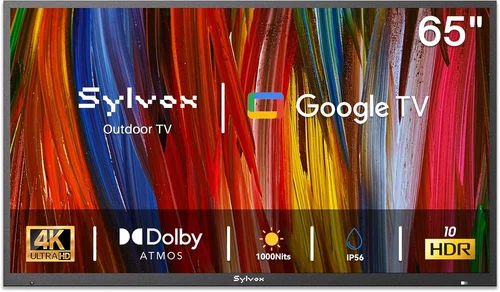
Garden TVs have become one of the most exciting additions to outdoor living spaces in recent years. Whether you’re hosting a summer barbecue, enjoying a quiet evening under the stars, or watching your favorite sports team with friends on the deck, having a reliable television outdoors transforms your backyard into a true entertainment hub. But here’s the catch: not all TVs are built to handle the challenges of outdoor use. Sunlight glare, humidity, temperature swings, and even dust can quickly ruin a standard indoor TV. That’s why investing in a garden TV—specifically designed for outdoor conditions—is essential if you want long-term performance and peace of mind.
This comprehensive buying guide is designed to help you navigate the growing market of affordable outdoor televisions without sacrificing quality or durability. We’ll walk you through everything you need to know, from understanding key technical specifications to comparing different types of garden TVs, avoiding common pitfalls, and finding the best value within your budget. Whether you’re a first-time buyer or upgrading from an older model, this guide will equip you with expert-level insights to make a smart, informed decision. By the end, you’ll know exactly what to look for, how much to spend, and which models offer the best blend of performance, protection, and price.
The outdoor TV market has evolved rapidly over the past few years. What once required custom-built enclosures or expensive all-weather cabinets now includes a growing range of purpose-built garden TVs that are both affordable and highly functional. Major brands like Samsung, LG, Sony, and specialized outdoor manufacturers such as SunBriteTV and Seura have introduced models that balance weather resistance with modern smart features. At the same time, budget-friendly options from brands like TCL, Hisense, and Vizio—when paired with proper outdoor enclosures—have made it possible to enjoy high-definition outdoor viewing without breaking the bank. This guide cuts through the noise to help you find the right solution for your deck, patio, or garden setup.

What to Look for When Buying a Garden TV
1. Weather Resistance & IP Rating
When it comes to outdoor electronics, weather resistance isn’t just a nice-to-have—it’s non-negotiable. A garden TV must withstand rain, snow, humidity, dust, and temperature extremes. The most reliable way to assess this is by checking the TV’s Ingress Protection (IP) rating. This two-digit code indicates how well the device resists solids (like dust) and liquids (like water). For outdoor use, look for a minimum IP55 rating, which means the TV is protected against dust ingress and low-pressure water jets from any direction. Ideally, aim for IP65 or higher—this ensures full dust protection and resistance to water projected from a nozzle, making it safe for year-round use in most climates.
Many budget garden TVs claim to be “weather-resistant,” but that term can be misleading. Some manufacturers simply coat internal components or use basic seals, which may fail over time. True outdoor TVs are built with sealed casings, corrosion-resistant materials, and internal climate control systems (like heaters and fans) to maintain optimal operating temperatures. For example, SunBriteTV’s Veranda series features an IP55-rated design with a built-in cooling fan and anti-reflective screen, making it ideal for covered decks. If you’re considering a standard indoor TV in an outdoor enclosure, ensure the enclosure itself has a high IP rating and proper ventilation to prevent overheating.
2. Screen Brightness & Anti-Glare Technology
One of the biggest challenges of outdoor viewing is screen visibility in bright sunlight. A typical indoor TV has a brightness of around 300–400 nits, which is fine for a dimly lit living room but nearly invisible on a sunny deck. For outdoor use, you need a display with significantly higher brightness—ideally 700 nits or more. Many garden TVs now feature high-brightness LED or OLED panels specifically engineered for outdoor environments. For instance, the LG Outdoor OLED series delivers up to 1,000 nits of peak brightness, ensuring clear images even at midday.
Equally important is anti-glare technology. Reflections from the sun or nearby surfaces can wash out the picture, making it hard to see details. Look for TVs with matte or anti-reflective coatings that diffuse light rather than reflecting it. Some models also include optical bonding—a process where the screen layers are fused together to reduce internal reflections and improve clarity. This is especially useful in partially shaded areas where ambient light still causes glare. Don’t forget to consider the viewing angle: a wide viewing angle (178 degrees or more) ensures that everyone on the deck can enjoy a clear picture, even when seated off-center.
3. Durability & Build Quality
Outdoor environments are harsh. Your garden TV will be exposed to UV rays, temperature fluctuations, moisture, and even accidental bumps or debris. That’s why build quality matters just as much as picture performance. Start by examining the materials used in the TV’s construction. High-quality garden TVs typically feature powder-coated aluminum or stainless-steel frames that resist rust and corrosion. Avoid plastic-heavy designs, as they can degrade under prolonged sun exposure and may crack in freezing temperatures.
Internal components should also be ruggedized. Look for TVs with reinforced circuit boards, sealed connectors, and components rated for extended temperature ranges (typically -22°F to 122°F or -30°C to 50°C). Some manufacturers go the extra mile by using conformal coating—a protective chemical layer applied to internal electronics to guard against moisture and dust. Additionally, check whether the TV includes a protective front glass layer. This not only enhances durability but also improves touch responsiveness if the model supports touch controls.
4. Smart Features & Connectivity
Even in your garden, you’ll want access to streaming services, voice assistants, and wireless connectivity. Most modern garden TVs come equipped with smart platforms like Google TV, webOS, or Roku TV, allowing you to stream content from Netflix, YouTube, Disney+, and more directly through the TV. This eliminates the need for external streaming devices, reducing cable clutter and simplifying setup.
Connectivity is another critical factor. Ensure the TV has multiple HDMI ports (at least two, preferably three), USB ports for media playback, and support for Wi-Fi 5 or Wi-Fi 6 for stable streaming. Bluetooth is also useful for connecting wireless speakers or headphones. Some models include built-in voice assistants like Google Assistant or Amazon Alexa, enabling hands-free control—perfect when you’re grilling or relaxing with a drink in hand. If you plan to connect gaming consoles, soundbars, or outdoor cameras, verify that the TV supports HDMI-CEC and ARC (Audio Return Channel) for seamless integration.
5. Size & Placement Flexibility
Choosing the right screen size depends on your deck layout and typical viewing distance. A common rule of thumb is to multiply your viewing distance (in inches) by 0.84 to determine the ideal screen diagonal. For example, if you’ll be sitting 8 feet (96 inches) away, a 55-inch TV (96 × 0.84 ≈ 80 inches, but scaled down for comfort) is a good fit. However, outdoor spaces often allow for larger screens due to the open environment—many homeowners opt for 65-inch or even 75-inch models for a cinematic experience.
Placement flexibility is equally important. Consider whether the TV will be wall-mounted, placed on a stand, or installed in a weatherproof cabinet. Wall mounts should be rated for outdoor use and capable of supporting the TV’s weight. Tilt and swivel mounts offer better viewing angles, especially if the screen is mounted high on a wall. Some garden TVs are designed with slim profiles and VESA-compatible mounting patterns, making them easy to integrate into existing outdoor structures. If space is limited, look for ultra-thin models or those with rear ports positioned for easy access when mounted flush against a wall.
6. Audio Performance & External Sound Options
While picture quality grabs most of the attention, audio is just as vital for an immersive outdoor experience. Unfortunately, many garden TVs—especially slim models—have underpowered built-in speakers that struggle to compete with ambient noise like wind, traffic, or party chatter. If audio quality is a priority, consider models with enhanced speaker systems or those that support external audio output.
Look for TVs with optical audio out, HDMI ARC, or Bluetooth audio support so you can connect a soundbar, wireless speakers, or a full outdoor audio system. Some premium garden TVs even include built-in subwoofers or Dolby Atmos support for richer sound. For larger decks or frequent entertaining, investing in a dedicated outdoor speaker system (like those from Bose, Sonos, or Polk Audio) can dramatically improve audio clarity and volume. Just ensure your TV’s audio settings allow you to disable internal speakers when using external ones to avoid echo or distortion.
7. Energy Efficiency & Operating Costs
Outdoor TVs often run for extended periods—during parties, movie nights, or background viewing—so energy efficiency can significantly impact your electricity bill. Check the TV’s Energy Star rating or look for models labeled as “eco-friendly” or “low power consumption.” LED-backlit displays are generally more efficient than older LCD or plasma technologies, and many modern TVs include power-saving modes that dim the screen or enter sleep mode when not in use.
Some garden TVs feature ambient light sensors that automatically adjust brightness based on surrounding conditions, further reducing energy use. Additionally, consider the cost of any required accessories, such as outdoor enclosures, mounts, or extension cables. While these may seem minor, they can add up—especially if you need to replace them frequently due to poor quality. Opting for an all-in-one outdoor TV solution may cost more upfront but can save money and hassle in the long run.
8. Warranty & Customer Support
Given the investment and environmental risks, a strong warranty is essential. Most reputable garden TV manufacturers offer at least a one-year limited warranty, but some provide extended coverage—up to three years—for outdoor-specific models. Read the fine print: some warranties exclude damage from weather exposure unless the TV is used within specified conditions (e.g., under a covered patio). Look for brands that offer comprehensive support, including phone, email, and live chat assistance, as well as readily available replacement parts.
Customer reviews can also shed light on post-purchase support. Check forums, retailer sites, and YouTube reviews to see how responsive the company is to issues like screen burn-in, connectivity problems, or hardware failures. Brands like SunBriteTV and Seura are known for excellent customer service and detailed installation guides, which can be invaluable if you’re setting up the TV yourself.
Different Types of Garden TVs

Common Buying Mistakes to Avoid
❌ Mistake: Buying a Standard Indoor TV for Outdoor Use
Why it’s bad: Indoor TVs are not designed to handle moisture, temperature changes, or UV exposure. Even if placed under a roof, condensation can form inside the unit, leading to corrosion, short circuits, or screen damage. Most indoor TVs also lack the brightness needed for outdoor visibility.
What to do instead: Either invest in a purpose-built outdoor TV or use a high-quality outdoor enclosure rated for your climate. If choosing the latter, ensure the enclosure has proper ventilation, UV protection, and a secure seal.
❌ Mistake: Ignoring the IP Rating
Why it’s bad: Without a proper IP rating, you have no guarantee the TV can withstand rain, dust, or humidity. A TV labeled “weather-resistant” without an IP code may fail prematurely, leaving you with a costly repair or replacement.
What to do instead: Always check the IP rating before purchasing. For full outdoor exposure, aim for IP65 or higher. For covered areas, IP54 may suffice, but IP55 is safer.
❌ Mistake: Overlooking Screen Brightness
Why it’s bad: A dim screen will be unusable in daylight, defeating the purpose of having an outdoor TV. You’ll end up watching a dark, washed-out image even on cloudy days.
What to do instead: Choose a TV with at least 700 nits of brightness. Look for models with anti-reflective coatings and high contrast ratios for better visibility in varying light conditions.
❌ Mistake: Skimping on Audio
Why it’s bad: Poor sound quality ruins the viewing experience, especially in noisy outdoor settings. Built-in speakers on slim TVs often lack volume and clarity.
What to do instead: Plan for external audio from the start. Invest in weather-resistant speakers or a soundbar that connects via Bluetooth or optical cable. Test audio options before finalizing your setup.
❌ Mistake: Choosing the Wrong Size
Why it’s bad: A TV that’s too small will be hard to see from a distance, while one that’s too large can overwhelm the space and strain your budget.
What to do instead: Measure your viewing distance and use the 0.84 rule as a guide. Consider the deck layout—will people be seated close or far? A 55-inch TV works for most average-sized decks, but larger spaces may benefit from 65-inch or bigger models.
❌ Mistake: Neglecting Installation Requirements
Why it’s bad: Improper mounting or poor cable management can lead to water ingress, electrical hazards, or structural damage. DIY installations without proper knowledge can void warranties.
What to do instead: Hire a professional installer if you’re unsure. Use outdoor-rated cables, conduit, and mounts. Ensure all connections are sealed and elevated off the ground to prevent water damage.
❌ Mistake: Forgetting About Power Supply
Why it’s bad: Outdoor outlets may not be GFCI-protected, increasing the risk of electrical shock. Long extension cords can also pose tripping hazards or voltage drops.
What to do instead: Install a dedicated outdoor GFCI outlet near the TV location. Use heavy-duty, weatherproof extension cords if necessary, and avoid daisy-chaining multiple devices.
Budget Guidelines: How Much Should You Spend?
Entry-Level ($400 – $800): This tier includes portable outdoor TVs or standard indoor models paired with basic enclosures. Expect limited brightness (around 500 nits), minimal smart features, and shorter warranties. Best for temporary use or fully covered, low-exposure areas. Examples include the TCL 55S535 in a Venturer outdoor cabinet.
Mid-Range ($800 – $1,800): The sweet spot for most homeowners. These TVs offer better brightness (700+ nits), improved weather resistance (IP55), and full smart functionality. Many include anti-glare screens and support for external audio. Ideal for covered decks and patios. Look at models like the Hisense 65H9F in a Peerless outdoor enclosure or the SunBriteTV Veranda 55-inch.
Premium ($1,800 – $3,500): Designed for serious outdoor entertainers. These TVs feature high-brightness displays (1,000+ nits), advanced cooling systems, and ruggedized builds. Often include built-in streaming, voice control, and extended warranties. Perfect for partially exposed areas or high-end outdoor kitchens. The LG Outdoor OLED 65-inch and Seura 75-inch Shadow TV fall into this category.
Luxury ($3,500+): Top-tier all-weather TVs with commercial-grade durability, 4K HDR, and professional installation support. These are built for 24/7 operation and extreme climates. Suitable for luxury homes, resorts, or public venues. SunBriteTV’s Pro series and Samsung’s The Terrace are prime examples.
Expert Tips for Getting the Best Deal
1. Shop During Off-Season Sales: Outdoor TVs see peak demand in spring and summer. Buy in late fall or winter (November–February) when retailers offer discounts to clear inventory. Black Friday and Cyber Monday often feature significant markdowns on both TVs and enclosures.
2. Compare Total Cost of Ownership: A cheaper TV may cost more long-term if it requires frequent repairs or lacks durability. Calculate the cost per year over a 5–7 year lifespan to assess true value.
3. Buy Direct from Manufacturers: Brands like SunBriteTV and Seura often offer exclusive bundles, extended warranties, or free shipping when purchased directly. You may also get access to expert installation guides.
4. Check Return Policies: Outdoor setups can be tricky. Ensure the retailer allows returns within 30–60 days in case the TV doesn’t perform as expected in your specific environment.
5. Test Before Finalizing: If possible, visit a showroom or borrow a friend’s setup to evaluate brightness, sound, and ease of use in daylight conditions.
6. Bundle with Accessories: Some retailers offer discounts when you buy a TV, mount, and cables together. Look for package deals that include everything you need.
7. Consider Refurbished Models: Certified refurbished outdoor TVs from reputable sellers can save 20–40% off retail prices. Ensure they come with a warranty and have been tested for outdoor performance.
8. Read Real User Reviews: Look beyond star ratings. Search for reviews that mention long-term use, weather performance, and customer service experiences. YouTube unboxings and installation videos are especially helpful.

Frequently Asked Questions
Q: Can I use a regular TV outside if it’s under a covered patio?
A: Yes, but only if it’s protected from direct rain, snow, and high humidity. Even under cover, condensation and temperature swings can damage internal components over time. For best results, use a high-quality outdoor enclosure or choose a partial-weather TV designed for covered areas.
Q: Do garden TVs need special mounting hardware?
A: Absolutely. Standard indoor mounts aren’t rated for outdoor conditions. Use mounts specifically designed for outdoor use, made from rust-resistant materials like stainless steel or powder-coated aluminum. Ensure they’re compatible with your TV’s VESA pattern and weight.
Q: How do I connect streaming devices to an outdoor TV?
A: Most garden TVs have built-in smart platforms, so you may not need external devices. If you prefer Roku, Apple TV, or Fire Stick, connect them via HDMI. Use weatherproof HDMI cables and seal connections with silicone or conduit to prevent moisture damage.
Q: Will a garden TV work in winter?
A: Yes, but only if it’s rated for low temperatures. Check the operating temperature range—many outdoor TVs function down to -22°F (-30°C). Avoid turning on the TV if it’s been exposed to freezing temps without acclimating indoors first.
Q: Can I leave my garden TV on all the time?
A: Most outdoor TVs are designed for extended use, but continuous operation can reduce lifespan. Use sleep timers or smart plugs to automate power cycles. Commercial-grade models are better suited for 24/7 use.
Q: Are garden TVs energy efficient?
A: Modern LED-based outdoor TVs are relatively efficient, especially those with ambient light sensors. However, high brightness increases power consumption. Look for Energy Star-rated models and enable eco modes when possible.
Q: What’s the difference between IP55 and IP65?
A: IP55 protects against dust and low-pressure water jets. IP65 offers complete dust protection and resistance to water projected from a nozzle. For full outdoor exposure, IP65 is recommended.
Q: Can I use a garden TV in a hot climate?
A: Yes, but ensure the TV has a built-in cooling system or is used in a shaded, ventilated area. Avoid direct sunlight on the screen, as this can cause overheating and reduce image quality.
Q: Do I need a permit to install an outdoor TV?
A: In most residential areas, no—but check local building codes, especially if you’re modifying electrical systems or mounting on a structural wall. Hiring a licensed electrician ensures compliance.
Q: How long do garden TVs last?
A: With proper care, a quality outdoor TV can last 7–10 years. Factors like climate, usage frequency, and maintenance play a big role. Regular cleaning and inspections can extend lifespan.
Our Final Recommendations
Best for Budget-Conscious Buyers: TCL 55S535 + Venturer Outdoor Enclosure – A smart 4K TV with Roku built-in, paired with a durable, ventilated enclosure. Great for covered decks under $900.
Best Overall Value: SunBriteTV Veranda 55-inch – Purpose-built for outdoor use with 700-nit brightness, IP55 rating, and Google TV. Reliable, user-friendly, and backed by excellent support.
Best Premium Option: LG Outdoor OLED 65-inch – Stunning picture quality, 1,000-nit brightness, and Dolby Vision. Ideal for luxury outdoor theaters and high-end entertaining.
Best for Beginners: Hisense 65H9F in Peerless Enclosure – Easy setup, strong performance, and affordable price. Perfect for first-time outdoor TV owners.
Best for Advanced Users: Seura 75-inch Shadow TV – Ultra-bright, fully weatherproof, and designed for seamless integration into outdoor architecture. Ideal for tech-savvy homeowners wanting a sleek, permanent solution.
Conclusion: Making the Right Choice
Choosing the right garden TV for your deck entertainment setup doesn’t have to be overwhelming. By focusing on key factors like weather resistance, screen brightness, build quality, and smart features, you can find a model that delivers exceptional performance without exceeding your budget. Remember, the cheapest option isn’t always the best value—investing in a TV built for outdoor conditions will save you money, frustration, and replacement costs in the long run.
Start by assessing your specific needs: How exposed is your deck? How many people will typically watch? What’s your ideal screen size and viewing distance? Use the budget tiers and expert tips in this guide to narrow your options and shop strategically. And don’t forget the importance of proper installation and accessories—they’re just as crucial as the TV itself.
Whether you’re hosting movie nights under the stars or catching the big game with friends, a well-chosen garden TV transforms your outdoor space into a true entertainment destination. With the insights from this guide, you’re now equipped to make a confident, informed decision. So go ahead—upgrade your deck, enjoy the great outdoors, and make every moment count.

