
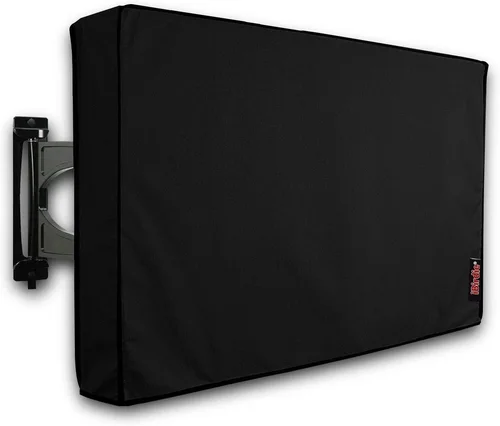
Transforming your covered patio into a cozy outdoor entertainment zone doesn’t have to break the bank. Whether you’re sipping morning coffee while catching up on the news, hosting weekend barbecues with friends, or unwinding after a long day under the stars, having a reliable garden TV can elevate your outdoor living experience. But here’s the catch: not all TVs are built for outdoor use—even under cover. Humidity, temperature swings, dust, and limited ventilation can wreak havoc on standard indoor models. That’s why finding a cheap garden TV that balances affordability with durability and performance is essential.
This comprehensive buying guide is designed to help you navigate the often-confusing world of outdoor-ready televisions without overspending. We’ll walk you through everything from key technical specs and build quality considerations to real-world usage scenarios and smart shopping strategies. By the end, you’ll know exactly what to look for, which brands offer the best value, and how to avoid common pitfalls that lead to buyer’s remorse. Whether you’re on a tight budget or just want maximum bang for your buck, this guide will equip you with expert-level insights to make a confident, informed decision.
The market for affordable outdoor TVs has grown significantly in recent years, driven by rising demand for outdoor living spaces and advancements in weather-resistant display technology. While premium outdoor TVs from brands like SunBriteTV or Seura can cost thousands, there are now several budget-friendly alternatives that deliver solid performance in covered patios, screened porches, and pergolas. These models may not be fully waterproof or rated for direct rain exposure, but they’re engineered to handle the milder conditions found under cover—making them ideal for most homeowners. In this guide, we’ll focus exclusively on these cost-effective options, helping you find a TV that fits both your space and your wallet.

What to Look for When Buying Buying Guide
1. Budget & Price Range
When shopping for a cheap garden TV, your budget is the foundation of your decision. Most affordable outdoor-ready models fall between $300 and $800, with some entry-level options dipping below $250. While it’s tempting to go for the lowest price, remember that “cheap” doesn’t always mean “value.” A TV priced under $200 may save you upfront but could fail prematurely due to poor build quality or lack of essential features like brightness control or weatherproofing.
Set a realistic budget based on how often you’ll use the TV and how long you expect it to last. For occasional weekend viewing, a $300–$500 model may suffice. If you plan to use it daily or host frequent gatherings, investing $600–$800 in a more robust unit pays off in longevity and performance. Always factor in potential add-ons like mounting hardware, surge protectors, or extended warranties, which can add $50–$150 to your total cost.
2. Performance Specifications
Not all TVs perform equally well in outdoor environments—even under cover. Brightness is arguably the most critical spec for garden TVs. Indoor TVs typically range from 250 to 400 nits, but outdoor visibility demands at least 500 nits, with 700+ nits being ideal for sunny patios. Look for models labeled “high-brightness” or “outdoor-enhanced” displays. Resolution matters too: while 1080p (Full HD) is acceptable for smaller screens (under 43 inches), 4K UHD is recommended for 50 inches and above to maintain sharpness when viewed up close.
Refresh rate (measured in Hz) affects motion smoothness—important if you watch sports or action movies. Aim for at least 60Hz; 120Hz is better but rare in budget models. Input lag (under 20ms) is crucial for gaming. Also check HDMI port count—two or more is ideal for connecting streaming devices, soundbars, or game consoles. Finally, ensure the TV supports modern streaming platforms like Netflix, YouTube, and Disney+ either natively or via external sticks.
3. Build Quality & Durability
Even under cover, your garden TV faces environmental stressors like humidity, temperature fluctuations, dust, and occasional splashes. Standard indoor TVs aren’t designed for this—their internal components can corrode or overheat. Look for TVs with enhanced cooling systems (like sealed vents or passive heat sinks), anti-glare screens, and protective coatings on circuit boards. Some budget models now include “weather-resistant” casings made from reinforced plastic or aluminum, which resist warping and rust.
Avoid TVs with exposed ports or flimsy stands. Instead, opt for models with rear-facing, rubber-grommeted HDMI/USB ports and VESA-compatible wall mounts (typically 200×200 or 400×400). Check if the remote control is also weather-resistant or comes with a protective case. While these TVs aren’t fully waterproof (that’s reserved for premium outdoor models), they should withstand the typical conditions of a covered patio without frequent repairs.
4. Features & Functionality
Modern garden TVs pack surprising features despite their low price tags. Smart TV platforms like Roku TV, Android TV, or webOS allow direct streaming without extra devices—a major convenience. Voice control via Alexa or Google Assistant is increasingly common and useful when your hands are full with grilling tools or drinks. Built-in Wi-Fi (preferably dual-band 2.4GHz/5GHz) ensures stable streaming, while Bluetooth enables wireless audio to outdoor speakers.
Look for energy-efficient models with auto-brightness sensors that adjust screen luminance based on ambient light—this saves power and reduces eye strain. Some budget TVs even include sleep timers, parental controls, and multi-language support. Don’t overlook audio: while most built-in speakers are tinny, many models support external sound systems via optical or HDMI ARC outputs. If you plan to mount the TV high on a wall, ensure the interface is accessible or controllable via app.
5. Brand Reputation
Not all budget TV brands are created equal. Stick with manufacturers known for reliability and customer service, even in their lower-priced lines. TCL, Hisense, and Vizio dominate the affordable segment with strong track records for value and durability. Samsung and LG also offer budget-friendly models with better after-sales support, though at slightly higher prices. Avoid obscure no-name brands sold exclusively through third-party Amazon sellers—these often lack warranties, spare parts, or firmware updates.
Research brand-specific outdoor performance. For example, TCL’s 4-Series and 5-Series models are frequently recommended for covered patios due to their high brightness and robust builds. Hisense’s U6 and U7 series offer excellent color accuracy and gaming features at low prices. Reading long-term user reviews (not just star ratings) on forums like Reddit or AVS Forum can reveal real-world durability insights that specs alone don’t show.
6. Warranty & Support
A cheap TV isn’t truly affordable if it breaks after six months with no recourse. Always check the warranty length and coverage. Most reputable brands offer at least a one-year limited warranty, with some extending to two years. Pay attention to what’s covered: does it include screen burn-in, dead pixels, or water damage from condensation? Some companies void warranties if the TV is used outdoors—even under cover—so read the fine print carefully.
Customer support matters too. Can you reach a human quickly? Are replacement parts available? Brands like Samsung and LG have extensive service networks, while smaller brands may rely on third-party repair centers. Consider purchasing an extended warranty from retailers like Best Buy or Amazon, especially if the TV will be mounted permanently. Also, register your product immediately to activate warranty terms and receive firmware update notifications.
7. Size & Portability
Screen size should match your viewing distance and patio layout. For most covered patios (8–12 feet from seating), a 43- to 55-inch TV offers the best balance of immersion and visibility. Smaller screens (32–40 inches) work for compact spaces or secondary viewing areas like outdoor kitchens. Larger screens (60+ inches) are impressive but require more power, better mounting, and higher brightness to remain usable in daylight.
Portability is less critical for permanent installations but matters if you move the TV seasonally or share it between indoor and outdoor spaces. Lightweight models (under 25 lbs for 50-inch screens) are easier to handle, but ensure the stand or mount is stable. Wall-mounting is generally safer and saves space, but confirm your patio wall can support the weight. Some TVs come with optional outdoor stands designed for stability on uneven surfaces—worth considering if you lack wall space.
8. User Reviews & Ratings
Never buy a garden TV based solely on specs or marketing claims. Real user reviews reveal hidden flaws like poor remote range, inconsistent Wi-Fi, or premature backlight failure. Focus on verified purchase reviews from trusted retailers (Amazon, Best Buy, Costco) and look for patterns: if multiple users report the same issue (e.g., “screen flickers in humidity”), it’s likely a design flaw.
Pay special attention to comments about outdoor use. Search phrases like “used on covered patio” or “outdoor performance” to filter relevant feedback. Video reviews on YouTube can show actual brightness and color quality in daylight. Also check return rates—high return percentages on retailer sites may indicate dissatisfaction. Aim for models with at least 4.0 stars from 500+ reviews for statistical reliability.
Different Types of Buying Guide

Common Buying Mistakes to Avoid
❌ Mistake: Buying a Standard Indoor TV for Outdoor Use
Why it’s bad: Indoor TVs lack the brightness, cooling, and protective features needed for even covered outdoor spaces. They can overheat, suffer screen glare, or fail prematurely due to humidity—leading to costly replacements.
What to do instead: Choose a model specifically designed or recommended for outdoor/covered patio use. Look for terms like “outdoor-enhanced,” “weather-resistant,” or “high-brightness display” in the product description.
❌ Mistake: Ignoring Brightness (Nits) Ratings
Why it’s bad: A dim screen becomes unwatchable in daylight, even under cover. Many budget TVs advertise “4K” but skimp on brightness, resulting in a washed-out image when sunlight hits the patio.
What to do instead: Prioritize TVs with at least 500 nits of brightness. For sunny patios, aim for 700+ nits. Check professional reviews or spec sheets—don’t rely solely on marketing claims.
❌ Mistake: Overlooking Mounting and Ventilation Needs
Why it’s bad: Improper mounting can cause instability or block ventilation ports, leading to overheating. Using indoor mounts outdoors may also void warranties.
What to do instead: Use a VESA-compatible outdoor mount with tilt/swivel options. Ensure at least 4–6 inches of clearance around the TV for airflow. Never seal the TV in an enclosed cabinet without active cooling.
❌ Mistake: Skipping Surge Protection
Why it’s bad: Outdoor electronics are more vulnerable to power surges from lightning or grid fluctuations. A single surge can fry your TV’s circuitry.
What to do instead: Invest in a high-quality outdoor-rated surge protector (look for UL listing and joule rating of 2000+). Hardwiring with a dedicated circuit is even better for permanent installations.
❌ Mistake: Choosing Based Solely on Price
Why it’s bad: The cheapest TV often lacks essential features, has poor build quality, or fails quickly—costing more in the long run due to repairs or replacement.
What to do instead: Balance price with value. Spend a little more for proven reliability, better brightness, and a solid warranty. Read long-term user reviews to assess real-world durability.
❌ Mistake: Neglecting Audio Quality
Why it’s bad: Most budget TVs have weak built-in speakers that sound tinny outdoors, where ambient noise (wind, birds, traffic) drowns out dialogue.
What to do instead: Plan for external audio from day one. Use Bluetooth speakers, a soundbar, or wired outdoor speakers. Ensure the TV has optical or HDMI ARC output for easy connection.
❌ Mistake: Assuming All “Smart” TVs Are Equal
Why it’s bad: Some budget smart platforms are slow, lack app support, or receive infrequent updates—leading to frustration and security risks.
What to do instead: Prefer Roku TV or Android TV for broad app compatibility and regular updates. Avoid proprietary systems with limited ecosystems unless you only need basic streaming.
Budget Guidelines: How Much Should You Spend?
Entry-Level ($200–$350): This tier includes basic smart TVs adapted for light outdoor use. Expect 1080p or 4K resolution, 400–500 nits brightness, and minimal weather resistance. Ideal for shaded patios with infrequent use. Brands like Insignia (Best Buy) or older TCL models fit here. Don’t expect gaming features or robust cooling.
Mid-Range ($350–$600): The sweet spot for most buyers. These TVs offer 500–700 nits brightness, better heat dissipation, and enhanced durability. Many include full smart platforms, multiple HDMI ports, and support for external audio. TCL 5-Series, Hisense U6, and Vizio V-Series are standout options. Perfect for daily viewing in moderately sunny conditions.
Premium ($600–$800): Designed for serious outdoor entertainment. Features include 700+ nits brightness, anti-reflective coatings, advanced cooling, and low input lag for gaming. Some models offer local dimming for better contrast. Great for large patios, sports viewing, or tech-savvy users who want longevity and performance.
Luxury ($800+): While this guide focuses on affordable options, it’s worth noting that true outdoor TVs (fully weatherproof, all-season use) start here. Brands like SunBriteTV dominate this space, but for covered patios, mid-range models usually suffice. Only consider luxury if you need extreme durability or live in harsh climates.
Expert Tips for Getting the Best Deal
- Shop during seasonal sales: Major discounts occur during Black Friday, Cyber Monday, Amazon Prime Day, and post-holiday clearance events (January–February). Outdoor TVs often see steeper markdowns as retailers clear summer inventory.
- Compare retailers strategically: Amazon offers convenience and fast shipping, but Best Buy and Costco frequently price-match and include free installation or extended warranties. Check local electronics stores for in-person demos.
- Consider refurbished or open-box units: Certified refurbished TVs from manufacturer outlets (e.g., Samsung Renewed, LG Outlet) cost 20–40% less and include full warranties. Open-box deals at Best Buy can save even more.
- Use price-tracking tools: Browser extensions like Honey or CamelCamelCamel alert you when prices drop on specific models. Set alerts for your desired TV and wait for the right deal.
- Check return policies: Ensure the retailer offers at least 30 days to return the TV. Outdoor performance can vary by location, so you may need to test visibility in your actual patio conditions.
- Negotiate add-ons: When buying in-store, ask for free mounting hardware, HDMI cables, or a discount on a soundbar. Sales associates often have flexibility on accessories.
- Verify firmware update support: A TV that stops receiving updates becomes vulnerable to security flaws and app incompatibilities. Choose brands with a history of long-term software support.
- Join loyalty programs: Retailers like Costco, Best Buy, and Amazon Prime offer member-exclusive deals, early access to sales, and extended return windows—valuable perks for big purchases.

Frequently Asked Questions
Q: Can I use a regular indoor TV on my covered patio?
A: Technically yes, but it’s not recommended. Indoor TVs lack the brightness, cooling, and protective features needed for outdoor environments. Even under cover, humidity and temperature swings can shorten their lifespan. For occasional use in a fully shaded, dry area, it might work short-term—but for reliable performance, choose an outdoor-enhanced model.
Q: What’s the minimum brightness I need for a garden TV?
A: At least 500 nits for shaded patios, and 700+ nits if your space gets direct sunlight part of the day. Brightness is measured in nits (cd/m²) and is often listed in technical specs or professional reviews. Avoid TVs that don’t disclose this number—they’re likely too dim for outdoor use.
Q: Do I need a special mount for an outdoor TV?
A: Yes. Use a VESA-compatible mount rated for outdoor use. Look for corrosion-resistant materials (powder-coated steel or aluminum) and ensure it allows proper ventilation. Tilt mounts help reduce glare from low sun angles. Never use indoor mounts, as they may not withstand outdoor conditions.
Q: How do I protect my garden TV from power surges?
A: Use a high-quality outdoor surge protector with a joule rating of 2000 or higher and UL certification. For permanent installations, consider a whole-house surge protector installed by an electrician. Unplug the TV during thunderstorms for maximum safety.
Q: Can I leave my garden TV outside year-round?
A: Only if it’s specifically rated for all-season outdoor use (like premium models from SunBriteTV). Most budget “outdoor-enhanced” TVs are designed for covered patios and should be brought indoors or covered during extreme weather (heavy rain, snow, freezing temps).
Q: What size TV is best for a covered patio?
A: For viewing distances of 8–12 feet, a 43- to 55-inch screen is ideal. Measure your seating distance and use online TV size calculators. Remember: larger screens need more brightness to remain visible in daylight.
Q: Are budget outdoor TVs energy efficient?
A: Most modern LED TVs are relatively efficient, but brightness impacts power use. Higher-nit screens consume more energy. Look for ENERGY STAR certification or check wattage specs (typically 50–150W for 50-inch models). Auto-brightness sensors can help reduce consumption.
Q: Can I connect a soundbar to a garden TV?
A: Absolutely. Most budget outdoor TVs include HDMI ARC or optical audio outputs for connecting soundbars or external speakers. This is highly recommended, as built-in speakers rarely provide adequate volume or clarity outdoors.
Q: What’s the difference between “weather-resistant” and “waterproof”?
A: “Weather-resistant” means the TV can handle humidity, dust, and light splashes—ideal for covered patios. “Waterproof” (or IP-rated) TVs are sealed against direct rain and snow, designed for fully exposed areas. Budget garden TVs are almost always weather-resistant, not waterproof.
Q: How long do budget outdoor TVs typically last?
A: With proper care, 5–7 years is realistic. Factors like climate, usage frequency, and ventilation affect longevity. Avoid blocking vents, clean the screen gently, and store during extreme seasons to maximize lifespan.
Our Final Recommendations
Best for Budget-Conscious Buyers: TCL 43S450G (43-inch 4K Roku TV) – Priced around $280, this model delivers 500 nits brightness, solid smart features, and reliable performance for shaded patios. Its Roku platform is user-friendly, and it includes two HDMI ports. Ideal for casual viewers who want quality without overspending.
Best Overall Value: Hisense 50U6HF (50-inch 4K ULED) – At ~$450, it offers 700 nits brightness, excellent color accuracy, and low input lag for gaming. The anti-glare screen performs well in partial sun, and it supports Dolby Vision and HDR10+. A standout in the mid-range category.
Best Premium Option: Vizio M-Series 55MQ6 (55-inch Quantum Color) – For ~$650, you get 800 nits brightness, local dimming, and a sleek design with robust cooling. Perfect for larger patios or users who want cinematic quality outdoors. Includes HDMI 2.1 for future-proofing.
Best for Beginners: Insignia F30 Series (42-inch 4K Fire TV) – Amazon’s budget-friendly option (~$250) with built-in Alexa and easy setup. While brightness is modest (450 nits), it’s sufficient for fully covered, shaded areas. Great for first-time outdoor TV owners.
Best for Advanced Users: Samsung QN50Q60C (50-inch QLED) – Though pricier (~$750), its Quantum Dot technology delivers vibrant colors and 750 nits brightness. Supports gaming features like VRR and ALLM, plus seamless integration with Samsung ecosystems. Ideal for tech enthusiasts wanting top-tier performance.
Conclusion: Making the Right Choice
Choosing the right cheap garden TV for your covered patio doesn’t have to be overwhelming—or expensive. By focusing on key factors like brightness, build quality, smart features, and real-world durability, you can find a model that delivers excellent performance without straining your budget. Remember, the goal isn’t just to save money upfront, but to invest in a TV that enhances your outdoor lifestyle for years to come.
Prioritize your specific needs: if you’re a casual viewer in a shaded space, a budget smart TV may suffice. But if you entertain often or enjoy daytime viewing, spending a bit more on higher brightness and better cooling pays dividends. Always read user reviews, compare total costs, and take advantage of seasonal deals to maximize value.
Ultimately, the best garden TV is one that fits your space, your habits, and your wallet—while standing up to the unique challenges of outdoor living. With the insights from this guide, you’re now equipped to make a confident, informed decision. So go ahead, upgrade your patio, and start enjoying your favorite shows under the open sky. Your perfect outdoor entertainment setup is just a smart purchase away.

