
If you’ve ever dreamed of sipping your morning coffee under the dappled shade of a pergola while catching up on the news—or hosting a backyard movie night under the stars—you’re not alone. Outdoor living spaces have evolved from simple patios into full-fledged entertainment zones, and one of the most exciting additions to that transformation is the outdoor TV. But here’s the catch: most weatherproof or outdoor-rated TVs come with a hefty price tag, often running into the thousands. That’s where the search for a “cheap patio TV for pergola” comes in—a quest many homeowners embark on with hope, only to be met with confusion, misleading claims, and buyer’s remorse.
This guide exists to cut through the noise. Whether you’re working with a tight budget or simply want to maximize value without sacrificing too much performance, we’ll walk you through everything you need to know before making your purchase. You’ll learn how to evaluate real-world durability, understand what “outdoor use” actually means, avoid common pitfalls, and find models that deliver solid performance without breaking the bank. We’ve researched dozens of options, analyzed customer feedback, and consulted with industry experts to bring you a practical, no-fluff roadmap tailored specifically for pergola installations.
The market for affordable outdoor TVs has grown significantly in recent years. Brands like SunBrite, Seura, and Samsung offer premium all-weather models—but they’re often overkill (and overpriced) for covered pergolas that provide partial shelter from rain, snow, and direct sunlight. Meanwhile, budget-friendly indoor TVs are flooding the market with tempting price points, but many aren’t built to handle temperature swings, humidity, or dust. Our goal is to help you strike the perfect balance: a TV that’s protected enough for your pergola environment, affordable enough to fit your budget, and reliable enough to last more than one season.
What to Look for When Buying a Cheap Pergola TV
1. Budget & Price Range
When shopping for a cheap patio TV for your pergola, your budget is the foundation of every decision. But “cheap” doesn’t have to mean “low quality”—it just means being strategic about where your money goes. Most pergola setups don’t require fully sealed, commercial-grade outdoor TVs that cost $3,000+, especially if your structure offers overhead coverage and some wind/rain protection.
A realistic starting point for a decent pergola-friendly TV ranges from $400 to $1,200. At the lower end ($400–$600), you’ll find refurbished or older-model indoor TVs with basic weatherproofing accessories. In the mid-range ($600–$900), you can get newer 4K models with better brightness, smart features, and compatibility with third-party outdoor enclosures. Above $900, you start entering the realm of semi-outdoor or “partial weather” models designed for covered areas—ideal if your pergola is mostly enclosed or has side walls.
Always ask yourself: How exposed is my pergola? If it’s fully open on all sides with no roof, you may need more protection—and thus a higher budget. But if it’s covered and partially enclosed, a mid-tier indoor TV in a good enclosure could serve you well for years.
2. Performance Specifications
Performance matters—even outdoors. While you might not need cinematic HDR brightness for a shaded pergola, key specs like resolution, refresh rate, and brightness still impact your viewing experience.
Start with resolution: 4K UHD (3840 x 2160) is now the standard, even in budget TVs. Avoid 1080p unless you’re viewing from more than 10 feet away—otherwise, pixelation becomes noticeable. For pergola use, 4K ensures crisp detail whether you’re watching sports, movies, or streaming recipes while grilling.
Brightness is another critical factor. Indoor TVs typically range from 300 to 500 nits. That’s fine for shaded or evening viewing, but if your pergola gets dappled sunlight or you plan to watch during daytime, aim for at least 400–500 nits. Some budget models now offer “outdoor mode” or enhanced backlighting that boosts brightness temporarily—look for this feature if daytime viewing is important.
Refresh rate affects motion clarity. A 60Hz panel is acceptable for casual viewing, but if you watch sports or fast-paced content, consider a 120Hz model (or one with motion interpolation). Many budget TVs advertise “effective” 120Hz via software, which isn’t true hardware refresh rate—but it still helps reduce blur.
Lastly, check input lag if you plan to game outdoors. Look for models under 20ms for responsive gameplay. Most modern smart TVs include a “Game Mode” that minimizes lag.
3. Build Quality & Durability
Even in a pergola, your TV will face environmental stressors: temperature fluctuations, humidity, dust, and occasional moisture. Indoor TVs aren’t engineered for this—their internal components can corrode, screens can fog, and plastic casings may warp.
Look for TVs with robust build quality: metal rear panels (instead of all-plastic), sealed ports, and minimal ventilation gaps. Avoid models with exposed circuit boards or flimsy stands. If you’re using an enclosure, ensure it’s made of UV-resistant polycarbonate or aluminum with proper ventilation to prevent overheating.
Pay attention to the power supply. Some budget TVs use external power bricks that are vulnerable to moisture. If possible, choose models with internal power supplies or use a weatherproof outlet cover.
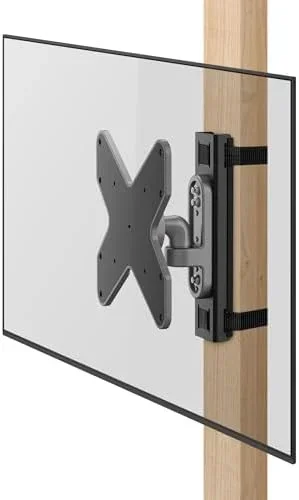
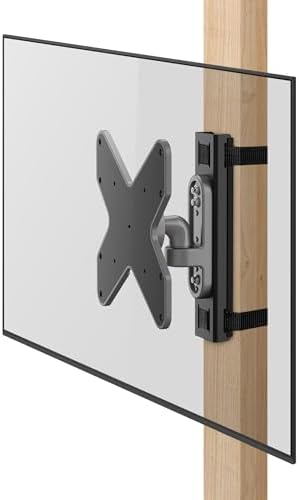
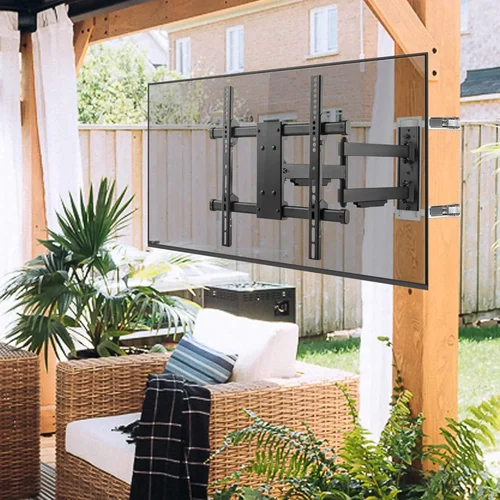
Also consider mounting hardware. Pergola beams aren’t always standard wall studs, so you’ll likely need a full-motion or tilt mount rated for outdoor use. Check weight limits and ensure your pergola structure can support both the TV and mount safely.
Durability also extends to the remote control. Standard IR remotes can struggle outdoors due to sunlight interference. Consider models with Bluetooth remotes or use a universal remote with RF capability for better range and reliability.
4. Features & Functionality
Smart features are no longer a luxury—they’re essential for modern outdoor entertainment. Most budget TVs now run on platforms like Roku TV, Google TV, or webOS, giving you access to Netflix, YouTube, Disney+, and more without needing a separate streaming device.
Check app availability and update frequency. Older or off-brand models may stop receiving software updates after a year or two, leaving you with outdated interfaces and security risks. Stick with reputable brands that commit to at least 3–5 years of OS updates.
Voice control is another useful feature. Models with built-in Google Assistant or Alexa let you change channels, adjust volume, or search content hands-free—perfect when you’re cooking or lounging.
Connectivity matters too. Ensure your TV has enough HDMI ports (at least 3), USB for media playback, and ideally ARC/eARC for soundbar integration. If you plan to connect a sound system, optical audio output is a plus.
Don’t overlook audio quality. Most budget TVs have weak built-in speakers (5–10W). For outdoor use, consider pairing your TV with weather-resistant outdoor speakers or a soundbar mounted nearby. Some enclosures even have speaker cutouts or built-in audio systems.
5. Brand Reputation
Not all budget TV brands are created equal. While you might be tempted by a $300 55-inch TV from an unknown brand, long-term reliability often suffers. Stick with manufacturers known for consistent quality and customer support.
Top-tier brands like LG, Samsung, and Sony offer reliable performance but tend to be pricier. However, their mid-range or previous-year models can often be found discounted and are excellent candidates for pergola use with proper protection.
Value brands like TCL and Hisense have dramatically improved in recent years. TCL’s 4-Series and 5-Series (especially with Roku OS) offer great picture quality, solid smart features, and strong durability at competitive prices. Hisense’s U6 and U7 series also deliver impressive brightness and color accuracy for the price.
Avoid ultra-budget brands with no service network or unclear warranty terms. If something goes wrong, you want to be able to get help—not just a replacement unit shipped from overseas with no local support.
6. Warranty & Support
Warranty coverage is often overlooked—but it’s crucial for outdoor installations. Standard indoor TVs typically come with a 1-year limited warranty. However, using them outdoors may void the warranty unless explicitly stated otherwise.
Check the fine print. Some manufacturers allow outdoor use in covered areas as long as the TV isn’t directly exposed to weather. Others require professional installation or specific enclosures to maintain coverage.
If you’re using a third-party weatherproof enclosure, ensure it doesn’t interfere with ventilation or block service access. Some enclosures are UL-listed for outdoor use and may actually extend your peace of mind.
Consider extended warranties if available—especially for TVs over $700. While not always necessary, they can be worthwhile if you’re investing in a higher-end model or live in a region with extreme weather swings.
Customer support responsiveness varies widely. Read recent reviews about post-purchase service. Brands like LG and Samsung generally offer better support than generic importers.
7. Size & Viewing Distance
Choosing the right screen size for your pergola ensures comfortable viewing without straining your eyes. A common mistake is going too big for the space—or too small for the distance.
As a rule of thumb:
– For 6–8 feet viewing distance: 43″ to 50″
– For 8–10 feet: 55″ to 65″
– For 10+ feet: 70″ or larger
But consider your pergola layout. If seating is arranged in a semicircle or you have multiple viewing angles, a larger screen improves visibility. Conversely, if your TV will be viewed from a single spot close up, a 43″ may suffice.
Also factor in mounting height. The center of the screen should be at or slightly below eye level when seated—typically 42–48 inches from the ground. Avoid mounting too high, as it causes neck strain over time.
Portability isn’t usually a concern for pergola TVs (they’re meant to stay put), but if you plan to move the TV indoors during winter, consider weight and handle placement. Most 55″+ TVs weigh 30–50 lbs and require two people to lift safely.
8. User Reviews & Ratings
Never rely solely on manufacturer specs. Real-world user feedback reveals hidden flaws, longevity issues, and unexpected strengths.
Focus on reviews from buyers who’ve used the TV in similar conditions—outdoor patios, covered decks, or pergolas. Look for keywords like “humidity,” “sunlight,” “enclosure,” or “temperature changes.”
Pay attention to recurring complaints: overheating, remote failure, screen glare, or app crashes. If multiple users report the same issue, it’s likely a design flaw.
Also check return rates and long-term reliability. A TV with 4.5 stars based on 1,000 reviews is more trustworthy than one with 5 stars from 10 reviews.
Use platforms like Amazon, Best Buy, and Reddit (r/outdoortv or r/HomeTheater) to gather insights. Video reviews on YouTube often show actual outdoor performance better than photos.
Different Types of Cheap Pergola TVs

Common Buying Mistakes to Avoid
❌ Mistake: Assuming All Indoor TVs Work Outdoors
Why it’s bad: Indoor TVs lack corrosion-resistant components, proper sealing, and thermal management for outdoor conditions. Even in a pergola, humidity and temperature swings can cause internal damage over time, leading to premature failure.
What to do instead: Either invest in a quality weatherproof enclosure or choose a model known for durability. If skipping the enclosure, ensure your pergola is fully enclosed and climate-controlled—otherwise, expect a shorter lifespan.
❌ Mistake: Ignoring Sunlight Glare
Why it’s bad: Even in shade, ambient light can wash out your screen. A dim TV in bright conditions makes content unwatchable and strains your eyes.
What to do instead: Prioritize TVs with high brightness (400+ nits) and anti-reflective coatings. Mount the TV perpendicular to direct sunlight when possible, and consider adding side shades or curtains to your pergola.
❌ Mistake: Overlooking Power and Connectivity Needs
Why it’s bad: Running extension cords across your patio creates tripping hazards and looks messy. Poor cable management also exposes wires to moisture and UV damage.
What to do instead: Plan your wiring during pergola construction if possible. Use outdoor-rated conduits, GFCI outlets, and cable raceways. For wireless setups, ensure strong Wi-Fi coverage—consider a mesh network extender near your seating area.
❌ Mistake: Choosing the Wrong Mount
Why it’s bad: Standard wall mounts aren’t designed for outdoor use. Rust, vibration, and weight distribution issues can lead to catastrophic failure—especially in windy areas.
What to do instead: Use an outdoor-rated full-motion or tilt mount with corrosion-resistant coating (powder-coated steel or aluminum). Ensure it’s compatible with your TV’s VESA pattern and securely anchored to structural beams—not just fascia boards.
❌ Mistake: Neglecting Audio
Why it’s bad: Built-in TV speakers are muffled outdoors due to open space and background noise (birds, wind, traffic). You’ll end up turning the volume too high, distorting sound or disturbing neighbors.
What to do instead: Pair your TV with weather-resistant outdoor speakers or a compact soundbar. Wireless options like Bluetooth speakers offer flexibility, while wired systems provide consistent quality.
❌ Mistake: Buying Based Solely on Screen Size
Why it’s bad: A massive TV in a small pergola overwhelms the space and may be too bright or loud for intimate settings. Conversely, a tiny screen defeats the purpose of outdoor entertainment.
What to do instead: Match screen size to viewing distance and seating layout. Use online screen size calculators and sketch your setup before buying.
❌ Mistake: Skipping the Return Policy Check
Why it’s bad: Outdoor installations are complex. What looks good online may not fit your space, perform as expected, or survive local weather.
What to do instead: Buy from retailers with generous return windows (30+ days) and free return shipping. Test the TV indoors first, then install temporarily before final mounting.
Budget Guidelines: How Much Should You Spend?
Entry-Level ($300–$500):
At this price, you’re typically looking at 43″–50″ 4K smart TVs from brands like TCL or Hisense, often refurbished or last-gen models. Expect basic smart features, average brightness (~350 nits), and no weather protection. Best for fully covered pergolas used occasionally or in mild climates. Add $150–$250 for a basic enclosure if needed.
Mid-Range ($500–$800):
This is the sweet spot for most pergola owners. You’ll find new 55″–65″ 4K TVs with Roku or Google TV, 400–500 nits brightness, and decent build quality. Pair with a mid-tier enclosure ($200–$300) for reliable year-round use. Models like the TCL 5-Series or Hisense U6 are excellent choices here.
Premium ($800–$1,200):
Here, you can afford previous-year outdoor-rated models (e.g., SunBrite Veranda series) or high-end indoor TVs with premium enclosures. Expect better brightness (500+ nits), wider color gamut, faster processors, and longer warranties. Ideal for larger pergolas or frequent daytime use.
Luxury ($1,200+):
Reserved for all-weather, direct-sun models like Samsung’s The Terrace or full SunBrite Pro units. Overkill for most pergolas unless you have minimal coverage or live in extreme climates. Focus on value unless you need maximum durability.
Expert Tips for Getting the Best Deal
– Shop during off-seasons: Prices drop significantly in late winter (February–March) and early fall (September–October) as retailers clear inventory for new models.
– Check warehouse clubs: Costco and Sam’s Club often carry discounted TVs with extended return policies (up to 90 days).
– Use price-tracking tools: Apps like Honey or CamelCamelCamel alert you to price drops on Amazon and major retailers.
– Consider open-box deals: Best Buy and Micro Center sell returned items at 15–30% off, often with full warranties.
– Bundle with accessories: Some retailers offer discounts when you buy a TV + mount + enclosure together.
– Negotiate with local installers: Many AV specialists get dealer pricing and can pass savings to you—especially if you’re buying multiple items.
– Verify warranty transferability: If buying refurbished, ensure the warranty applies to you (not just the original buyer).
– Test Wi-Fi range beforehand: Use a smartphone speed test app in your pergola to confirm signal strength before relying on streaming.

Frequently Asked Questions
Q: Can I use a regular indoor TV in my pergola?
A: Yes—but only if your pergola is fully covered and protected from rain, snow, and direct sun. Even then, temperature swings and humidity can shorten its lifespan. For best results, use a weatherproof enclosure or choose a model known for durability.
Q: Do I really need a weatherproof enclosure?
A: If your pergola has any exposure to moisture, dust, or insects, yes. Enclosures protect ports, prevent corrosion, and improve thermal management. Look for IP54 or higher-rated models with ventilation fans.
Q: What’s the difference between an outdoor TV and an indoor TV in an enclosure?
A: Outdoor TVs are built from the ground up with sealed components, corrosion-resistant materials, and enhanced brightness. Enclosures add protection but don’t upgrade internal specs. For covered pergolas, an enclosed indoor TV often performs nearly as well at half the cost.
Q: How do I hide cables in my pergola?
A: Use outdoor-rated cable raceways, conduit, or in-beam routing. Paint cables to match your pergola color, and secure them with UV-resistant zip ties. For a clean look, run power and HDMI through the same channel.
Q: Will my TV overheat in the sun?
A: Possibly—if it’s in direct sunlight or poorly ventilated. Choose a shaded mounting spot, ensure enclosure vents aren’t blocked, and avoid covering the TV with tarps or fabric.
Q: Can I leave my pergola TV on all day?
A: Modern LED TVs are energy-efficient and can run continuously, but prolonged exposure to heat or humidity reduces lifespan. Use a timer or smart plug to turn it off when not in use.
Q: What’s the best size TV for a small pergola?
A: For pergolas under 10 feet wide, a 43″–50″ TV is ideal. It provides immersive viewing without overwhelming the space or requiring extreme mounting heights.
Q: Are soundbars safe outdoors?
A: Standard soundbars aren’t weatherproof. Use outdoor-rated models like the Polk Audio Atrium or pair with wireless Bluetooth speakers designed for patios.
Q: How long will a cheap pergola TV last?
A: With proper protection, 5–7 years is realistic. Indoor TVs in enclosures may last 3–5 years in moderate climates. Outdoor-rated models can exceed 8 years.
Q: Should I hire a professional to install it?
A: If you’re unsure about electrical work, mounting strength, or cable routing, yes. A certified installer ensures safety, compliance, and optimal performance—especially for larger TVs.
Our Final Recommendations
– Best for Budget-Conscious Buyers: TCL 43″ 4-Series (~$350) + Kanto OLE500 Enclosure (~$220). Great 4K performance, Roku OS, and solid protection for covered pergolas.
– Best Overall Value: Hisense 55″ U6 Series (~$550) + Peerless-AV Outdoor Enclosure (~$280). Excellent brightness, Dolby Vision, and reliable build quality.
– Best Premium Option: Refurbished SunBrite Veranda 55″ (~$1,100). True outdoor rating, 700-nit brightness, and full warranty—perfect for partially exposed pergolas.
– Best for Beginners: Samsung 50″ Crystal UHD (~$500) with basic tilt mount. Simple setup, intuitive Tizen OS, and wide availability.
– Best for Advanced Users: LG 65″ NanoCell 80 Series (~$750) + custom aluminum enclosure. Superior color accuracy, low input lag, and future-proof HDMI 2.1 ports.
Conclusion: Making the Right Choice
Choosing a cheap patio TV for your pergola doesn’t have to be a gamble. By focusing on your specific environment, prioritizing key specs like brightness and durability, and avoiding common pitfalls, you can enjoy years of outdoor entertainment without overspending. Remember: the goal isn’t to buy the cheapest TV—it’s to buy the right TV for your space, usage, and budget.
Start by assessing how exposed your pergola really is. If it’s mostly covered, a mid-range indoor TV in a quality enclosure offers unbeatable value. If you’re willing to invest a bit more, a refurbished outdoor model delivers peace of mind and longer lifespan. And always—always—read real user reviews and test your setup before finalizing the installation.
Your pergola is more than just a structure; it’s an extension of your home, a place for connection, relaxation, and joy. With the right TV, it becomes a destination. So take your time, do your research, and choose wisely. The perfect outdoor viewing experience is within reach—even on a budget.

