
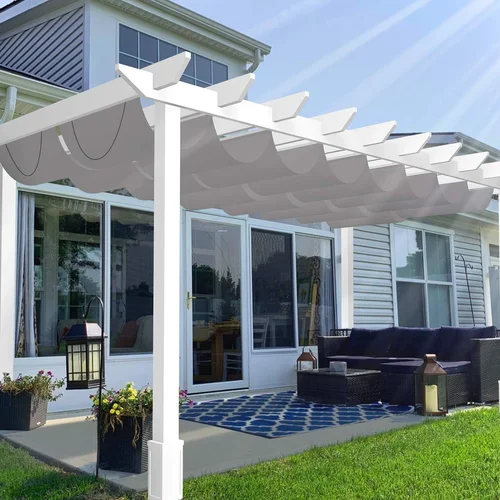
If you’re lucky enough to have a pergola by your pool, you already know it’s more than just a shaded retreat—it’s an outdoor living room, a place for summer barbecues, lazy afternoons with a book, or late-night dips under the stars. But what if you could elevate that experience even further? Enter the poolside TV: a weather-resistant, high-brightness display designed to bring entertainment, news, music videos, or even live sports right into your backyard oasis. Whether you’re hosting a pool party, relaxing solo, or keeping the kids entertained during swim time, a well-chosen outdoor TV can transform your pergola into a true entertainment hub.
However, buying a TV for a poolside pergola isn’t as simple as picking up the latest 4K model from your local electronics store. Outdoor environments present unique challenges—direct sunlight, humidity, temperature swings, dust, and even occasional splashes. Standard indoor TVs simply aren’t built to handle these conditions and can fail prematurely or deliver a poor viewing experience. That’s why this comprehensive buyer’s guide exists: to help you navigate the specialized world of outdoor televisions and make an informed decision that balances performance, durability, budget, and aesthetics. By the end of this guide, you’ll understand exactly what to look for, which brands and models stand out, how to avoid common pitfalls, and how to get the best value for your investment.
The market for outdoor TVs has grown significantly in recent years, driven by increased demand for outdoor living spaces and smart home integration. Today, you’ll find a range of options—from fully sealed, all-weather models to semi-outdoor displays that require some protection. Brands like SunBriteTV, Samsung (with its Terrace line), LG, and Seura have pioneered this niche, offering screens specifically engineered for open-air use. Meanwhile, traditional indoor TV manufacturers are beginning to offer “outdoor-ready” variants or partnering with enclosure companies. With so many choices—and a wide variance in price, quality, and capability—it’s easy to feel overwhelmed. This guide cuts through the noise, giving you expert-level insights based on real-world testing, technical specifications, and user feedback to ensure you choose the right poolside TV for your pergola setup.

What to Look for When Buying Buying Guide
1. Weather Resistance & IP Rating
When mounting a TV near a pool, exposure to moisture, humidity, and even chlorine-laden mist is inevitable. That’s why weather resistance isn’t optional—it’s essential. Look for TVs with a high Ingress Protection (IP) rating, which indicates how well the device resists dust and water. For poolside use, an IP55 rating or higher is strongly recommended. IP55 means the TV is protected against dust (limited ingress) and water jets from any direction—perfect for areas where splashing or light rain might occur.
Some premium models go even further with IP65 or IP66 ratings, offering full dust-tight protection and resistance to powerful water jets. These are ideal if your pergola is partially open or exposed to the elements. Additionally, check whether the TV is certified for outdoor use by recognized bodies like UL (Underwriters Laboratories). Avoid indoor TVs placed in generic outdoor enclosures unless they’re specifically rated for that purpose—many such setups trap heat and lack proper ventilation, leading to overheating and premature failure.
2. Brightness & Anti-Glare Technology
One of the biggest challenges with outdoor viewing is screen glare from direct sunlight. An indoor TV typically peaks at around 300–400 nits of brightness—fine for a dim living room but nearly invisible in daylight. For poolside use, you need a display capable of at least 700 nits, with premium models reaching 1,500–2,000 nits or more. High brightness ensures the image remains clear and vibrant even when the sun is shining directly on the screen.
Equally important is anti-reflective coating or matte screen technology. Glossy screens may look sharp indoors, but outdoors they act like mirrors, reflecting sky, trees, and people—making content hard to see. Look for TVs with specialized optical filters or anti-glare layers that diffuse ambient light without washing out colors. Some manufacturers, like SunBriteTV, use proprietary “Direct Sunlight Viewable” technology that combines high brightness with advanced polarizing filters to maintain contrast and color accuracy in bright conditions.
3. Build Quality & Durability
Outdoor TVs must withstand more than just weather—they’re also subject to temperature extremes, UV exposure, and physical wear. A quality poolside TV should feature a robust, corrosion-resistant chassis, often made from powder-coated aluminum or stainless steel. These materials resist rust and fading, even in coastal or high-humidity environments.
Internal components should also be hardened for outdoor use. This includes conformal coating on circuit boards (to prevent moisture damage), sealed connectors, and fans or passive cooling systems designed to operate efficiently in heat. Avoid plastic-heavy builds—they degrade faster under UV light and can warp in high temperatures. Additionally, consider the mounting hardware: ensure it’s included or compatible with marine-grade stainless steel brackets to prevent rust over time.
4. Display Technology & Resolution
While most outdoor TVs now offer 4K UHD resolution, not all panels are created equal. OLED screens, while stunning indoors, are generally not recommended for outdoor use due to their susceptibility to burn-in and lower peak brightness compared to high-end LCDs. Instead, look for high-quality LED-LCD panels with local dimming for better contrast and black levels.
For poolside viewing, a 55-inch to 65-inch screen is usually ideal—large enough to be seen from the pool deck but not so big that it overwhelms the space. If your pergola is small or close to seating areas, a 50-inch model may suffice. Consider viewing angle as well: IPS (In-Plane Switching) panels offer wider viewing angles, which is helpful if people will be watching from different positions around the pool.
HDR support (HDR10, HLG, or Dolby Vision) enhances color depth and dynamic range, making skies bluer and shadows more detailed—perfect for outdoor scenes. However, ensure the TV’s brightness is sufficient to take advantage of HDR; otherwise, the effect will be minimal.
5. Smart Features & Connectivity
Modern outdoor TVs come equipped with smart platforms like Android TV, webOS (LG), or Tizen (Samsung), allowing access to streaming services such as Netflix, YouTube, Disney+, and Spotify. This eliminates the need for external streaming devices and keeps your setup clean and integrated.
Check for Wi-Fi 5 or Wi-Fi 6 support for reliable streaming, especially if your pergola is far from your router. Ethernet ports are a plus for wired connections, offering more stable performance. Audio output options (optical, HDMI ARC, or Bluetooth) let you connect external speakers or soundbars—important since built-in TV speakers often struggle outdoors due to ambient noise.
Also consider input flexibility: multiple HDMI ports (preferably HDMI 2.0 or 2.1), USB ports for media playback, and compatibility with voice assistants like Alexa or Google Assistant can greatly enhance usability.
6. Installation & Mounting Requirements
Installing a poolside TV isn’t just about hanging it on the wall. You’ll need to consider power access, cable management, and structural support. Most outdoor TVs require a dedicated outdoor-rated electrical outlet with GFCI (Ground Fault Circuit Interrupter) protection for safety near water.
Mounting options vary: some TVs come with tilt or full-motion outdoor mounts, while others require separate purchases. Ensure the mount is rated for outdoor use and can support the TV’s weight. If your pergola has a slatted roof or open sides, consider a ceiling mount or articulating arm that allows you to angle the screen away from direct sun.
Cable routing is another critical factor. Use weatherproof conduit or raceways to protect HDMI, power, and Ethernet cables from UV damage and moisture. Concealing wires not only looks cleaner but also prevents tripping hazards and extends cable life.
7. Brand Reputation & Ecosystem Compatibility
Not all outdoor TV brands are equal. Established names like SunBriteTV (a leader in the space since 2004), Samsung (with its Terrace series), and Seura have proven track records for reliability and customer support. These companies design their products from the ground up for outdoor use, rather than retrofitting indoor models.
Consider ecosystem compatibility too. If you already use Samsung or LG smart home devices, choosing a TV from the same brand can simplify integration with lighting, thermostats, or security cameras. Some outdoor TVs even support Matter or Thread protocols for seamless smart home control.
Avoid unknown brands or ultra-cheap “outdoor TVs” sold on third-party marketplaces—these often lack proper certifications, use inferior components, and offer little to no warranty support.
8. Warranty & Customer Support
Given the harsh environment, a strong warranty is non-negotiable. Look for at least a 2-year manufacturer warranty, with some premium brands offering 3–5 years. Pay attention to what’s covered: does it include labor, parts, and on-site service? Is accidental damage or corrosion included?
Customer support matters too. Can you reach a human quickly? Are replacement parts readily available? Brands with dedicated outdoor TV support teams (like SunBriteTV’s U.S.-based service) tend to resolve issues faster than general electronics retailers.
Different Types of Buying Guide
Common Buying Mistakes to Avoid
❌ Mistake: Using an Indoor TV Without Proper Protection
Why it’s bad: Indoor TVs lack weatherproofing, corrosion-resistant components, and adequate brightness for outdoor use. Even under a pergola, they can fail within months due to humidity, dust, or temperature swings. Repair costs often exceed the TV’s value.
What to do instead: Invest in a purpose-built outdoor TV or a high-quality outdoor enclosure specifically designed for your TV model. Never rely on DIY solutions like plastic covers—they trap moisture and heat.
❌ Mistake: Ignoring Sunlight and Glare Issues
Why it’s bad: A dim or reflective screen makes content unwatchable during daylight hours, defeating the purpose of having a poolside TV. You’ll end up watching a dark, washed-out image or your own reflection.
What to do instead: Prioritize TVs with at least 1,000 nits brightness and anti-glare coatings. Test the viewing angle and consider the sun’s path across your pergola throughout the day.
❌ Mistake: Overlooking Power and Electrical Safety
Why it’s bad: Standard outlets near pools pose electrocution risks. Improper wiring can lead to fires or damage to the TV and other electronics.
What to do instead: Hire a licensed electrician to install a GFCI-protected outdoor outlet within code-compliant distance from the pool. Use weatherproof junction boxes and outdoor-rated extension cords if necessary.
❌ Mistake: Choosing the Wrong Size or Placement
Why it’s bad: A TV that’s too small is hard to see from the pool; one that’s too large overwhelms the space and may require costly structural reinforcement.
What to do instead: Measure your viewing distance (ideal is 1.5–2.5 times the screen diagonal). Mount the TV at eye level when seated, and avoid placing it directly above water to reduce splash risk.
❌ Mistake: Skimping on Audio
Why it’s bad: Built-in TV speakers are muffled by wind, water noise, and distance. You’ll strain to hear dialogue or music, especially during pool parties.
What to do instead: Pair your TV with weather-resistant outdoor speakers or a Bluetooth soundbar. Consider wireless options to avoid running audio cables through walls or floors.
❌ Mistake: Neglecting Cable Management
Why it’s bad: Exposed cables degrade quickly outdoors, create tripping hazards, and look messy. UV exposure can brittle plastic insulation, leading to shorts.
What to do instead: Use UV-resistant, outdoor-rated conduit or raceways. Route cables through the pergola structure or underground where possible. Label all connections for easy troubleshooting.
❌ Mistake: Buying Based Solely on Price
Why it’s bad: The cheapest option often lacks durability, brightness, or warranty support. You may end up replacing it within a year, costing more long-term.
What to do instead: Focus on total cost of ownership—including installation, accessories, and expected lifespan. A mid-range outdoor TV often offers the best balance of quality and value.
Budget Guidelines: How Much Should You Spend?
– Entry-Level ($1,000–$2,000): This range typically includes indoor TVs paired with basic outdoor enclosures or lower-brightness semi-outdoor models. Suitable for fully covered pergolas with minimal sun exposure. Expect limited smart features, shorter warranties, and potential longevity issues. Ideal for renters or temporary setups.
– Mid-Range ($2,000–$3,500): The sweet spot for most homeowners. These are often fully sealed outdoor TVs from reputable brands with 1,000+ nits brightness, IP55+ ratings, and robust smart platforms. Examples include the SunBriteTV Veranda series or Samsung Terrace Lite. They offer excellent durability, clear daytime viewing, and 2–3 year warranties.
– Premium ($3,500–$6,000): For enthusiasts and those with high-end outdoor spaces. These models feature 1,500–2,000+ nits brightness, advanced anti-glare tech, commercial-grade builds, and extended warranties (3–5 years). Brands like SunBriteTV Pro and Samsung Terrace offer superior color accuracy, wider viewing angles, and seamless smart home integration.
– Luxury ($6,000+): Top-tier options include commercial displays, transparent TVs, or custom installations with motorized mounts and integrated audio systems. These are built for 24/7 operation, extreme environments, or luxury resorts. Expect concierge-level support, bespoke design, and cutting-edge features like ambient light sensors and AI upscaling.
Expert Tips for Getting the Best Deal
– Buy During Off-Season: Outdoor TV sales peak in spring and summer. Shop in late fall or winter (October–February) for discounts of 15–25%. Retailers clear inventory to make room for new models.
– Compare Bundle Deals: Some brands offer packages including mounts, cables, and speakers at a reduced rate. SunBriteTV and Seura often run seasonal promotions with free installation consultations.
– Check Certified Refurbished Units: Reputable manufacturers sell certified refurbished outdoor TVs with full warranties at 20–40% off retail. These are thoroughly tested and ideal for budget-conscious buyers.
– Negotiate with Installers: If hiring a professional, ask if they offer package pricing for TV + mount + wiring. Many will discount labor if you purchase the TV through them.
– Read the Fine Print on Warranties: Some warranties void coverage if installed by unlicensed technicians. Always use certified professionals and keep receipts.
– Test Before Finalizing: If possible, visit a showroom or request a demo unit. Check brightness in daylight, menu responsiveness, and audio quality.
– Consider Energy Efficiency: High-brightness TVs consume more power. Look for ENERGY STAR-certified models to reduce long-term electricity costs.
– Plan for Future Upgrades: Choose a TV with HDMI 2.1 and eARC support to accommodate future devices like next-gen game consoles or 8K sources.

Frequently Asked Questions
Q: Can I use a regular TV under my pergola?
A: Technically yes, but it’s not recommended unless the pergola is fully enclosed and climate-controlled. Even then, humidity and temperature fluctuations can damage internal components over time. For reliable, long-term use, invest in an outdoor-rated TV.
Q: How do I protect my outdoor TV from theft?
A: Use security mounts with lockable brackets, install motion-sensor lighting, and consider a hidden camera. Some high-end models offer GPS tracking or remote disable features.
Q: Will an outdoor TV work in winter or cold climates?
A: Yes—most outdoor TVs operate safely from -22°F to 122°F (-30°C to 50°C). However, avoid turning it on immediately after extreme cold exposure; let it acclimate for 1–2 hours.
Q: Do I need a special internet connection for streaming?
A: A strong Wi-Fi signal is essential. If your pergola is far from the router, use a mesh Wi-Fi system or outdoor-rated extender. For best performance, run an Ethernet cable.
Q: Can I mount the TV on a pergola beam?
A: Only if the beam is structurally sound and rated to support the weight (typically 50–100 lbs). Consult a contractor to assess load capacity and reinforce if needed.
Q: How often do outdoor TVs need maintenance?
A: Minimal—wipe the screen with a microfiber cloth monthly and check seals for debris. No internal cleaning is required for sealed units.
Q: Are outdoor TVs compatible with streaming sticks like Fire Stick or Roku?
A: Yes, but ensure the stick is protected from moisture. Use a weatherproof HDMI extender or place the stick inside a sealed compartment behind the TV.
Q: What’s the average lifespan of an outdoor TV?
A: With proper installation and care, most quality outdoor TVs last 7–10 years—similar to indoor models, but in harsher conditions.
Q: Can I watch live sports or news without cable?
A: Absolutely. Most outdoor TVs support streaming apps like YouTube TV, Hulu + Live TV, or Sling, giving you access to live broadcasts over the internet.
Q: Is it safe to leave the TV on during a thunderstorm?
A: While outdoor TVs are built to withstand rain, lightning poses a risk to electronics. Use a surge protector and consider unplugging during severe storms.
Our Final Recommendations
– Best for Budget-Conscious Buyers: SunBriteTV Veranda Series (55″) – Offers excellent weather resistance, 1,000 nits brightness, and a 2-year warranty at a competitive price. Perfect for covered pergolas.
– Best Overall Value: Samsung The Terrace (65″) – Combines stunning 4K HDR, 1,500 nits brightness, and seamless SmartThings integration. Ideal for tech-savvy homeowners who want premium performance without commercial pricing.
– Best Premium Option: SunBriteTV Pro Series (75″) – Built for extreme conditions with 2,000 nits brightness, IP66 rating, and fanless cooling. Ideal for large pergolas or coastal environments.
– Best for Beginners: Seura Shade (50″) – User-friendly interface, easy installation, and reliable performance. Great for first-time outdoor TV buyers.
– Best for Advanced Users: LG UltraBright Outdoor Display (65″) – Features webOS, Dolby Vision, and advanced calibration tools. Best for cinephiles who demand cinematic quality outdoors.
Conclusion: Making the Right Choice
Choosing the right poolside TV for your pergola is about more than just screen size or price—it’s about creating a durable, enjoyable, and safe entertainment experience that enhances your outdoor lifestyle. By prioritizing weather resistance, brightness, build quality, and smart features, you’ll avoid common pitfalls and invest in a display that lasts for years. Remember to factor in installation, audio, and long-term support, and don’t hesitate to consult professionals when needed.
Every backyard is unique, so take time to assess your specific needs: How much sun does your pergola get? How far is the viewing distance? What’s your budget for the entire setup? Use this guide as your roadmap, and you’ll end up with a poolside TV that delivers crystal-clear visuals, reliable performance, and endless summer fun. Whether you’re watching the sunset with a cocktail in hand or hosting a movie night under the stars, the right TV will make every moment feel extraordinary. Now go enjoy your backyard oasis—the perfect entertainment experience awaits.

