Hiding cables outside your outdoor TV for your bar doesn’t have to be complicated. This guide walks you through practical, weather-resistant methods to keep wires out of sight and protected from the elements—so your setup stays clean, safe, and professional-looking.
Key Takeaways
- Plan your cable route first: Map out the shortest, safest path from your TV to power and AV sources to minimize exposure and clutter.
- Use outdoor-rated cable management products: Choose UV-resistant, waterproof raceways, conduits, and clips designed for exterior use.
- Protect cables from weather and pests: Seal entry points and use conduit or buried cables to prevent water, rodents, and sun damage.
- Blend cables with your decor: Paint raceways to match your wall or bar surface for a seamless, invisible look.
- Ensure safety and code compliance: Avoid overloading circuits and follow local electrical codes when running power outdoors.
- Test everything before finalizing: Check signal strength and power delivery after installation to avoid frustrating issues later.
- Maintain access for future repairs: Use removable covers or access panels so you can easily troubleshoot or upgrade cables later.
How to Hide Cables Outside TV for Outdoor Bar
So you’ve set up the perfect outdoor bar—complete with a sleek TV, string lights, and maybe even a mini-fridge. But now you’re staring at a tangled mess of cables snaking across your patio, threatening to trip guests or get damaged by rain and sun. Sound familiar?
Don’t worry. Hiding cables outside your TV for your outdoor bar is totally doable—and doesn’t require a contractor or a huge budget. With the right tools, a little planning, and some smart weatherproofing, you can keep your space looking clean, safe, and professional.
In this guide, we’ll walk you step by step through the best ways to hide and protect your outdoor TV cables. Whether you’re mounting your TV on a wall, under a pergola, or on a freestanding bar, these tips will help you achieve a polished, cable-free look that lasts through rain, heat, and even winter.
Let’s get started.
Why Hiding Outdoor TV Cables Matters
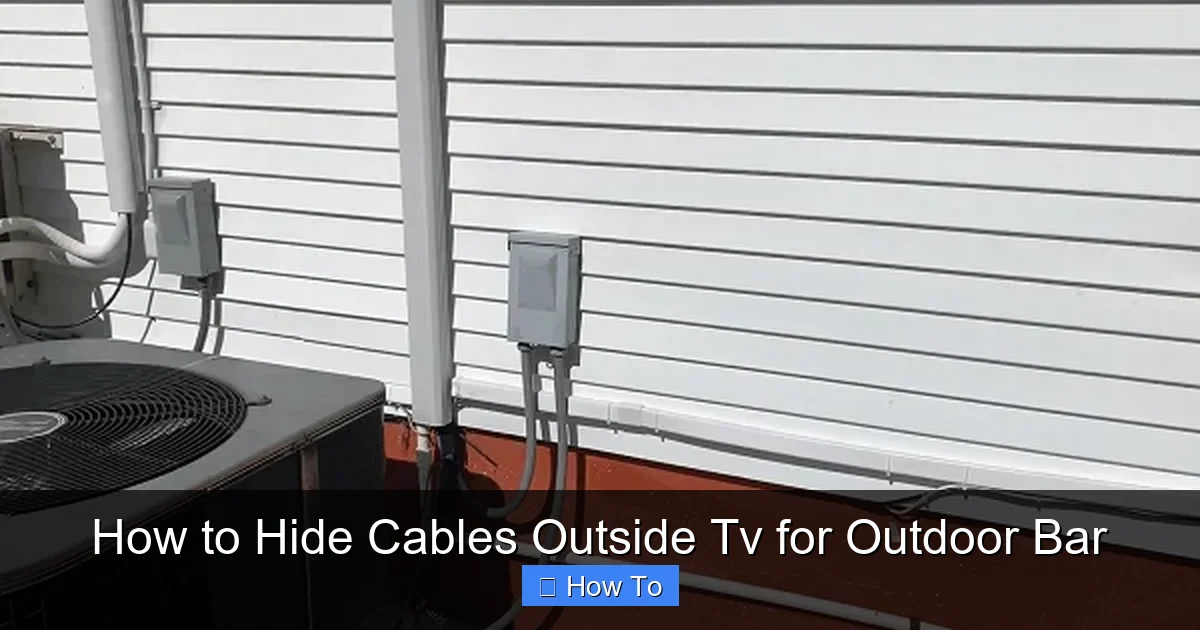
Visual guide about How to Hide Cables Outside Tv for Outdoor Bar
Image source: cablesadvisor.com
Before we dive into the how-to, let’s talk about why this matters. It’s not just about aesthetics—though a clean setup definitely looks better. There are real safety and practical reasons to hide your cables.
First, exposed cables are a tripping hazard. If your bar gets busy during parties or game nights, someone could easily trip over a loose HDMI or power cord. That’s not just embarrassing—it could lead to injury or damage to your equipment.
Second, outdoor cables are vulnerable to the elements. Sunlight can degrade plastic coatings over time. Rain and humidity can cause corrosion or short circuits. And if you live in an area with rodents or insects, they might chew through unprotected wires.
Finally, a messy cable setup can ruin the vibe of your outdoor space. Your bar should feel like a relaxing retreat, not a tech repair shop. Hiding cables helps maintain that ambiance and makes your setup look intentional and well-designed.
So yes—hiding cables is worth the effort.
Step 1: Plan Your Cable Route
The first step in hiding outdoor TV cables is planning. You can’t just grab a raceway and start clipping—you need a strategy.
Start by identifying where your TV is mounted and where your power source and AV equipment (like a streaming box, soundbar, or gaming console) are located. Ideally, these should be as close as possible to minimize cable length.
Next, map out the shortest, most direct path from the TV to each device. Avoid sharp turns or areas with heavy foot traffic. If you’re running cables along a wall, try to follow natural lines—like the edge of a bar counter, under a ledge, or along a beam.
If your TV is mounted high on a wall, consider running cables down the back of the mounting bracket and along the wall surface. If it’s on a freestanding bar, you might route cables underneath or through the structure.
Pro tip: Use a laser level or measuring tape to mark your route with painter’s tape. This gives you a visual guide and helps you avoid drilling in the wrong spot later.
Also, think about future access. If you might need to replace or upgrade cables, avoid sealing them in permanently. Leave room for adjustments.
Step 2: Choose the Right Cable Management Products
Not all cable organizers are created equal—especially for outdoor use. You need products that can handle sun, rain, temperature changes, and physical wear.
Here are the best options for hiding outdoor TV cables:
Outdoor Cable Raceways
These are plastic or metal channels that attach to walls or surfaces and hold multiple cables inside. Look for raceways labeled “UV-resistant” and “weatherproof.” Many come with adhesive backing or screw mounts.
Popular brands like D-Line and Legrand offer sleek, low-profile raceways that blend into walls. Some even come in colors like white, black, or gray—or you can paint them to match your bar’s finish.
Raceways are great for running cables along flat surfaces, like the side of a bar or under a counter. They’re easy to install and keep cables organized and protected.
Flexible Conduit
For more rugged protection, use flexible conduit—a corrugated plastic or metal tube that encases cables. It’s ideal for areas exposed to heavy weather or foot traffic.
You can run conduit along walls, under decks, or even bury it underground (more on that later). Look for liquid-tight conduit with sealed fittings to keep moisture out.
Conduit is a bit more involved to install but offers the highest level of protection. It’s perfect if you’re running power cables or multiple AV lines.
Cable Clips and Ties
For shorter runs or temporary fixes, use outdoor-rated cable clips or zip ties. These are inexpensive and easy to install, but they don’t hide cables—they just keep them tidy.
Use clips to secure cables along beams, railings, or under counters. Choose stainless steel or UV-resistant plastic to prevent rust and cracking.
Avoid regular zip ties outdoors—they become brittle in sunlight. Instead, use UV-resistant versions or reusable Velcro straps.
In-Wall Solutions (For Permanent Setups)
If you’re building or renovating your outdoor bar, consider running cables inside the wall. This is the cleanest option but requires more work.
You’ll need to drill through studs, install in-wall rated cables (like CL2 or CL3 for safety), and possibly hire an electrician for power lines.
This method is best for covered patios or outdoor kitchens with framed walls. It’s not practical for freestanding bars or open structures.
Step 3: Install Cable Raceways or Conduit
Now that you’ve chosen your cable management system, it’s time to install it.
Installing Cable Raceways
1. Clean the surface where you’ll mount the raceway. Use rubbing alcohol or a mild cleaner to remove dust and grease.
2. Measure and cut the raceway to length using a hacksaw or utility knife. Most raceways snap together with connectors for corners or T-junctions.
3. If using adhesive, peel off the backing and press firmly along the marked route. Hold for 30 seconds to ensure a strong bond.
4. If using screws, pre-drill small pilot holes to avoid cracking the raceway. Use outdoor-rated screws and anchors for masonry or stucco walls.
5. Open the raceway cover and lay in your cables. Don’t overstuff—leave some slack for movement and future changes.
6. Snap the cover closed and test the fit. Make sure it opens easily for future access.
Pro tip: Paint the raceway before installation to match your wall or bar. Use outdoor spray paint for a smooth, durable finish.
Installing Flexible Conduit
1. Measure the length needed and cut the conduit with a fine-tooth saw or conduit cutter.
2. Attach conduit fittings to both ends—these seal the openings and connect to boxes or outlets.
3. Feed your cables through the conduit before mounting. Use a fish tape or string to pull them through if needed.
4. Mount the conduit to the wall using conduit straps or clips. Space them every 18–24 inches for support.
5. Seal all connections with waterproof electrical tape or silicone sealant to prevent moisture entry.
For underground runs, bury the conduit at least 6–12 inches deep (check local codes) and use a pull string for future upgrades.
Step 4: Protect Cables from Weather and Pests
Even the best raceway won’t help if water gets in or critters chew through your cables. Outdoor setups need extra protection.
Seal All Entry Points
Use silicone caulk or outdoor-rated sealant around where cables enter the raceway, conduit, or wall. This prevents rain, snow, and humidity from seeping in.
Pay special attention to gaps around mounting brackets, outlets, and junction boxes. A small drip loop (a U-shaped bend in the cable) can also help water run off instead of dripping into connections.
Use Weatherproof Outlets and Covers
If you’re running power to your outdoor bar, use a GFCI (Ground Fault Circuit Interrupter) outlet with a weatherproof cover. These shut off power if they detect a fault, preventing shocks.
Install the outlet in a protected area—under an eave, inside a cabinet, or behind the bar. Use a bubble cover that snaps shut when not in use.
Protect Against Pests
Rodents and insects love warm, hidden spaces—like cable raceways. To deter them:
– Use metal conduit instead of plastic in high-risk areas.
– Apply peppermint oil or commercial repellent around entry points (avoid direct contact with cables).
– Keep the area clean and free of food debris that might attract pests.
Choose the Right Cables
Not all cables are built for outdoor use. Look for labels like “outdoor-rated,” “UV-resistant,” or “direct burial” (for underground runs).
HDMI and Ethernet cables should be shielded and have thick, durable jackets. Power cords should be heavy-duty and rated for outdoor appliances.
Avoid cheap, indoor cables—they’ll degrade quickly in the sun and rain.
Step 5: Blend Cables with Your Decor
Hiding cables isn’t just about protection—it’s also about style. You want your setup to look intentional, not like an afterthought.
Paint to Match
As mentioned earlier, paint your raceways or conduit to match your wall, bar, or pergola. Use outdoor spray paint in a matte finish to avoid glare.
Test the color on a small section first. You can also use camouflage patterns or decorative wraps for a fun touch.
Use Natural Cover
Route cables behind plants, trellises, or outdoor furniture. Just make sure they’re still protected and not pinched or exposed.
For example, run cables along the back of a bar stool or under a planter box. Use zip ties to secure them out of sight.
Install Under Counters or Shelves
If your bar has a countertop or shelf, run cables underneath. Drill a small hole through the back panel and feed them through.
This keeps cables hidden while still accessible. Add a small access panel if needed for future maintenance.
Step 6: Test and Secure Everything
Before you call it done, test your setup.
Turn on the TV and all connected devices. Check for signal issues, audio dropouts, or power problems. If something isn’t working, double-check connections and cable integrity.
Make sure all cables are securely fastened and not pinched or kinked. A bent HDMI cable can cause signal loss or damage over time.
Finally, give everything a gentle tug to ensure raceways and clips are firmly attached. You don’t want them coming loose in the wind.
Troubleshooting Common Issues
Even with careful planning, problems can arise. Here’s how to fix the most common ones:
Cables Are Too Short
If your cables don’t reach, don’t stretch them. Use high-quality extension cables or couplers designed for outdoor use. Avoid daisy-chaining multiple extensions—this can cause signal loss.
For power, use a heavy-duty outdoor extension cord with a built-in GFCI. For HDMI, look for active or amplified extensions that boost the signal.
Raceways Won’t Stick
Adhesive-backed raceways can fail in heat or humidity. If this happens, switch to screw mounts or use outdoor-rated double-sided tape.
Clean the surface thoroughly and roughen it slightly with sandpaper for better adhesion.
Water Got Into the Conduit
If you find moisture inside, disconnect the cables and let everything dry completely. Check for cracks or loose fittings and reseal with silicone.
Consider adding a small drain hole at the lowest point of the conduit to let water escape.
Signal Issues After Installation
Long cable runs can weaken signals, especially for 4K or HDR content. Use signal boosters or fiber optic HDMI cables for runs over 25 feet.
Also, keep power cables separate from AV cables to avoid interference.
Maintaining Your Outdoor Cable Setup
Once everything is installed, a little maintenance goes a long way.
Inspect your cables and raceways every few months. Look for cracks, fading, or loose mounts. Re-tighten screws and reapply sealant as needed.
Trim back plants that might be growing over cables. And after storms, check for debris or water buildup.
If you notice any damage, replace cables immediately—don’t wait for a failure.
Final Thoughts
Hiding cables outside your TV for your outdoor bar might seem like a small detail, but it makes a big difference. A clean, organized setup looks better, performs better, and lasts longer.
By planning your route, using the right products, and protecting against weather and pests, you can enjoy your outdoor entertainment space without worrying about tripping hazards or damaged equipment.
Remember: the goal isn’t perfection—it’s practicality. You don’t need a flawless, invisible setup. You just need something safe, functional, and tidy.
So grab your tools, pick a sunny day, and get to work. Your outdoor bar—and your guests—will thank you.