Installing a backyard TV in windy areas requires careful planning and the right equipment to ensure safety and durability. This guide walks you through every step—from choosing a sturdy mount to securing cables and weatherproofing—so you can enjoy outdoor movie nights without worry.
Key Takeaways
- Step-by-step: Easy to follow instructions
How to Install Backyard TV for Windy Areas
If you love outdoor entertainment, a backyard TV can transform your patio, deck, or garden into a cozy outdoor theater. But if you live in a windy area—whether it’s a coastal region, open plain, or mountain ridge—installing a TV outdoors comes with unique challenges. Strong winds can damage equipment, loosen mounts, or even cause safety hazards if not properly addressed.
The good news? With the right tools, planning, and installation techniques, you can enjoy your favorite shows and movies under the stars—without worrying about the weather. This step-by-step guide will walk you through how to install a backyard TV for windy areas, ensuring your setup is safe, secure, and built to last.
Whether you’re mounting a TV under a covered patio, on a freestanding pole, or on an exterior wall, we’ll cover everything from choosing the right equipment to weatherproofing and maintenance. By the end of this guide, you’ll have a reliable outdoor entertainment system that stands up to Mother Nature—no matter how hard she blows.
Step 1: Assess Your Wind Conditions and Location
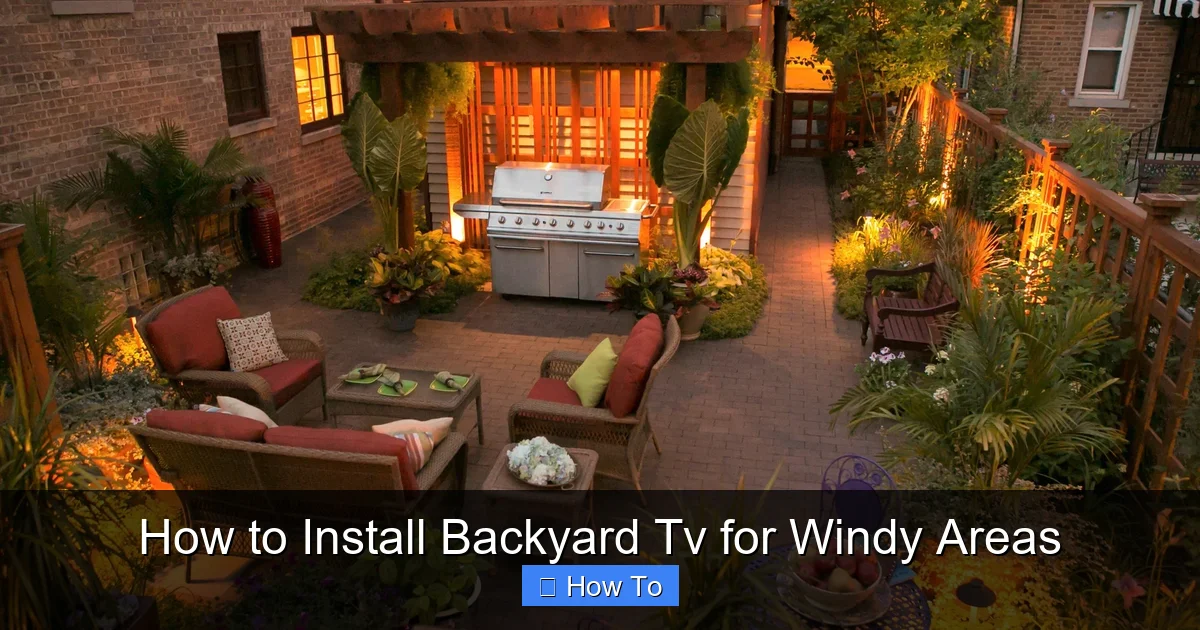
Visual guide about How to Install Backyard Tv for Windy Areas
Image source: kdlandscapeinc.com
Before you buy a single screw or cable, take time to evaluate your outdoor space and local weather patterns. Not all wind is created equal, and understanding your environment is the first step to a successful installation.
Check Local Wind Speeds
Start by researching average wind speeds in your area. You can find this information through local weather services, NOAA (National Oceanic and Atmospheric Administration), or even weather apps. Pay attention to peak wind speeds during storms or seasonal changes. If your area regularly experiences winds over 40 mph, you’ll need extra reinforcement.
For example, coastal regions like Florida or the Pacific Northwest often face strong gusts, while open plains in Kansas or Texas can see sustained high winds. Knowing your risk level helps you choose the right mounting system and anchoring method.
Identify Sheltered Spots
Look for natural windbreaks around your yard. A TV mounted under a covered patio, pergola, or near a solid wall will experience less direct wind force. Avoid open decks, rooftops, or isolated poles in the middle of a lawn—these are more vulnerable.
If you don’t have a sheltered area, consider building a simple wind barrier using lattice panels, outdoor curtains, or even tall planters. These won’t stop all wind, but they can reduce exposure by 30–50%, making a big difference in stability.
Consider TV Placement and Viewing Angle
Think about where you’ll be sitting. The TV should be at eye level when seated, with minimal glare from the sun. In windy areas, avoid placing the TV where it might catch crosswinds or be exposed to flying debris.
Also, consider the direction of prevailing winds. If winds typically come from the west, mount the TV on the east side of a structure for added protection.
Step 2: Choose the Right Outdoor TV and Mount
Not all TVs and mounts are created equal—especially when it comes to outdoor use. You’ll need equipment designed to handle the elements, especially wind.
Select an Outdoor-Rated TV
Standard indoor TVs are not built for outdoor conditions. They can overheat in direct sunlight, suffer from moisture damage, or fail in temperature extremes. Instead, choose one of these options:
– **All-Weather Outdoor TVs:** Brands like SunBrite, Seura, and Samsung offer TVs specifically designed for outdoor use. These are weatherproof, UV-resistant, and have built-in cooling systems.
– **Outdoor TV Enclosures:** If you already have an indoor TV you love, you can protect it with a weatherproof enclosure. Look for models with tempered glass, ventilation fans, and secure locking mechanisms.
For windy areas, a fully sealed outdoor TV is ideal because it reduces the risk of wind-driven rain entering the unit.
Pick a Heavy-Duty Mount
The mount is just as important as the TV. In windy conditions, a flimsy mount can bend, loosen, or fail entirely.
Choose a mount with these features:
– **Fixed or Low-Profile Design:** Full-motion mounts (which swivel and tilt) are convenient but can catch wind like a sail. A fixed mount is more aerodynamic and secure.
– **High Wind Rating:** Look for mounts rated for wind speeds of 70 mph or higher. Check the manufacturer’s specifications.
– **Robust Construction:** Opt for mounts made from powder-coated steel or aluminum. Avoid plastic components, which can crack or weaken over time.
Popular brands like Peerless, Sanus, and Vogel’s offer heavy-duty outdoor mounts designed for harsh conditions.
Consider a Retractable or Portable Option
If your area experiences extreme or unpredictable winds, a retractable mount or portable TV stand might be your best bet. These allow you to lower or move the TV indoors during storms.
Retractable mounts can be motorized or manual, folding the TV flat against a wall or ceiling when not in use. Portable stands with locking wheels let you roll the TV to safety when needed.
While not as permanent, these options offer peace of mind and flexibility—especially in hurricane-prone or tornado-risk zones.
Step 3: Prepare the Mounting Surface
A strong mount is only as good as the surface it’s attached to. Whether you’re mounting to a wall, pole, or freestanding structure, preparation is key.
Wall Mounting: Reinforce the Structure
If you’re attaching the TV to an exterior wall, make sure the wall can support the weight and wind load. Wood-frame walls should have studs spaced 16 or 24 inches apart. Use a stud finder to locate them.
For added strength:
– Use lag bolts (not screws) to secure the mount to the studs.
– Install a backing plate or steel reinforcement bracket behind the wall if the studs are weak.
– Avoid mounting on vinyl siding or thin stucco—these materials can crack or pull away under stress.
Pole or Freestanding Mount: Use Concrete Footings
For a standalone setup, a sturdy pole anchored in concrete is essential. Here’s how to do it:
1. Dig a hole at least 24–36 inches deep and 12 inches wide.
2. Set a galvanized steel pole (4–6 inches in diameter) in the center.
3. Pour quick-setting concrete around the pole, ensuring it’s perfectly vertical.
4. Let the concrete cure for at least 48 hours before attaching the mount.
The deeper and wider the footing, the more resistance it provides against wind uplift. For extra security, add rebar or a concrete anchor kit.
Use Ground Anchors for Added Stability
In areas with soft soil or high winds, ground anchors can help stabilize freestanding mounts. These are screw-in or driven anchors that grip deep into the earth.
Attach guy wires from the top of the pole to the anchors, forming a triangle for support. This method is commonly used for flagpoles and satellite dishes and works well for TV mounts too.
Step 4: Install the Mount and TV Securely
Now it’s time to put everything together. Take your time—rushing this step can lead to mistakes that compromise safety.
Attach the Mount to the Surface
Follow the manufacturer’s instructions carefully. Use a level to ensure the mount is perfectly straight. For wall mounts, drill pilot holes slightly smaller than the lag bolts to prevent splitting.
Tighten all bolts with a torque wrench to the recommended specification. Over-tightening can strip threads; under-tightening can lead to loosening over time.
Secure the TV to the Mount
Most outdoor mounts use a locking mechanism to prevent theft and wind damage. Make sure the TV is firmly attached and cannot be easily removed.
Double-check that all safety straps or locks are engaged. In windy areas, even a small gap can allow movement that leads to wear or failure.
Test for Stability
Before connecting cables, gently push on the TV to test for wobble. If it moves more than 1–2 inches, recheck your mounting hardware and anchoring.
For pole mounts, try leaning on the pole to simulate wind pressure. If it bends or shifts, reinforce the base or add guy wires.
Step 5: Weatherproof and Protect Cables
Wind often brings rain, dust, and debris. Protecting your cables is just as important as securing the TV.
Use Outdoor-Rated Cables
Standard indoor cables aren’t designed for outdoor use. Choose:
– **Weatherproof HDMI and power cables** with UV-resistant jackets.
– **Direct-burial-rated cables** if running underground.
– **Cable with built-in surge protection** to guard against lightning.
Avoid splicing cables—use one continuous length whenever possible to reduce weak points.
Route Cables Through Conduit
Run all cables through waterproof PVC or metal conduit. This protects them from moisture, rodents, and physical damage.
For wall mounts, drill a small hole through the wall and feed the conduit from inside to outside. Seal the hole with silicone caulk to prevent water intrusion.
For pole mounts, attach the conduit to the pole using UV-resistant zip ties or clamps. Keep cables away from sharp edges.
Use Cable Management Solutions
Loose cables can act like sails in the wind, pulling on connections. Secure them with:
– **Cable raceways** along walls or decks.
– **Adhesive cable clips** for temporary setups.
– **Cable sleeves** to bundle multiple wires together.
Label each cable at both ends to make troubleshooting easier.
Step 6: Test and Fine-Tune the Setup
Once everything is installed, it’s time to test your system.
Power On and Check Connections
Turn on the TV and verify that all inputs (HDMI, antenna, streaming device) are working. Check for signal strength, especially if using an outdoor antenna.
Adjust Viewing Angle and Height
Fine-tune the TV’s position for the best viewing experience. In windy areas, avoid extreme tilt angles that increase wind resistance.
If using a fixed mount, make sure the screen is level and centered.
Monitor in Windy Conditions
After installation, observe the TV during a breezy day. Look for:
– Excessive sway or vibration
– Loose cables or mounts
– Water pooling near connections
Make adjustments as needed. Even small changes—like tightening a bolt or repositioning a cable—can improve performance.
Step 7: Maintain Your Backyard TV
Regular maintenance ensures your outdoor TV stays safe and functional for years.
Inspect Monthly
Check all bolts, mounts, and cables for signs of wear, rust, or loosening. Tighten any loose hardware.
Clean the Screen and Enclosure
Use a soft, damp cloth to wipe down the screen and housing. Avoid harsh chemicals that can damage coatings.
Check Weatherproofing Seals
Inspect seals on enclosures and conduit for cracks or gaps. Replace damaged seals immediately.
Seasonal Deep Cleaning
Every 3–6 months, remove the TV (if possible) and clean dust from vents and fans. Check for insect nests or moisture buildup.
Troubleshooting Common Issues
Even with careful planning, problems can arise. Here’s how to handle common issues in windy areas:
TV Sways or Vibrates in Wind
This usually means the mount isn’t secure enough. Check all bolts and anchors. Consider adding guy wires or switching to a fixed mount.
Cables Come Loose
Wind can shake loose connections. Re-secure cables with clips or conduit. Use locking HDMI connectors if available.
TV Overheats or Shuts Off
Outdoor TVs need airflow. Make sure vents aren’t blocked by debris or enclosures. Install in a shaded area if possible.
Water Damage Despite Enclosure
Check for gaps in seals or poor drainage. Ensure the enclosure is rated for your climate and properly installed.
Conclusion
Installing a backyard TV in a windy area doesn’t have to be daunting. With the right preparation, equipment, and installation techniques, you can create a safe and enjoyable outdoor entertainment space that stands up to the elements.
Start by assessing your wind conditions and choosing a sheltered location. Invest in an outdoor-rated TV and a heavy-duty, wind-resistant mount. Secure your setup with proper anchoring—whether it’s concrete footings, wall reinforcements, or ground anchors. Protect all cables with conduit and weatherproofing, and never skip regular maintenance.
Remember, safety comes first. A little extra effort during installation can prevent costly repairs or accidents down the line. Whether you’re watching the big game, a family movie night, or your favorite show under the stars, your backyard TV will be ready—rain or shine, wind or calm.
So grab your tools, follow this guide, and get ready to enjoy the great outdoors—with your favorite screen right beside you.