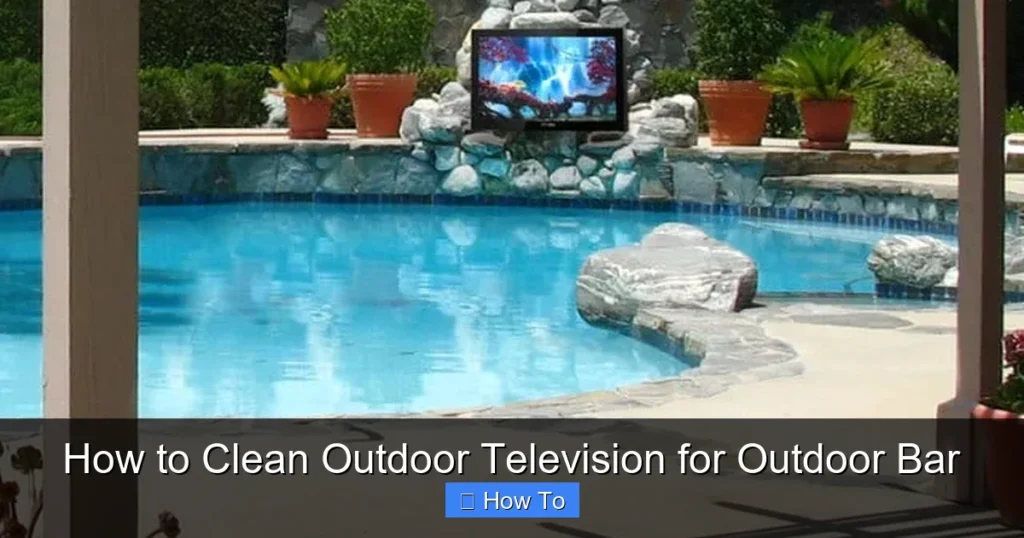
Hiding cables for your poolside TV ensures a safe, clean setup for outdoor sports viewing. This guide walks you through practical, weather-resistant solutions to keep wires out of sight and out of mind—without compromising performance or style.
Key Takeaways
- Use weatherproof cable management products: Choose UV-resistant, waterproof conduits and clips designed for outdoor use to protect cables from sun, rain, and pool chemicals.
- Route cables along structural elements: Run wires behind walls, under decking, or along railings to keep them hidden and secure.
- Label and organize all connections: Clearly mark power, HDMI, and audio cables to simplify troubleshooting and future upgrades.
- Prioritize safety with GFCI outlets: Always plug outdoor electronics into Ground Fault Circuit Interrupter outlets to prevent electrical hazards near water.
- Test signal strength before finalizing: Ensure HDMI and antenna signals remain strong after routing cables through walls or conduits.
- Consider wireless alternatives: Use wireless HDMI kits or streaming devices to reduce cable clutter when possible.
- Maintain access for maintenance: Install removable panels or access points so you can service cables without dismantling your entire setup.
How to Hide Cables Poolside TV for Outdoor Sports Watching
Imagine this: It’s game day. The sun is shining, the grill is fired up, and your friends are gathered around the pool. You’ve mounted a sleek outdoor TV on the patio wall, ready to stream the big match in stunning clarity. But then you notice it—wires snaking across the deck, dangling behind the TV, and tripping everyone who walks by. Not exactly the picture-perfect setup you imagined.
Don’t worry. You’re not alone. Many homeowners struggle with cable clutter when setting up outdoor entertainment spaces. The good news? With the right tools and a bit of planning, you can hide those cables safely and effectively—so your poolside TV looks clean, professional, and ready for any sporting event.
In this guide, we’ll walk you through step-by-step instructions on how to hide cables for your poolside TV. Whether you’re mounting your screen on a wall, under a pergola, or near a cabana, we’ll cover weatherproofing, routing techniques, safety tips, and smart alternatives to reduce wire mess. By the end, you’ll have a sleek, hazard-free setup that lets you focus on the game—not the cables.
Why Hiding Cables Matters for Poolside TVs
Before diving into the how-to, let’s talk about why cable management is so important outdoors—especially near a pool.
First, safety. Exposed cables are tripping hazards, especially in wet areas where people are walking barefoot. A single misstep could lead to injury—or worse, someone falling into the pool while tangled in a power cord. That’s a risk no one wants.
Second, durability. Outdoor cables face harsh conditions: intense UV rays, humidity, chlorine splash, and temperature swings. Without proper protection, wires can degrade quickly, leading to signal loss, flickering screens, or even electrical faults.
Third, aesthetics. A clean, wire-free setup enhances your outdoor living space. It looks more professional and lets your TV—and the game—take center stage.
Finally, functionality. Poorly managed cables can interfere with signal quality. Long, coiled, or kinked HDMI cables may cause lag or dropouts during live sports broadcasts. Proper routing ensures consistent performance.
So yes, hiding cables isn’t just about looks. It’s about safety, longevity, and performance.
Assess Your Poolside TV Setup
Before you start hiding wires, take a moment to evaluate your current setup. This will help you choose the best cable management strategy.
Step 1: Identify All Cables
List every cable connected to your TV:
– Power cord (from TV to outlet)
– HDMI cables (from streaming device, cable box, or game console)
– Audio cables (if using external speakers)
– Antenna or satellite cable (if applicable)
– Ethernet cable (for wired internet, if used)
Count how many you have and note their lengths. This helps when planning routes and buying management supplies.
Step 2: Determine the TV Location
Where is your TV mounted?
– On a wall near the pool?
– Under a covered patio or pergola?
– Inside a weatherproof enclosure?
Each location affects how you’ll route cables. For example, wall-mounted TVs near the pool may require in-wall conduits, while under-cover setups might allow for surface-mounted raceways.
Step 3: Locate Power and Signal Sources
Find the nearest:
– GFCI (Ground Fault Circuit Interrupter) outlet—essential for outdoor safety
– Internet router or Ethernet port
– Cable or satellite box location
Ideally, your power source should be within 10–15 feet of the TV. If it’s farther, you may need an outdoor-rated extension cord or to relocate the outlet (a job for a licensed electrician).
Step 4: Check for Obstacles
Look for:
– Decking boards
– Railings
– Plants or furniture
– Water features
These can block or complicate cable routes. Plan around them early to avoid last-minute changes.
Choose the Right Cable Management Tools
Not all cable organizers are created equal—especially for outdoor use. You need products that resist moisture, UV damage, and physical wear.
Weatherproof Conduits and Raceways
These are plastic or metal channels that enclose and protect cables. Look for:
– UV-resistant PVC or polycarbonate
– IP65 or higher waterproof rating
– Flexible options for curved paths
Popular brands include D-Line, Legrand, and Wiremold. Choose a raceway that matches your deck or wall color for a seamless look.
Cable Clips and Adhesive Mounts
Use outdoor-rated adhesive clips or screw-mounted brackets to secure cables along walls, under decks, or behind furniture. Avoid cheap plastic clips—they crack in the sun.
In-Wall Cable Kits
If you’re mounting the TV on an exterior wall, consider an in-wall cable management kit. These include:
– Wall plates with brush openings
– Flexible conduit tubing
– Fire-rated in-wall HDMI cables
These kits let you run cables inside the wall, completely out of sight. Best for permanent installations.
Wireless Alternatives
Reduce cable count with:
– Wireless HDMI transmitters (e.g., Nyrius, J-Tech Digital)
– Streaming devices (Roku, Apple TV, Fire Stick) that connect via Wi-Fi
– Bluetooth speakers instead of wired audio
These won’t eliminate all cables (you still need power), but they cut down on clutter.
Cable Sleeves and Wraps
For a quick fix, bundle multiple cables together with a spiral wrap or fabric sleeve. Choose outdoor-safe materials like nylon or polyethylene.
Plan Your Cable Route
A good plan prevents frustration and rework. Sketch a simple diagram of your setup, noting:
– TV location
– Power source
– Signal sources (cable box, router)
– Desired cable path
Best Routes for Poolside TVs
- Behind the wall: Ideal for permanent setups. Requires drilling and possibly professional help.
- Under the deck: Great for elevated patios. Use conduit to protect cables from moisture and pests.
- Along railings or posts: Use clips to attach cables vertically or horizontally. Paintable raceways blend in.
- Through outdoor furniture: Some cabanas or TV cabinets have built-in cable channels.
- Under outdoor rugs or mats: Only for low-traffic areas and short-term use. Not recommended for power cables.
Avoid running cables across walkways or pool edges. If you must cross a path, use a cable ramp or bury the cable slightly under mulch or pavers (with conduit protection).
Step-by-Step: Hide Cables for Your Poolside TV
Now let’s get to the hands-on work. Follow these steps to hide your cables safely and effectively.
Step 1: Turn Off Power and Disconnect Devices
Safety first. Unplug the TV and all connected devices. Turn off the circuit breaker if you’re working near electrical outlets.
Step 2: Mount the TV (If Not Already Done)
Use an outdoor-rated TV mount designed for your screen size and wall type. Ensure it’s securely anchored and level. Leave enough space behind the TV for cables to connect comfortably.
Step 3: Run Power Cable Safely
Your TV’s power cord should plug into a GFCI outlet within 6 feet. If the outlet is farther:
– Use an outdoor-rated extension cord with a built-in GFCI (look for “SJTW” or “SJTOW” rating).
– Never daisy-chain multiple extension cords.
– Route the cord along the wall or under the deck—never across the pool deck.
If you need a new outlet, hire a licensed electrician to install one with proper grounding and weatherproof cover.
Step 4: Route HDMI and Signal Cables
This is where most of the hiding happens.
Option A: In-Wall Installation (Best for Permanent Setups)
- Drill a hole in the wall behind the TV and another near the power outlet or signal source.
- Feed a flexible conduit (like Carlon ENT tubing) through the wall cavity.
- Pull your HDMI, audio, and antenna cables through the conduit.
- Install wall plates with brush openings on both ends.
- Connect cables to devices and test signal quality.
Tip: Use in-wall rated HDMI cables (look for “CL2” or “CL3” certification) to meet fire safety codes.
Option B: Surface-Mounted Raceways
- Measure the distance from TV to power/signal source.
- Cut the raceway to length using a hacksaw or utility knife.
- Attach the raceway to the wall or deck using screws or outdoor adhesive.
- Open the raceway, lay cables inside, and snap the cover shut.
- Paint the raceway to match your wall or deck (use outdoor paint).
Option C: Under-Deck Routing
- Lift deck boards near the TV and power source (if removable).
- Run cables under the deck, securing them with clips every 12–18 inches.
- Use conduit if cables will be exposed to moisture or critters.
- Reinstall deck boards, leaving access points if needed.
Step 5: Secure and Organize Cables
Once routed:
– Bundle related cables together with zip ties or Velcro straps (avoid over-tightening).
– Label each cable at both ends with tags or colored tape (e.g., “HDMI 1 – Apple TV”).
– Use cable clips to prevent sagging or snagging.
Step 6: Test Everything
Plug in all devices and power on the TV. Check:
– Picture quality (no flickering or lag)
– Audio sync
– Internet connection (if streaming)
– Remote control functionality
If you notice issues, double-check connections and cable integrity. Long HDMI runs (over 25 feet) may need an active cable or signal booster.
Wireless Solutions to Reduce Cable Clutter
Sometimes, the best way to hide cables is to eliminate them altogether.
Wireless HDMI Transmitters
These devices send video and audio from your source (cable box, game console) to your TV without wires. Just plug the transmitter into the source and the receiver into the TV.
Pros:
– No long HDMI runs
– Works up to 100 feet (line of sight)
– Supports 4K and HDR
Cons:
– Slight latency (may affect gaming)
– Requires power for both units
– Can interfere with Wi-Fi if not on 5GHz band
Popular models: J-Tech Digital Wireless HDMI, Nyrius ARIES Pro.
Streaming Devices
Instead of running HDMI from an indoor cable box, use a streaming stick like Roku Ultra, Apple TV 4K, or Amazon Fire TV Stick 4K. Connect it directly to the TV’s HDMI port and control it via Wi-Fi.
Pros:
– No need for long HDMI cables
– Access to live sports apps (ESPN, YouTube TV, Hulu + Live TV)
– Compact and easy to hide behind the TV
Cons:
– Requires strong Wi-Fi signal
– May need a Wi-Fi extender near the pool
Bluetooth Speakers
Skip wired audio altogether. Pair outdoor Bluetooth speakers with your TV or streaming device. Place them around the pool for immersive sound.
Tip: Use speakers with long battery life and weather resistance (IPX5 or higher).
Safety Tips for Outdoor Cable Management
Outdoor electronics demand extra caution. Follow these safety rules:
- Always use GFCI outlets: These shut off power if they detect a ground fault—critical near water.
- Never splice or modify outdoor cables: Use proper connectors or hire an electrician.
- Keep cables away from pool water: Even waterproof cables aren’t meant to be submerged.
- Use surge protectors: Outdoor power strips with surge protection guard against lightning and power spikes.
- Inspect cables regularly: Check for cracks, fraying, or UV damage every few months.
- Follow local electrical codes: Some areas require permits for outdoor wiring. When in doubt, consult a pro.
Troubleshooting Common Issues
Even with the best planning, problems can arise. Here’s how to fix them.
Problem: Weak or Dropping Signal
Possible causes:
– HDMI cable too long or low quality
– Interference from power cables
– Wireless signal blocked by walls or water
Solutions:
– Replace with a high-speed, active HDMI cable
– Keep signal cables at least 6 inches from power cords
– Use a Wi-Fi extender or mesh network for streaming devices
Problem: Cables Keep Coming Loose
Possible causes:
– Clips not secure
– Wind or vibrations
Solutions:
– Use screw-mounted clips instead of adhesive
– Add extra support every 12 inches
– Use flexible conduit for added protection
Problem: Water in Conduit or Raceways
Possible causes:
– Improper sealing
– Condensation
Solutions:
– Use silicone sealant around entry points
– Install conduit with a slight downward slope to let water drain
– Choose raceways with drainage holes
Problem: TV Won’t Power On
Check:
– GFCI outlet hasn’t tripped (press “Reset” button)
– Extension cord is rated for outdoor use
– All connections are tight
Maintain Your Setup Year-Round
Outdoor cable management isn’t a one-and-done task. Seasonal changes can affect your setup.
Spring
– Inspect cables for winter damage
– Clean raceways and conduits
– Test all connections
Summer
– Check for overheating (don’t bundle too many cables tightly)
– Ensure no cables are exposed to direct sun without UV protection
Fall
– Trim back plants that may rub against cables
– Secure loose clips before windy weather
Winter
– In cold climates, ensure cables aren’t pinched by ice or snow
– Use insulated conduit if temperatures drop below freezing
Final Thoughts
Hiding cables for your poolside TV doesn’t have to be complicated or expensive. With the right tools, a solid plan, and attention to safety, you can create a clean, professional setup that enhances your outdoor sports-watching experience.
Remember: prioritize weatherproofing, use GFCI outlets, and test everything before finalizing. And don’t forget the wireless options—they can simplify your life and reduce clutter.
Now, go enjoy that game in peace—no tripping hazards, no tangled wires, just pure, uninterrupted fun by the pool.